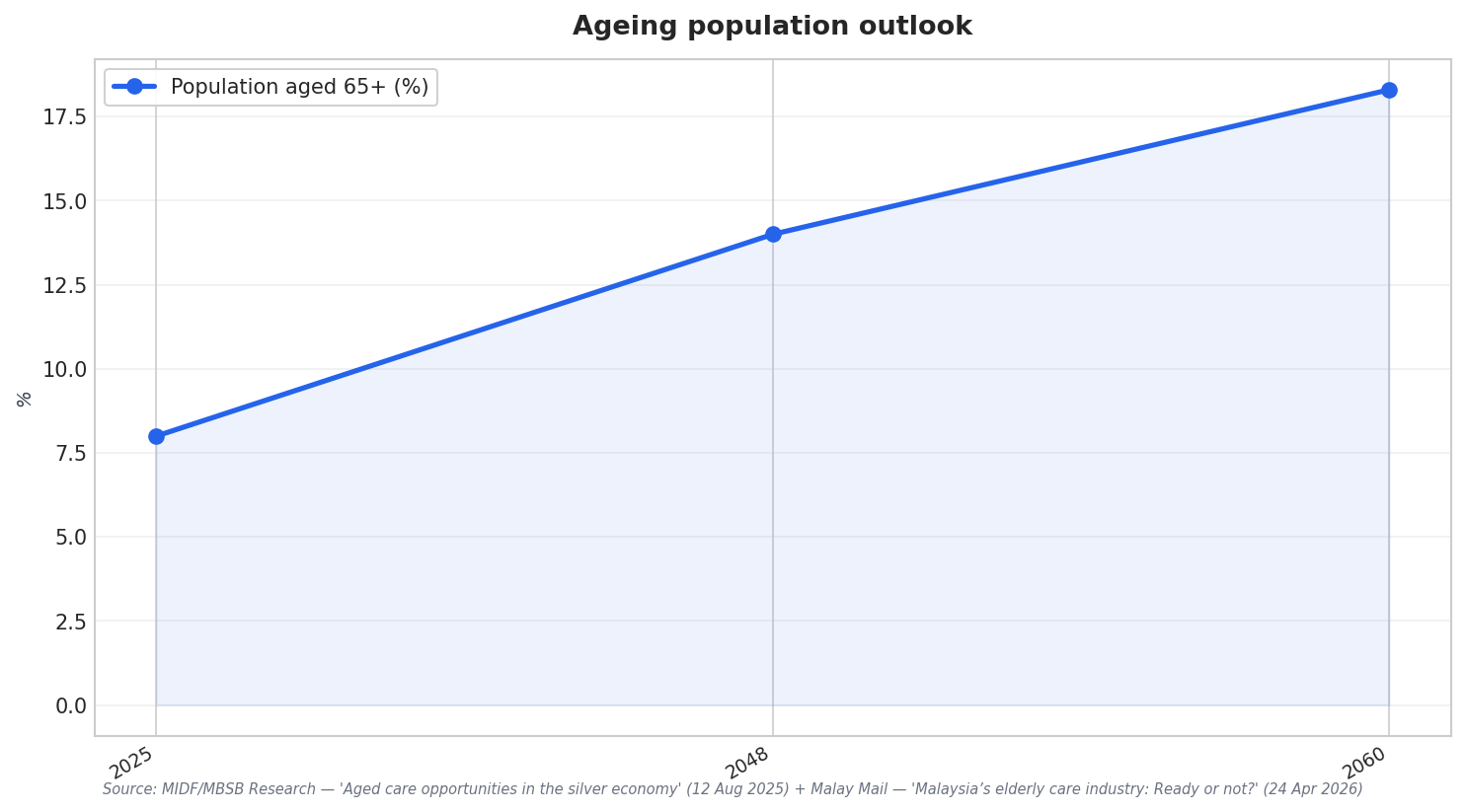
Malaysia’s care needs are expanding as the country ages. The Health Minister shared findings from the 2025 National Health and Morbidity Survey (NHMS) showing that only 14.7 per cent of elderly Malaysians were ageing healthily. This matters because Malaysia is expected to reach “aged society” status by 2048, with more than 14 per cent of the population aged 65 and above. A separate healthcare thematic paper also frames the demographic shift: Malaysia’s elderly population (65+) is projected to rise from 8% in 2025 to 18.3% by 2060, and it reiterates the 2048 aged-society timeline. Together, these points explain why demand for care is climbing across settings—from home support to facilities.
Supply and affordability are already pressure points. A Khazanah Research Institute (KRI) paper cited in Malay Mail describes uneven care provision across the nation and a gap between demand and supply within the care sector. The same piece notes the live-in or residential elderly care landscape is highly privatised and small in number, which brings affordability concerns. Reported basic residential care costs range from RM1,500 to RM3,000, and that figure does not include medical care. Government-run residential centres exist, but they are concentrated in Peninsular Malaysia and are available only for extremely poor elderly people with no family. The MIDF paper also describes Malaysia’s aged care ecosystem as fragmented, involving government, private, and charity-based facilities.
Where the Biggest Opportunities Are Emerging
Two growth areas stand out: financing and specialised services. Malay Mail reports that one strategy proposed during the NHMS launch was the introduction of long-term care insurance (LTCI), describing it as distinct from medical insurance because it helps cover long-term care needs like paying for a nursing home or care facility. It also notes Malaysia currently does not provide LTCI on its own, though it may be bundled with traditional life or critical illness policies. On the private market side, Ken Research values the Malaysia long-term care private insurance market at approximately USD 1.3 billion, and describes product formats ranging from standalone long-term care insurance to riders and hybrid products. It adds that long-term care needs in Malaysia are most commonly addressed through medical and life insurance products that embed long-term care or disability benefits.
Memory care is another expanding segment. Ken Research values the Malaysia memory care market at USD 1.3 billion, attributing growth to increasing prevalence of dementia and cognitive impairments among the ageing population, rising awareness, and the demand for specialised facilities. It also notes key cities—Kuala Lumpur, Penang, and Johor Bahru—dominate due to population density and concentration of healthcare facilities. Public policy support is referenced through the Ministry of Health’s Dementia Action Plan 2023–2030, which aims to enhance the quality of care for individuals with dementia and includes funding for training healthcare professionals and establishing more memory care facilities. Ken Research also highlights a trend toward in-home memory care, linked to preferences for personalised care and the role of telehealth and home monitoring technologies.
Service gaps remain structural, not just commercial. A 2025 policy review on elder care practices in Malaysia states that the institutional response to population ageing remains fragmented and inadequate, and that the country lacks a coherent, overarching national elder care strategy integrating health services, social protection, and long-term care provision. It argues elder care is dispersed across multiple ministries, charitable organisations, and family structures, resulting in significant gaps in service delivery, and it identifies regulatory inconsistencies. The MIDF paper flags practical constraints that can hold the market back, including caregiver shortages and unregistered care, alongside escalating healthcare costs and inadequate retirement savings. Even as demand rises, closing these gaps is central to building a sustainable Malaysia Elderly Care Market.
What is driving demand in Malaysia’s elderly care sector?
How affordable is residential elderly care in Malaysia today?
How big are the long-term care insurance and memory care markets in Malaysia?
What are the biggest service gaps in the Malaysia Elderly Care Market?
Which Malaysian cities are highlighted for memory care demand and supply?