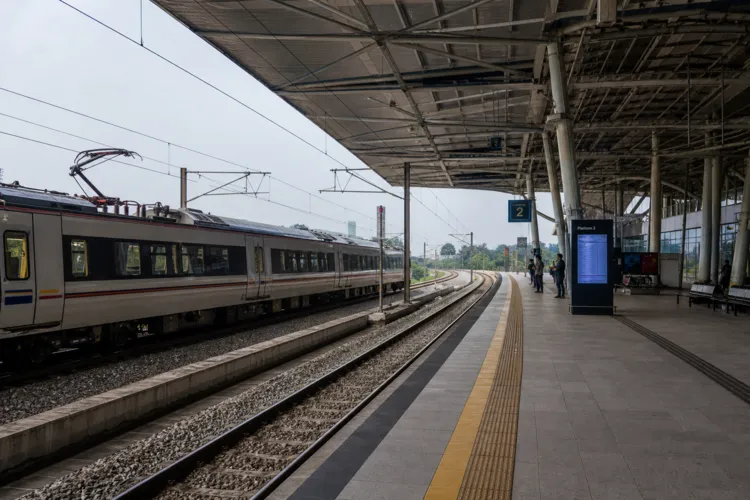
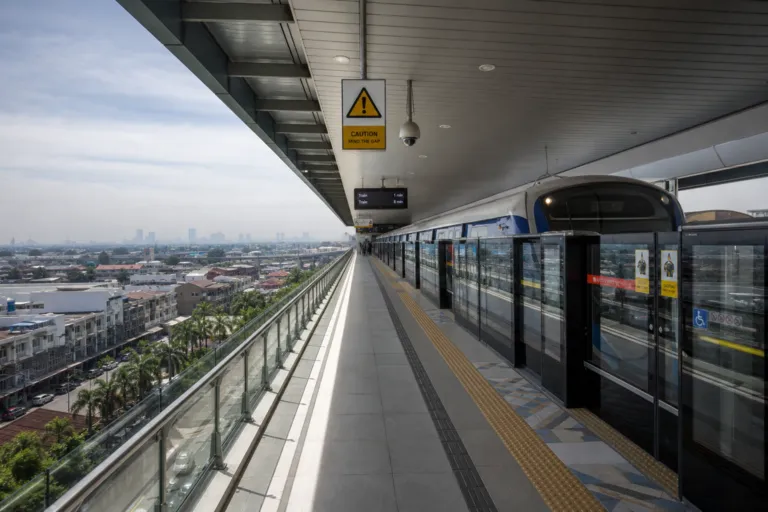
The LRT Shah Alam Line, previously known as LRT3, is a medium-capacity rapid transit line serving the western corridor of the Klang Valley in Selangor, Malaysia. It operates as part of Rapid KL under Rapid Rail, a subsidiary of Prasarana Malaysia, and it is designated Line 11 with a sky-blue colour on official maps. The line is also notable because it is the first rapid transit route located entirely outside the Federal Territory of Kuala Lumpur, operating solely within Selangor. For commuters, that matters because it expands Rapid KL coverage to better connect communities across Petaling Jaya, Shah Alam, and Klang without needing Kuala Lumpur as the anchor for every journey.
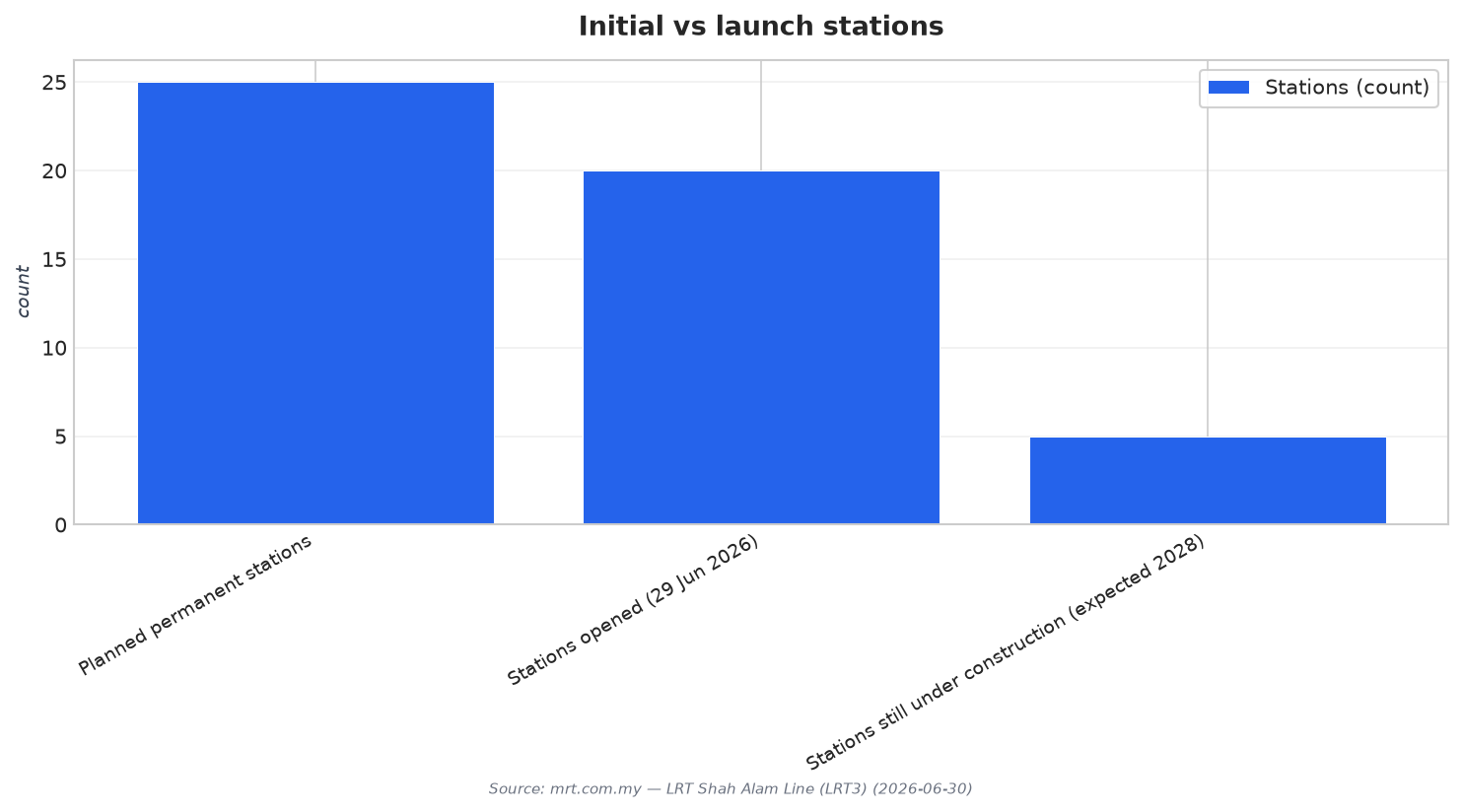
Service began on 29 June 2026 after an extended timeline. Prasarana announced the project in 2013, work began in 2016, and construction was halted in 2018 for a review tied to funding concerns and a change of government. The project later resumed after being reclassified from a rapid transit line to a light metro, with completion moving from 2020 to 2024 and then pushed through 2025 into 2026. At launch, the planned 25 permanent stations were not all open: 20 began operations on 29 June 2026, while five in-fill stations remain under construction and are expected to open by 2028.
What the Route and Operations Change for Daily Trips
For day-to-day commuting, the biggest practical shift is the new east-west spine across the west of Kuala Lumpur’s metro area. The route runs from Bandar Utama to Shah Alam and Johan Setia over 37.8 km, and most of it is elevated, with a 2 km underground segment. The end-to-end journey is stated as 70 minutes. Trains run every 8 minutes during peak periods and every 10 to 15 minutes off-peak, supported by communications-based train control and GoA4 unattended driverless operation at speeds up to 70 km/h. Interchanges are located at Bandar Utama with the MRT Kajang Line and at Glenmarie with the LRT Kelana Jaya Line, plus a connection to KTM Komuter services at Jambatan Kota.
Capacity and rolling stock decisions also affect what commuters will feel on platforms. In August 2017, CRRC Zhuzhou received a RM1.56 billion contract to supply 42 six-car trainsets, but a later cost-cutting programme reduced this to 22 three-car trainsets. Each trainset is 57.6 m long and can carry 624 passengers, with final fit-out and testing done at CRRC’s rolling stock centre in Batu Gajah. On the opening day, the government also announced that seven additional trainsets would be ordered in the future to boost capacity as ridership increases. In the short term, that mix of frequency, train size, and future additions frames how crowded the line may become during peak travel.
For people comparing commuting options and where to live, the line’s western focus is the headline. Commentary around the corridor highlights that Shah Alam, Klang, and the inner-west of Petaling Jaya were historically treated as “drive-only” areas, but the line turns much of that catchment into a one-seat ride to Bandar Utama, with onward travel possible via interchange. Subsale terrace houses around Bandar Baru Klang and Bandar Bukit Tinggi have reportedly changed hands between RM450,000 and RM700,000 in recent quarters, and some renters are now considering catchments such as Stadium Shah Alam, Glenmarie 2, or UiTM Shah Alam because the commute becomes manageable rather than punitive. For a limited period, rides on the line and on Rapid KL feeder buses were also announced as free until July 31, creating a window for commuters to trial the new network.
When did the Shah Alam Line (LRT3) start passenger service, and how many stations opened first?
How long is the Shah Alam Line, and how long does the full trip take?
What interchanges and rail connections does the line provide?
How frequent are trains, and what is the operating mode?
What should commuters know about the Malaysia LRT3 line’s trains and capacity plans?