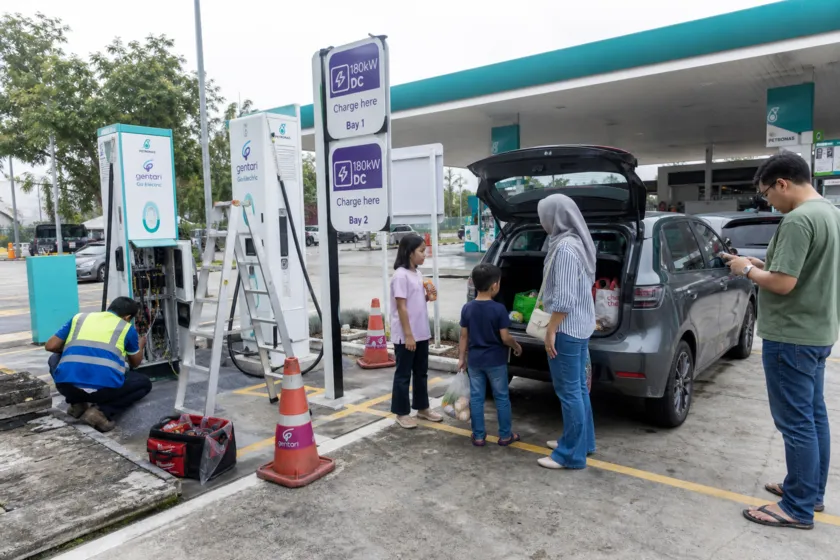
Malaysia’s EV charging market is moving from a “more is better” mindset to a focus on what works in the right place. According to MARii, the country’s charging network has reached only about half of its national target. That gap matters because demand signals are rising. In March, EV registrations reached 4,717 units, up more than 50% year-on-year. Total registrations in the first quarter doubled compared with the same period last year. These numbers put pressure on planners to align access, reliability, and location strategy, not just installation counts.
One reason this shift is happening is that charger “fit” changes by use case. Industry players highlight a practical split: AC chargers suit dwell-time locations, while DC fast chargers belong on highway corridors. This is the core quality-over-quantity pivot now shaping Malaysia EV Charging Infrastructure decisions. The same sources note that higher fuel costs linked to geopolitical tensions in the Middle East have renewed interest in EVs and other transport options with more predictable energy expenses. That demand tailwind can help, but only if new sites are planned around real travel and parking patterns.
Where the Gaps Are Most Visible—and Why They Persist
Adoption dynamics also show why infrastructure confidence matters. A Malaysia-focused study using a survey of 522 respondents reports a strong value–action gap: 69% acknowledged EVs’ environmental benefits, yet only 1.1% owned one, while 42% had considered buying. The same research notes an EV market share of 0.6%, despite 143% growth from a small base. These figures underline how charging availability and perceived convenience can affect whether interest turns into ownership, especially when people are still weighing price perception and daily usability.
Opportunities are emerging beyond simply building new sites. Ken Research values the Malaysia Electric Vehicle Charger Operations Maintenance Services Market at approximately USD 140 million, based on a five-year historical analysis. That points to a business case for better uptime, servicing, and network performance as utilization grows. The same report frames the development of fast-charging networks across urban and rural areas as a significant opportunity. It also states that, in future, Malaysia’s EV sales are projected to reach 20,000 units, compared with 8,000 units in future, reinforcing why operations and maintenance must scale alongside installations.
Regional benchmarks offer context, but they must be read carefully. A separate Asia-Pacific analysis says the Asia-Pacific EV Charging Market reached USD 11.5 million in 2024 and is projected to reach USD 42. million, growing at a CAGR of 22.48% from 2025 to 2030. Meanwhile, an academic review on Malaysia emphasizes grid and power-system perspectives and compares Malaysia with leading EV markets such as China, the United States, Germany, and Japan. Taken together, these sources suggest Malaysia’s next phase should prioritize corridor fast charging, dwell-time AC charging, and stronger planning that links charging growth to power-system readiness and long-term scalability.
How far has Malaysia’s EV charging network progressed versus its target?
What recent EV registration figures suggest rising demand for charging?
How should Malaysia EV Charging Infrastructure balance AC and DC deployments?
What do surveys in Malaysia say about interest in EVs versus ownership?
What market opportunity is linked to charger operations and maintenance in Malaysia?