Green financing for sustainable construction is not only about “doing the right thing.” It is increasingly about cost of capital, lender confidence, and compliance readiness. Globally, green bonds, sustainability-linked loans, and climate-aligned investment criteria are pushing developers to adopt certified green buildings, with financial institutions rewarding energy-efficient and low-carbon projects with better lending terms. This broader shift sits alongside fast growth in green buildings: one global report estimates the green building market exceeded USD 530.2 billion in 2024 and is projected to grow to USD 1.39 trillion by 2034 at a CAGR of 10.2%. For project teams in Malaysia, this global direction matters because it shapes investor expectations, reporting habits, and the types of “bankable” sustainability features that funding partners increasingly want to see.
Malaysia also has its own signals that financing and policy support are real. According to MIDA (as cited in a Malaysia-focused overview), as of 2020 over 479 green-technology projects had been approved in Malaysia, amounting to RM2.23 billion in investment. The same overview argues that tax incentives and financing support can reduce the effective payback period of green projects, and it points to tools and programs such as GITA, GITE, GTFS, and green financing guarantees as part of the incentive landscape relevant to green construction. In practice, this creates a pathway for developers to link design choices (materials, energy measures, and building systems) to a financing story that speaks in investor language: risk reduction, clearer payback logic, and stronger long-term asset value framing.
How Regional Green-Building Momentum Shapes Funding Choices
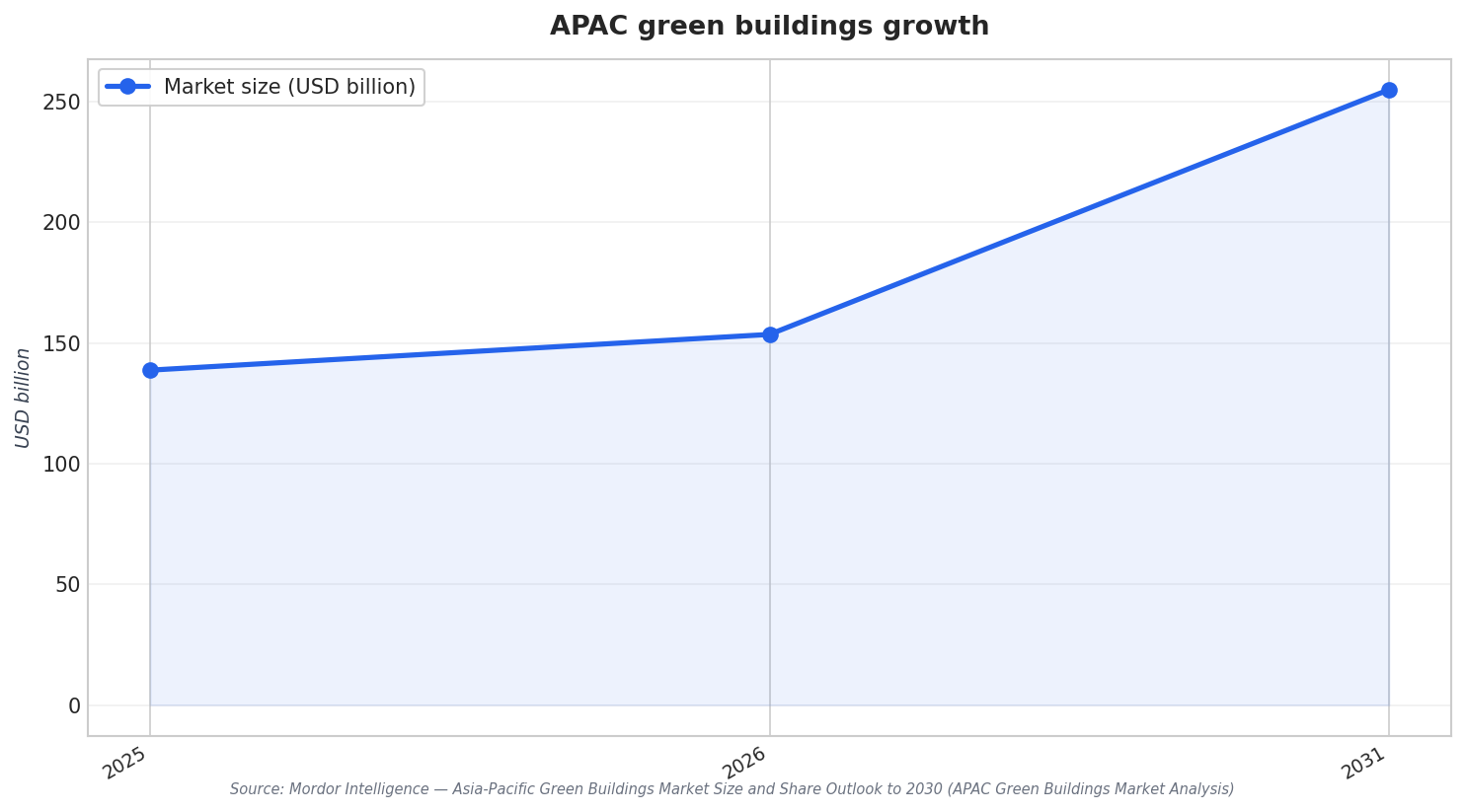
Regional context can also influence how construction finance evolves in Malaysia. In the Asia-Pacific green buildings market, the market size was valued at USD 138.71 billion in 2025 and is estimated to grow from USD 153.51 billion in 2026 to reach USD 254.87 billion by 2031, at a CAGR of 10.67% (Mordor Intelligence). Within that same Asia-Pacific dataset, New Construction generated 67.3% of revenue in 2025, while Renovation is forecast to grow at an 11.21% CAGR over 2026–2031. The report also notes building-automation platforms that cut operating costs by 20–30% as part of what is reinforcing growth dynamics. While these are Asia-Pacific figures (not Malaysia-only), they help explain why funders increasingly focus on measurable operating-cost impacts, clear performance pathways, and project types (new build vs. retrofit) when underwriting sustainability outcomes.
Financing readiness also depends on how projects are procured and governed. A Malaysia-focused study on green procurement notes that the 12th Malaysia Plan emphasized the Malaysian government’s strategic commitment to integrate environmental considerations into its procurement processes. The same study highlights challenges faced by the industry in green procurement implementation, including lack of commitment, low awareness and knowledge, and policy enforcement. It frames authority, accountability, policy, and knowledge as determinants that influence implementation. For developers seeking Malaysia Green Financing Construction outcomes, this matters because lenders and investors often look beyond drawings and specifications: they assess whether procurement rules, responsibilities, and compliance processes can consistently deliver what the financing terms assume.
For stakeholders assembling capital stacks, the practical takeaway is to align technical decisions with finance language early. Global market commentary emphasizes that collaboration between governments, financial institutions, and developers can accelerate sustainable construction, and it also points to the role of green debt instruments in steering funding toward environmentally friendly initiatives. In Malaysia, approved green-technology project activity and the stated direction in procurement policy provide local anchors for that narrative. When a project can show strong governance, clear procurement accountability, and credible performance outcomes, green financing structures are easier to justify—especially when paired with incentive pathways that are already positioned as supportive of green construction investment.
What does green financing mean for sustainable construction projects?
What local Malaysia fact supports the case for sustainable construction finance?
How does Asia-Pacific green building growth provide context for Malaysia projects?
What procurement issues can affect financing outcomes for green projects in Malaysia?
How should developers frame the Malaysia green financing and construction topic in funding discussions?