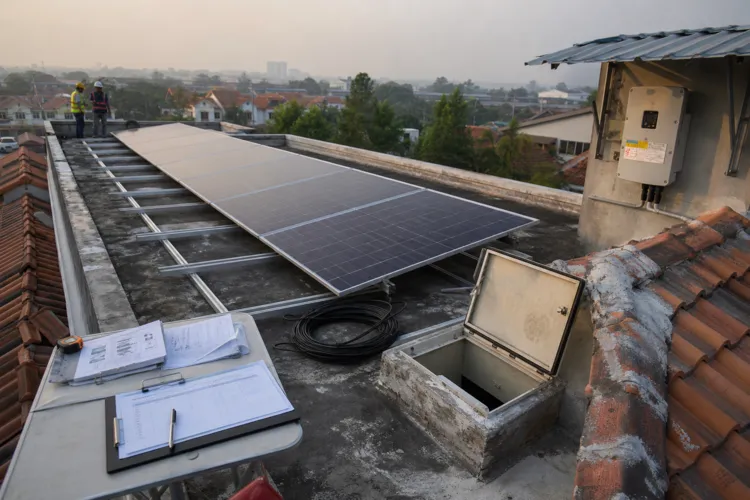
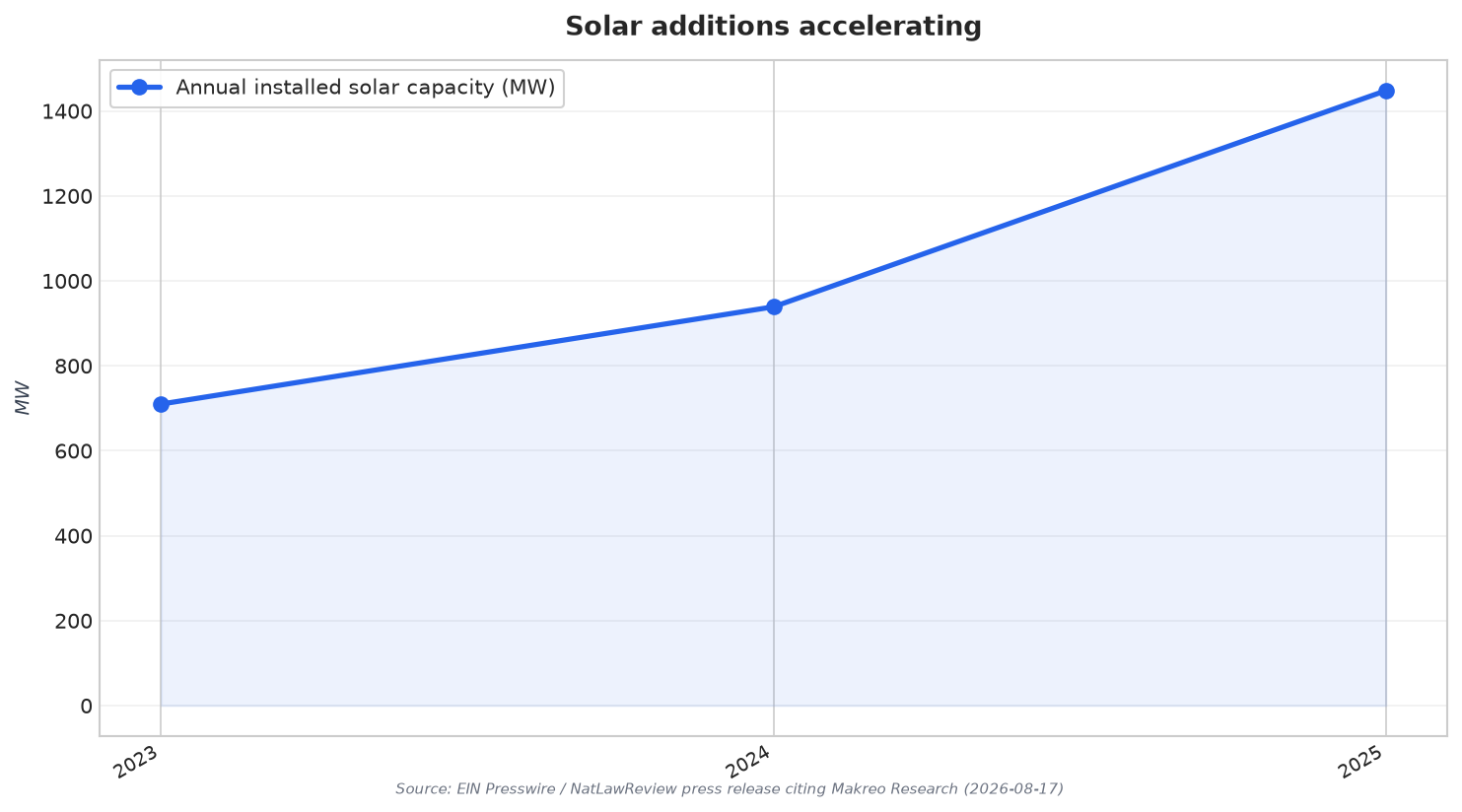
Malaysia’s solar market is entering a more infrastructure-intensive phase, where reliability and dispatchability matter as much as adding new megawatts. Makreo Research estimates the Malaysia Solar Energy Market is expected to generate approximately MYR 5.04 billion in revenue in 2026, following a CAGR of 31.23% from 2023 to 2026E. Installed solar capacity increased from 4,329 MW in 2024 to 5,777 MW in 2025, representing approximately 33% year-on-year growth. Annual additions also rose from 710 MW in 2023 to 939 MW in 2024 and 1,448 MW in 2025, underscoring the pace of expansion.
Within that context, LSS6 is positioned as the country’s largest-ever solar tender and the first to require Battery Energy Storage Systems (BESS) for every awarded project. Malaysia’s Deputy Prime Minister and Minister of Energy Transition and Water Transformation, Datuk Seri Fadillah Yusof, confirmed at the Energy Transition Conference 2026 that the new 2,000 MW tender round will require participating solar projects to be paired with battery energy storage systems. SolarQuarter also describes LSS6 as offering 2,000 MW (2 GW) of solar power capacity and highlights the mandatory storage inclusion as the key shift in programme design.
Why LSS6 Makes Storage Non-negotiable
New Energy Weekly frames the programme as a shift away from procuring intermittent generation as a standalone asset, because LSS6 couples 2.5 GW of photovoltaic capacity with 1.25 GW of batteries and is structured as three packages. Makreo and related press materials similarly report PETRA’s announcement of 2,500 MW of solar capacity together with 1,250 MW of battery energy storage system capacity, alongside a separate 150 MW solar allocation for Bumiputera companies in Peninsular Malaysia. The tender design is intended to place responsibility for integration on developers from the outset, rather than adding batteries later as a remedial measure.
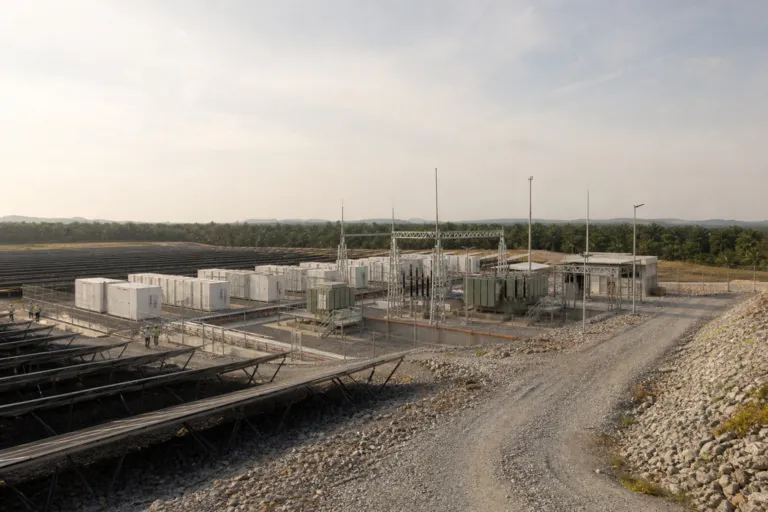
The policy rationale is tied to grid flexibility needs as solar capacity expands. Makreo notes that Malaysia’s solar capacity expanded rapidly through 2025, while storage deployment did not increase at the same pace, heightening the need for solutions that can manage daytime generation and improve dispatchability as renewable penetration increases. One referenced milestone is the 100 MW and 400 MWh Santong Battery Energy Storage System in Terengganu, positioned by PETRA as a grid-connected storage development capable of storing surplus electricity and supporting frequency stability. For bidders, New Energy Weekly notes that previous solar development experience is required, while battery project experience is not compulsory.
LSS6 also lands in a broader policy environment that increasingly treats solar and storage as a combined investment decision. Makreo links growth expectations to programmes and frameworks including NETR, Solar ATAP, CRESS, and MyBeST, with a stated government goal for solar’s share of Malaysia’s electricity generation to climb toward 14% by 2030 and 25% by 2035. Makreo’s press materials add that the programme is expected to mobilise approximately RM13 billion to RM15 billion in private investment. Taken together, Malaysia LSS6 is less about a simple capacity auction and more about procuring grid-ready, controllable clean power at scale.
What is LSS6, and what makes it different from earlier LSS rounds?
How much solar and battery storage capacity is tied to LSS6?
How fast has Malaysia’s installed solar capacity been growing ahead of LSS6?
What level of private investment is LSS6 expected to mobilise?
What does the Santong BESS project show about Malaysia’s storage push?