
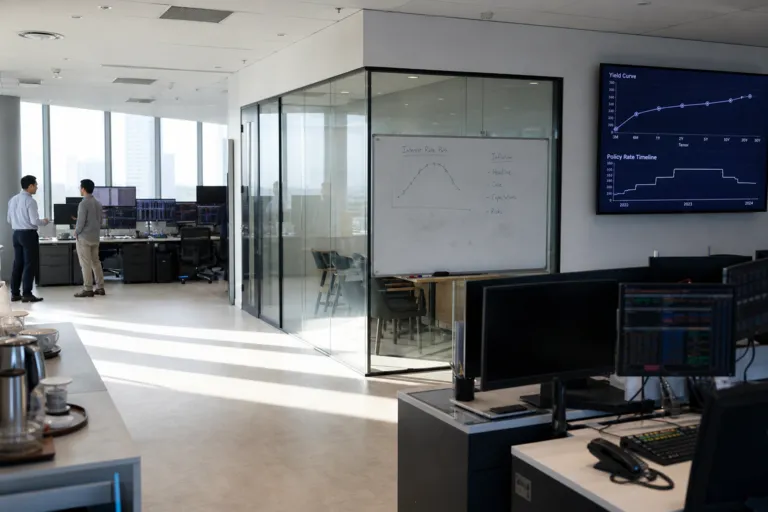
Expectations around Malaysia’s policy rate are turning into a 2027 debate, not a 2026 event. At its final Monetary Policy Committee (MPC) meeting of 2026, Bank Negara Malaysia (BNM) kept the overnight policy rate (OPR) unchanged at 2.75%. The OPR has been held at 2.75% since a 25-basis-point cut in July 2025. In Bloomberg surveys cited in reporting, most economists expected a hold, but a minority still looked for a hike. That split matters for planning, because it signals that the market is watching for a shift from “steady” to “normalisation” as early as the first quarter of 2027.
The case for holding, and the case for hiking, both show up in the same set of facts. Malaysia’s consumer prices rose 1.8% in September year-on-year, within the government’s 2026 forecast range of 1.5%-2.5%. For 2027, the government forecasts inflation of 1.8%-2.8% and expects it to pick up in early 2027 before easing later in the year. Meanwhile, growth has been firm: GDP rose 5.3% in the three months through September from a year earlier, and the economy expanded 5.5% during the first three quarters of 2026. This mix gives BNM room to wait, but also keeps the door open if price pressures broaden.
What Could Trigger a 2027 OPR Move—and When
Several forecasters frame a potential 2027 move as a small “normalisation” step rather than a tightening cycle. HSBC expects a 25-basis-point hike in the first quarter of 2027. OCBC Group Research, ANZ Research, and HSBC Global Investment Research also expect a 25-basis-point hike in the first quarter, while BIMB Securities Research anticipates a change in the second half of the year; Pantheon Macroeconomics expects no change throughout 2027. Kenanga Research likewise expects BNM to raise the OPR once to 3.00% in the first quarter of 2027. Separately, RHB Investment Bank expects a 25-basis-point hike during the first half of 2027. Together, these views shape the Malaysia BNM OPR hike 2027 conversation around timing, not direction.
For businesses and borrowers, the key is what BNM and analysts cite as risks. Geopolitical developments, elevated global commodity prices, and adverse weather conditions are flagged as inflation drivers for next year. Bloomberg Economics also warned that if an oil shock extends and the scope to subsidise lessens, second-round inflation effects become a growing risk. SPI Asset Management’s Stephen Innes said a move to 3% in 2027 “should not be ruled out,” particularly if higher energy and food costs feed into broader consumer prices, but he also stressed policymakers are not necessarily “in any particular hurry” and will assess the US Federal Reserve’s direction beyond December.
Borrower implications depend on whether normalisation arrives early or later in 2027. If the OPR were lifted by 25 basis points from 2.75% to 3.00%, borrowing costs could rise versus the post-July 2025 setting. For corporate planning, the underlying growth mix matters too. AmBank’s Firdaos Rosli noted that recent expansion was supported significantly by electrical and electronics trade, which may not translate into domestic demand-driven inflation, and warned that hiking in response to supply-side pressure could constrain growth. That combination suggests borrowers should plan for the possibility of slightly higher rates, while recognising that some credible forecasts still point to no 2027 change.
What is the current OPR level that frames a possible 2027 decision?
Is a move to 3.00% in 2027 being discussed by forecasters?
When do some economists expect BNM could raise the OPR in 2027?
What inflation signals are cited in the Malaysia BNM OPR hike 2027 debate?
How strong has Malaysia’s growth been going into 2027 planning?