
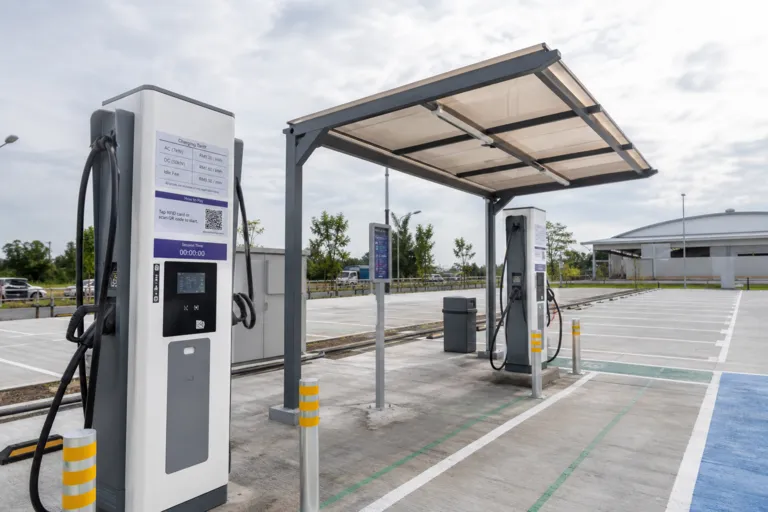
Malaysia EV charging pricing matters because consumers do not evaluate an EV only at the showroom. They also weigh the cost and convenience of keeping the vehicle moving day to day. Malaysia-focused research on EV adoption frames this as “price perception” alongside charging infrastructure and environmental consciousness, highlighting that affordability signals can shape attitudes early in a market’s development. Separate Malaysia sentiment evidence also shows that price-related discourse dominates conversations, with “price”, “affordable”, and “expensive” appearing prominently, while “charge time” and “battery” reflect practical concerns that sit next to cost in real purchase deliberations.
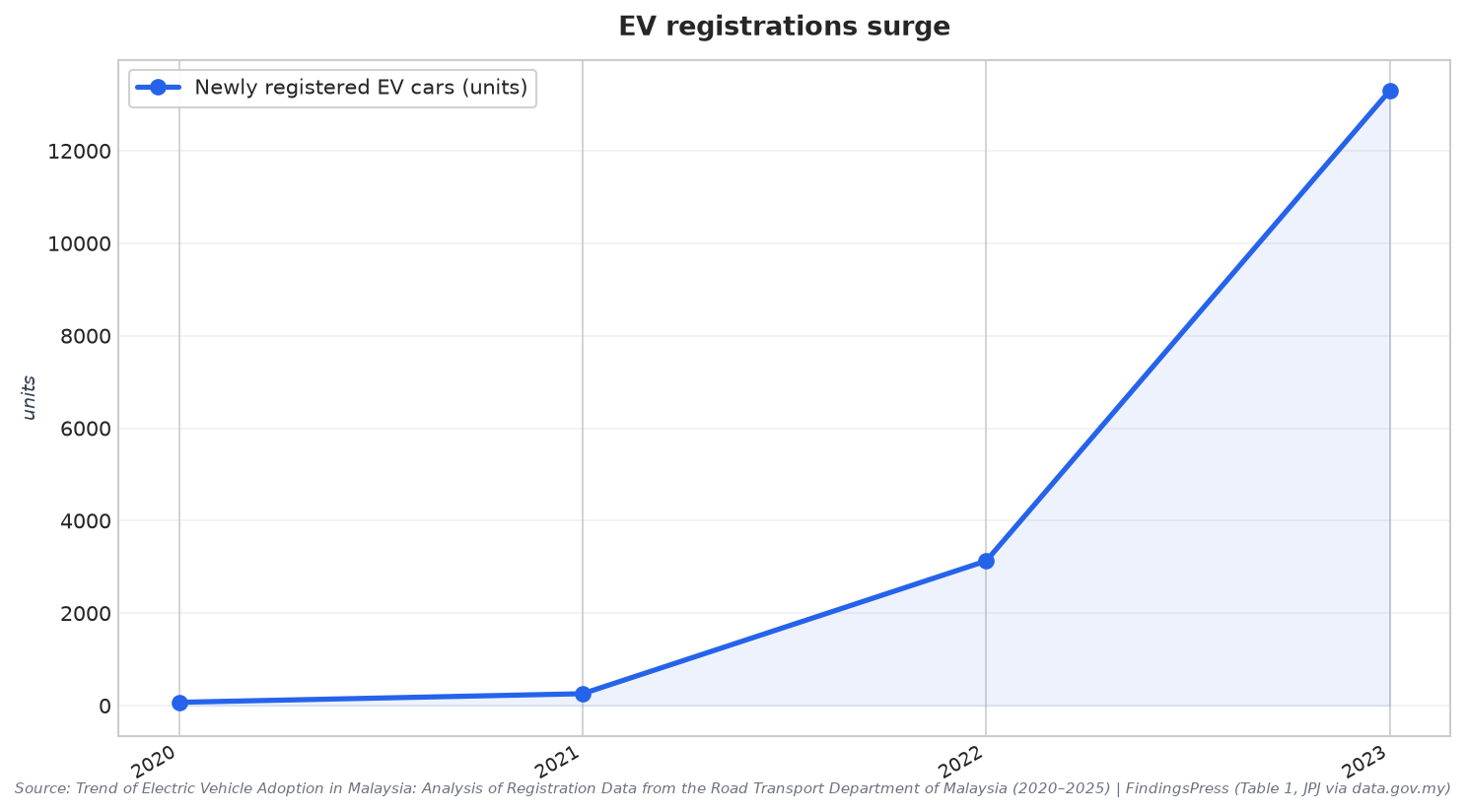
The link between tariffs and adoption becomes clearer when you place it next to Malaysia’s rapid registration growth. JPJ registration analysis reports that newly registered EV car counts were minimal in 2020 and 2021 at 71 and 257 units. Growth accelerated sharply in 2022, with registrations rising 1,117.5% to 3,129 units, coinciding with duty exemptions for CBU EVs under Budget 2022 and publication of the Low Carbon Mobility Blueprint. Momentum continued in 2023 with a further 325.1% increase to 13,301 units. Growth moderated in 2024 at 63.8% before re-accelerating in 2025 at 105.7%, coinciding with mass-market Chinese brands entering and the launch of the locally-assembled Proton e.MAS series.
Why Charging Tariffs Feel Like a “Second Price Tag”
Even without a single national tariff number in the available sources, the mechanism is visible: consumers talk about price and charging together. In Malaysia market sentiment evidence, “charging time” appears alongside price and affordability terms, suggesting that the perceived “cost of waiting” and the perceived “cost of charging” may blend into a single judgement about value. Research focused on Malaysia perspectives explicitly positions charging infrastructure and price perception as key factors influencing adoption. That pairing implies that tariff design and clarity can influence whether charging is seen as predictable and fair, or as another uncertainty layered on top of a high upfront purchase price.
Pricing also interacts with where adoption is already strongest. In 2025, EV car penetration is reported as highest in Melaka at 16.9% of state car registrations, followed by Pulau Pinang at 15.6%, Selangor at 12.6%, Pahang at 12.1%, Kuala Lumpur at 11.8%, and Negeri Sembilan at 11.1%. Penetration is lowest in Sabah at 2.2%, Sarawak at 4.6%, and Terengganu at 5.2%. The same registration analysis notes that Melaka’s elevated figure corresponds to a relatively small total car market of 694 registrations in the period. These differences matter because tariff choices can amplify or reduce perceived gaps in access and cost between high-uptake and low-uptake locations.
Nationally, Malaysia’s EV car market share is reported at 5.15% in 2025, and the same source provides regional context: this exceeds Thailand’s 3.5% and Indonesia’s 0.8% recorded in 2023, while also cautioning that direct comparison is limited by different reporting years. For Malaysia, the adoption curve shows that policy signals, brand availability, and consumer price sensitivity can move the market quickly. Within that reality, charging tariffs are not only a revenue tool. They become a message about whether running an EV will feel simple, stable, and worth it for the next wave of buyers.
How does Malaysia EV charging pricing influence EV adoption?
How fast did EV registrations grow in Malaysia from 2020 to 2025?
What happened in 2022 that coincided with a surge in EV registrations?
Which Malaysian states recorded the highest and lowest EV penetration in 2025?
What was Malaysia’s EV car market share in 2025, and how does it compare regionally?