Malaysia’s private health insurance affordability problem is no longer theoretical. The Health Minister, Datuk Seri Dr Dzulkefly Ahmad, said 340,000 private medical insurance policies have been surrendered because policyholders could no longer afford rising premiums, with more people turning to government facilities. That scale of surrender matters because letting a policy lapse does not remove the need for treatment. It changes where care is sought and who carries the risk when hospital bills arrive. The outcome is pressure on families and on the public system at the same time.
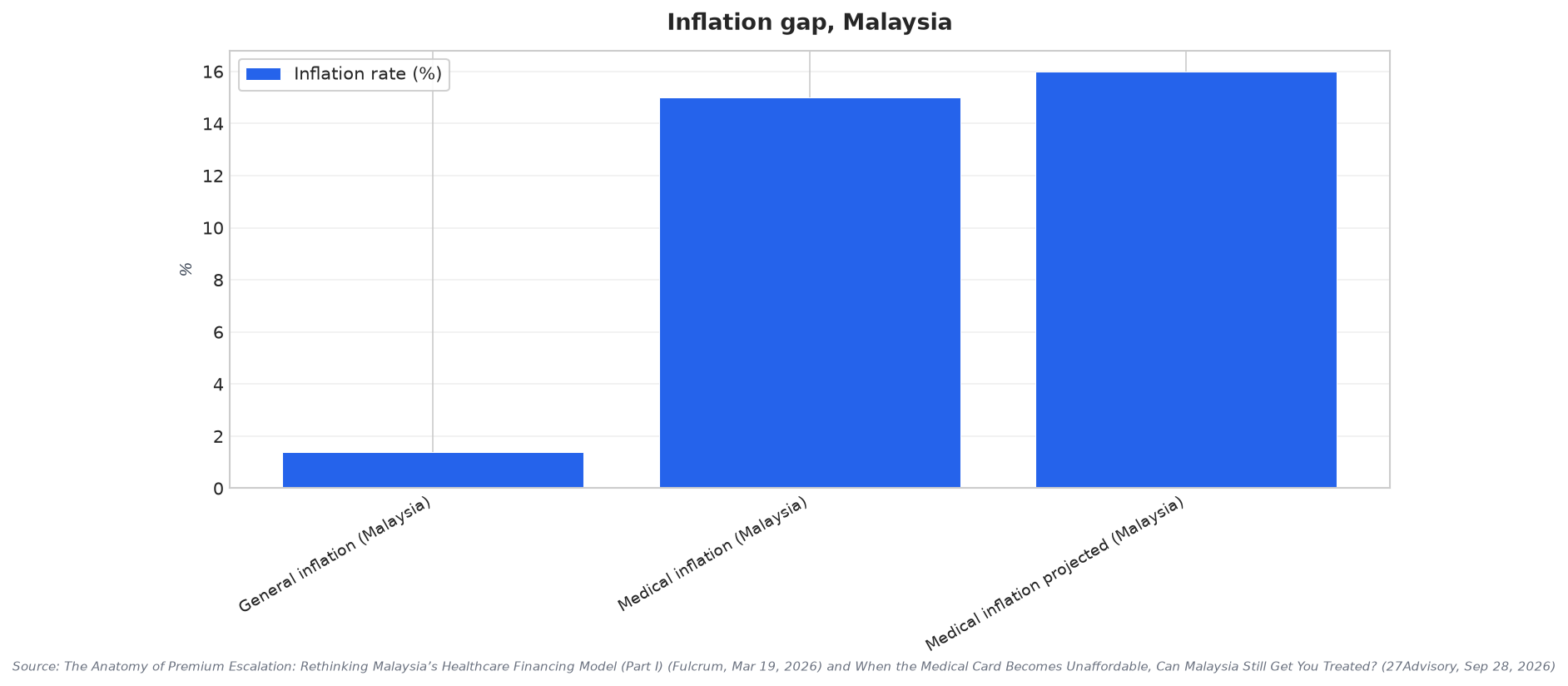
Part of the squeeze comes from the widening distance between medical inflation and broader prices. One analysis cited medical inflation reaching 15 in 2024 and projected to rise above 16% by 2026, while general inflation was 1.4%. When medical costs rise that much faster than the rest of the economy, premium increases can feel abrupt even when they reflect claims pressure. The same analysis described aggressive repricing by insurers and takaful operators when claims ratios exceed stipulated rates for premium collections, making long-term affordability harder, especially when wages do not keep pace.
Why Repricing Relief Helps—But Doesn’t Close the Gap
Bank Negara Malaysia’s interim measures, in place since December 2024, were designed to slow the shock of repricing rather than freeze prices. The measures spread repricing caused by medical claims inflation over a minimum of three years through the end of 2026, and are expected to keep at least 80% of affected policyholders under 10% a year. There was also a one-year pause for policyholders aged 60 and above on their plan’s minimum tier, counted from their policy anniversary, though it does not apply to higher tiers or increases from moving age bands. Insurers were required to offer alternative products at the same or a lower premium by the end of 2025.
Still, households making renewal decisions face trade-offs that can lead directly to surrender. A Malaysian family confronting a renewal notice may pay more, cut other spending, downgrade to a lower limit or bigger co-payment, switch insurers, or let the policy lapse. Public care remains heavily subsidised, which shapes consumer behaviour. The Edge reported that outpatient treatment at public hospitals costs RM1, specialist consultations including basic tests at Hospital Kuala Lumpur cost RM5, and more advanced scans or imaging are only RM50 to RM100 more. Yet the same report pointed to push factors like longer waiting times, overcrowding, and strain on healthcare workers that drive middle-class patients toward private care when they can still afford it.
Policymakers are now trying to bend the cost curve behind premiums. RESET, a joint MOH-MOF-BNM strategy, includes a reference price guide for common private procedures published by the insurance and takaful industry in January 2026, plus a shift toward diagnosis-related group payment to make billing more predictable. The World Bank noted Malaysia’s sharp increases in private health insurance and takaful premiums and described interim premium adjustment measures (2024–2026) and RESET as key responses, while also finding suggestive evidence that moral hazard from both patients and providers contributes to utilization, with claim amounts substantially higher when moral hazard is present. Looking ahead, MediAsas is being piloted through 2026, with a nationwide launch planned for 2027, positioned as a more affordable base option even as final premiums are not yet set.
What is driving Malaysia’s wave of medical policy surrenders?
How big is the medical inflation gap mentioned in the sources?
Do Bank Negara Malaysia’s interim measures cap premium increases at 10%?
What does public treatment cost compared with private cover costs discussed in the article?
What does the Malaysia medical insurance surrender trend mean for coverage options in 2027?