

The Malaysia e-commerce consumer increasingly expects convenient shopping, competitive prices, trusted platforms, and flexible digital payments. Yet online adoption does not eliminate differences in cultural preferences or the importance of physical retail. Brands need to connect digital convenience with local relevance and a compelling value proposition.
These developments are examined in The New ASEAN Consumer, a 2023 whitepaper by Eurogroup Consulting produced for the French Foreign Trade Advisors (CCE) APAC Forum.
Drawing on interviews with digital commerce executives and regional business cases, the study explores how platforms such as Lazada, Shopee, and Grab influence consumer behaviour across Southeast Asia.
Malaysia offers a useful example of how shared digital platforms can serve diverse consumer groups while supporting different purchasing habits.
How Do Malaysian Consumers Shop Online?
Malaysia's digital shopping environment combines online marketplaces, mobile applications, social media, and physical stores.
Consumers use platforms to discover products, compare prices, assess reviews, and complete transactions.
However, purchasing journeys can extend across several channels.
A shopper may discover a product through social media, compare alternatives on a marketplace, and visit a physical store before making a decision.
The whitepaper highlights how digital adoption was already changing these behaviours when the study was published.
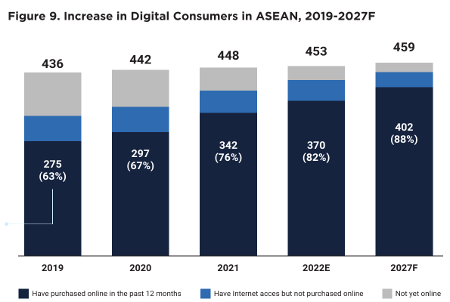
Across Southeast Asia, approximately 460 million people were internet users in 2022, according to data cited in the report.
This regional figure provides context for Malaysia's digital retail environment but should not be interpreted as a Malaysia-specific statistic.
For brands, the important question is not simply whether consumers shop online. It is how digital platforms influence purchasing decisions across the entire customer journey.
The New ASEAN Consumer whitepaper examines the changing relationship between e-commerce, physical retail, and consumer expectations.
Lazada's View of Malaysia's Diverse Digital Market
Malaysia's multicultural consumer landscape requires brands to understand different purchasing preferences and communication needs.
However, shared digital platforms increasingly connect consumers across communities.
In the whitepaper, Fabian Teja Boegershausen, Category Director – General Merchandise at Lazada, explains:
"You're going to shop on either Lazada or Shopee for the best and cheaper deals."
His observation forms part of a wider discussion about how digital platforms serve consumers from different cultural and religious backgrounds.
The implication is that a shared shopping platform does not necessarily create identical consumer preferences.
Businesses should understand several dimensions of the Malaysian customer journey:
- Platform behaviour: Identify where target consumers discover, compare, and purchase products.
- Local preferences: Adapt product positioning, language, and promotions to relevant customer segments.
- Trust and credibility: Use clear product information, reviews, and reliable fulfilment to build confidence.
- Value expectations: Communicate why a product is worth purchasing, particularly when competing alternatives are readily available.
Lazada's experience also highlights the importance of influencer marketing and maintaining a presence across relevant digital channels.
However, brands should select platforms and creators according to their audience rather than assuming that every channel offers the same commercial value.
Grab Shows the Power of an Integrated Consumer Platform
Grab provides an example of how a digital business can expand by responding to several everyday consumer needs.
Launched in Malaysia in 2012 as a ride-hailing application, Grab subsequently expanded across Southeast Asia.
The whitepaper's business case describes how Grab developed additional services, including food delivery, logistics, and digital payments.
These activities allow customers to access different services through an integrated application.
The model illustrates the commercial potential of connecting convenience, service quality, and customer engagement.
Rather than focusing on a single transaction, Grab built a platform designed to encourage continued use across different activities.
Its approach also relies on local service providers, customer feedback, and market-specific operations.
For consumer brands, several lessons are relevant.
First, convenience can create value beyond the price of an individual product.
Second, integrated services can reduce friction and encourage repeat engagement.
Third, customer trust depends on consistent service quality, reliable fulfilment, and effective support.
Grab demonstrates how digital platforms can become part of daily purchasing routines when their services address recurring consumer needs.
Omnichannel Retail Is Becoming a Business Necessity
Digital growth does not make physical retail irrelevant.
The whitepaper emphasises that businesses need to integrate online and offline channels to provide consistent customer experiences.
Consumers may move between social media, marketplaces, applications, and physical stores before completing a purchase.
For retailers, this requires coordination across marketing, inventory, payments, delivery, and customer service.
Key Components of an Effective Omnichannel Strategy
- Digital discovery: Relevant content, social media, and marketplace visibility.
- Product evaluation: Clear information, reviews, and transparent pricing.
- Convenient purchasing: Simple checkout, appropriate payments, and channel flexibility.
- Reliable fulfilment: Consistent delivery, stock availability, and customer support.
- Customer retention: Loyalty programmes, relevant offers, and after-sales engagement.
Digital payment options are also important.
The study highlights growing interest in electronic wallets and Buy Now Pay Later arrangements as part of a convenient shopping experience.
However, payment preferences differ by customer segment and purchasing occasion.
Brands should assess which payment methods their target customers actually use rather than introducing options without sufficient demand.
Why Value for Money Still Shapes Malaysian Shopping
Digital access gives consumers more opportunities to compare prices, products, and brands.
This increases competition and can make customer retention more challenging.
Bain and Meta research cited in the whitepaper found that 53% of surveyed Southeast Asian consumers had switched their most-purchased brand during the preceding three months in 2022.
The same research found that 65% said they would switch if their preferred brand was unavailable.
These findings concern ASEAN consumers overall rather than Malaysia alone.
Nevertheless, they illustrate the importance of availability, competitive positioning, and consumer experience.
Several considerations are relevant for Malaysian brands:
- Competitive pricing: Understand how customers compare products and evaluate alternatives.
- Perceived quality: Explain product benefits, durability, and performance rather than relying solely on discounts.
- Availability: Maintain reliable stock and fulfilment across relevant channels.
- Customer retention: Use service quality, personalisation, and meaningful loyalty benefits to encourage repeat purchases.
For Malaysian consumers, value can involve price, quality, convenience, reliability, or a combination of these factors.
Brands need to determine which benefits matter most within their target product category.
For businesses seeking deeper customer insights, Malaysia consumer behavior analysis services can support purchasing behaviour research, customer segmentation, and channel assessment.
Companies evaluating retail expansion or digital growth can also contact Market Research Malaysia to discuss consumer research requirements.
Frequently Asked Questions
Which digital platforms do Malaysian consumers use?
Malaysian consumers use digital marketplaces such as Lazada and Shopee, service platforms such as Grab, and social media channels for product discovery and engagement. Platform preferences vary by product category, customer segment, and purchasing occasion. Brands should identify which platforms are most relevant to their target audience.
What is omnichannel retail in Malaysia?
Omnichannel retail connects online, mobile, and physical shopping experiences so customers can move between channels more conveniently. For example, a customer may compare products online before purchasing in-store. Effective omnichannel strategies require consistent product information, suitable payment options, reliable fulfilment, and coordinated customer support.
Are Malaysian consumers loyal to particular brands?
Brand loyalty depends on product quality, pricing, availability, and customer experience. The 2023 whitepaper cites ASEAN-wide Bain and Meta research showing significant brand switching in 2022. These regional findings indicate competitive pressure, although businesses need Malaysia-specific research to understand loyalty within individual categories.
What can retailers learn from Grab's business model?
Grab demonstrates how integrated services, convenience, local partnerships, and customer engagement can support repeat platform use. Its expansion from ride-hailing into additional services illustrates the value of addressing several related consumer needs. Retailers can apply similar principles through connected shopping journeys and consistent customer experiences.
What payment options matter for Malaysian online shopping?
Relevant payment options can include cards, bank transfers, electronic wallets, and Buy Now Pay Later services. Consumer preferences depend on the platform, product, and customer segment. Brands should evaluate payment accessibility, transaction reliability, checkout convenience, and relevant regulatory requirements when designing digital purchasing experiences.
Understand Malaysia's Digital Consumer Beyond the Platform
Malaysia's digital shoppers expect more than online access. Convenience, local relevance, perceived value, and a consistent purchasing experience all influence how brands compete.
For retailers, consumer brands, and business leaders, The New ASEAN Consumer provides deeper analysis of digital commerce, customer expectations, expert interviews, business cases, and strategies for growth across Southeast Asia.