
Malaysia’s battery energy storage story is increasingly defined by grid-connected deployment and formal procurement. One market view expects the Malaysia Battery Energy Storage System Market to grow at a 17.45% CAGR over 2024 to 2032. In that same source, the largest connection type segment in 2024 is on-grid (grid-tied) systems, reported with revenue of USD 2.82 billion, and it is also described as the fastest-growing segment with a 17.51% growth rate for 2025–2032. This positioning matters because it links storage directly to how the power system operates, rather than treating batteries only as stand-alone backup.
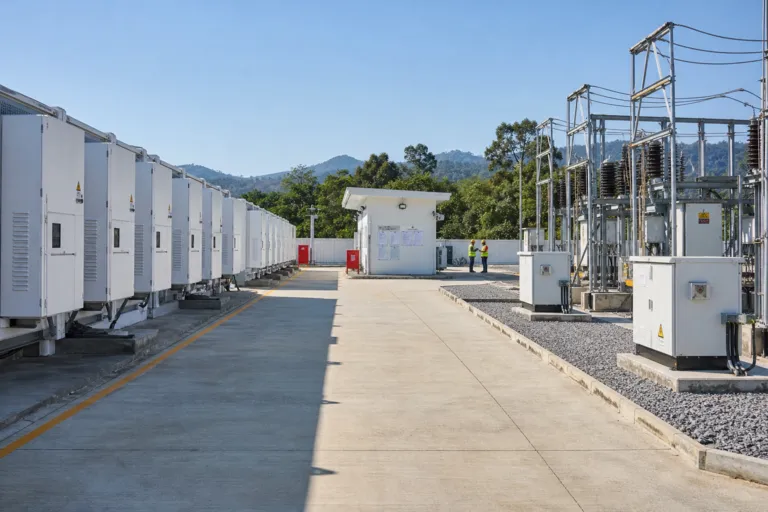
Competitive tenders and early utility projects add real-world signals on direction. Tenaga Nasional Berhad (TNB) commissioned a 100 MW/400 MWh battery energy storage system (BESS), described as using grid-forming inverters and designed to improve electricity supply stability on the East Coast of Peninsular Malaysia, while supporting renewable integration under the National Energy Transition Roadmap (NETR). In parallel, the Malaysia Battery Energy Storage System (MyBeST) solicitation launched in November 2024 seeks four grid-connected projects, each 100 MW/400 MWh, totaling 400 MW/1,600 MWh, targeted for commissioning in 2027. Together, these items show Malaysia progressing toward larger, commercially structured storage procurement.
Policy Signals and Price Trends Shaping Demand
Policy and economics are also pulling storage into more projects. A market report notes that the Solar ATAP framework, introduced in January 2026, requires energy storage integration for large-scale solar and community projects. The same coverage adds that SELCO guidelines require batteries for rooftop solar systems exceeding 72 kWp. On the cost side, stationary storage pack prices are reported to have fallen to USD 70 per kWh, improving the commercial viability of solar-plus-storage in Malaysia’s commercial and industrial segments, and expanding opportunities in behind-the-meter storage, industrial microgrids, and renewable energy projects. These policy triggers and pricing shifts help explain why grid-tied storage is being prioritized.
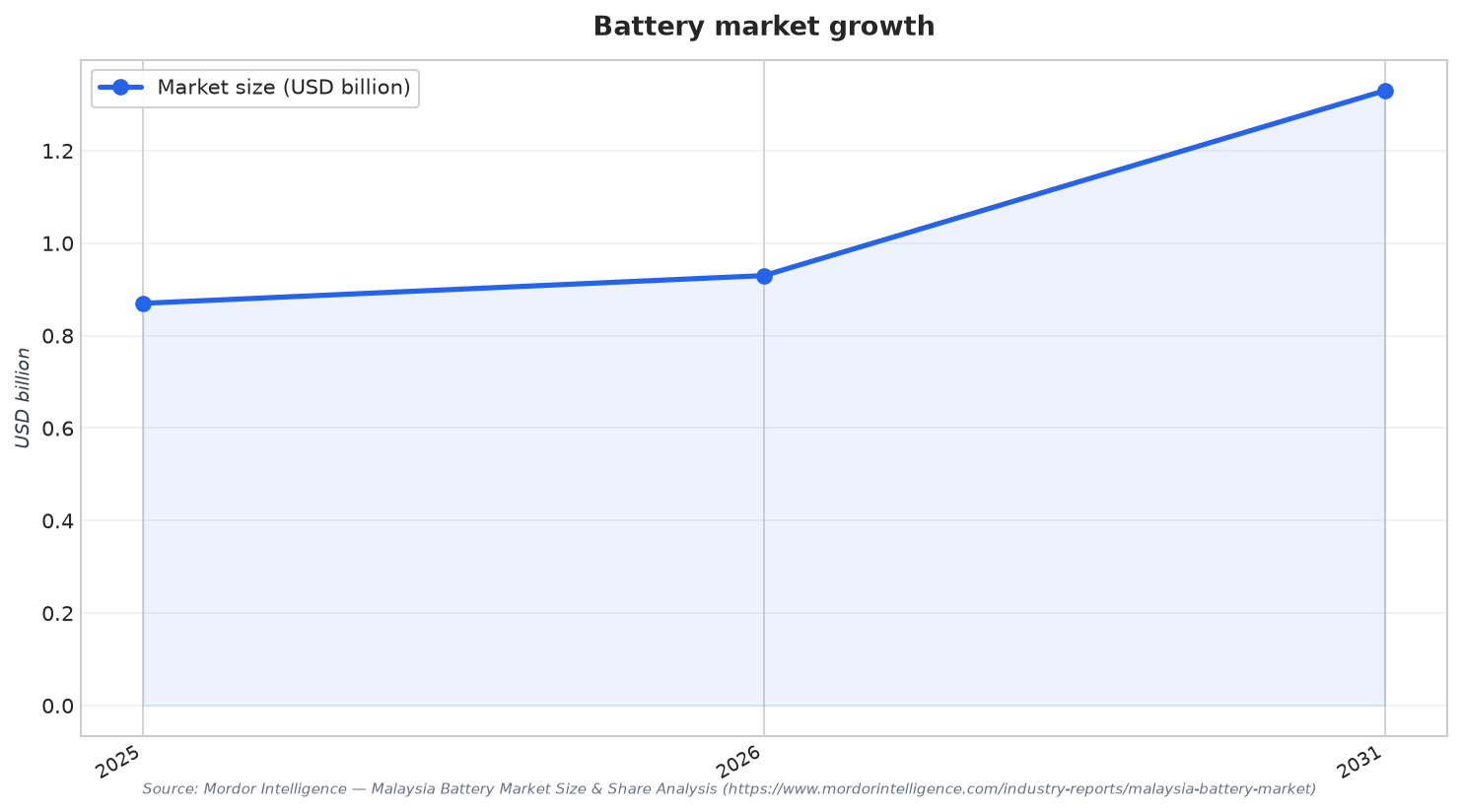
Looking wider than BESS alone, multiple sources outline growth in the broader battery ecosystem that supplies storage projects. One estimate projects the Malaysia battery market to expand from USD 0.87 billion in 2025 and USD 0.93 billion in 2026 to USD 1.33 billion by 2031, at a CAGR of 7.48% during 2026–2031. In that same view, secondary (rechargeable) batteries accounted for 88.1% of Malaysia’s battery market share in 2025 and are forecast to grow at a 7.9% CAGR through 2031. Another report values the Malaysia Battery Market at USD 1.31 billion in 2024 and projects USD 6.45 billion by 2032, and also describes batteries as “critical national infrastructure” aligned with NETR and the National Energy Policy 2022–2040.
The grid role is explicit in the targets and project design described in the sources. NETR is cited as targeting a 70% renewable energy capacity share by 2050, requiring an additional 14 GW of renewables, and calling for 500 MW of battery storage deployments by 2030 with continued expansion thereafter. The commissioned 100 MW/400 MWh TNB facility is framed as a stability asset, while the 400 MW/1,600 MWh MyBeST tender indicates scale-up. For stakeholders evaluating Malaysia battery energy storage systems, the practical takeaway is that the market is being built around grid services—stability, renewable integration, and structured procurement—supported by mandates and falling pack costs.
What is the MyBeST tender size in Malaysia?
What BESS project has TNB commissioned for grid stability?
Which segment is highlighted as the largest in Malaysia’s BESS market in 2024?
How do policies like Solar ATAP affect storage demand?
How are Malaysia battery energy storage systems being positioned in the grid?