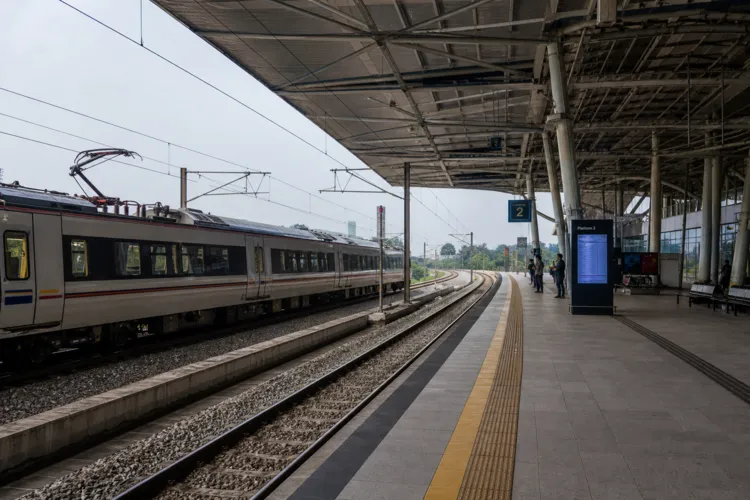
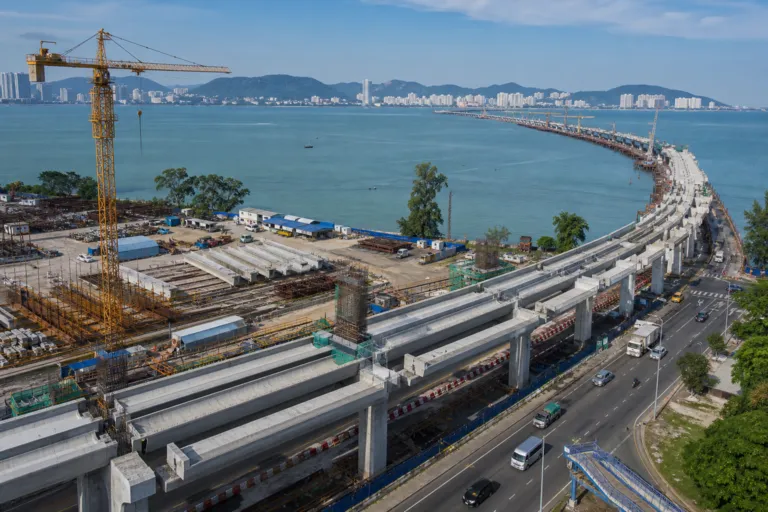
The Penang LRT Mutiara Line is a light rapid transit system under construction that aims to reshape how people move across Penang Island and connect to Seberang Perai. The line is planned at 29.5 km and will connect George Town’s city centre with southern suburbs including Jelutong, Gelugor, and Bayan Lepas, with a link towards Seberang Perai across the Penang Strait. It is described as the first domestic LRT line outside the Klang Valley and a component of the Penang Transport Master Plan (PTMP). The project comprises 22 stations, and construction began in 2025, with completion stated as December 2031.
The alignment responds to intense demand on the island’s north–south travel corridor. Wikipedia’s PTMP overview notes that, as of 2018, average daily traffic along the city centre–Bayan Lepas axis reached 64,144 vehicles. The same overview also frames the line as useful for tourism access, stating that the transit service would facilitate easier commutes for tourists arriving via the Penang International Airport. The line’s history also reflects multiple resets. It was previously introduced as the Bayan Lepas line in 2015, received conditional federal approval in 2019, and was scheduled to begin in 2020, but delays followed due to the COVID-19 pandemic and a nationwide political crisis that led to shifting support.
A Cross-strait Link That Reframes Daily Commutes
A major feature of the current Mutiara Line plan is the cross-sea connection between island and mainland. The Star reports the RM16.8 billion project includes a 6 km cross-sea link connecting the Jalan Macallum area on the island to Penang Sentral in Butterworth, with published specifications indicating a vertical clearance of more than 60 m. A separate travel-focused report highlights a performance claim for the maritime link: a channel crossing time of eight minutes, contrasted with 82 minutes by car during rush hour. Penang Sentral is also positioned as a mainland interchange that links KTM rail, bus, and ferry services, supporting the idea that the rail line is designed to integrate with existing modes rather than replace them.
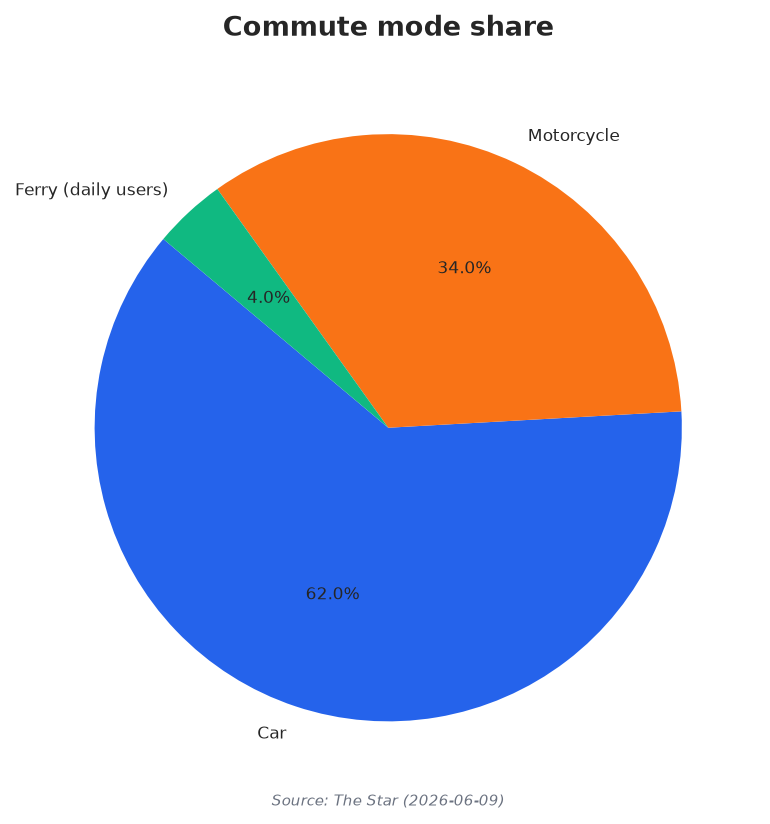
Ridership potential is frequently framed through daily movement patterns and visitor volumes. MRT Corp’s business planning and project economics general manager Liyana Zainal said about one million people engaged in economic activities on Penang Island daily. She also said around 400,000 people commuted daily between the island and mainland. Mode split details were also shared: 62% travel by car and 34% by motorcycle, while another 6,000 to 7,000 people use ferry services each day. She added that more than six million tourists visited Penang annually by land and sea, and argued these combined flows support demand for the rail investment and its cross-channel rail bridge.
Beyond the initial build, MRT Corp also signaled that the system can expand after completion. The Star reported potential extensions to Tanjung Bungah on the island, plus Bukit Mertajam and Batu Kawan on the mainland, with the suggestion tied to activity centres such as tourism and residential areas. Project progress has also been publicly tracked. The Star’s metro report described a working visit by Finance Minister II Datuk Seri Amir Hamzah Azizan to multiple construction sites, focusing on structural bridge works and readiness for a high-capacity public transportation project expected to enhance interconnectivity and public mobility. With ownership and development led by MRT Corp and a stated end date of 2031, the Mutiara Line is being positioned as a long-term mobility backbone for Penang.
What is the Penang LRT Mutiara Line and where will it run?
How many stations are planned and when is completion expected?
How fast could the cross-strait link be compared with driving at rush hour?
What key figures have been cited to support demand for the line?
Can the Mutiara Line be extended in the future?