Malaysia’s halal trade momentum strengthened in 2025. Halal exports reached RM68.52 billion, up 10.9% year-on-year, and the halal industry accounted for 4.3% of Malaysia’s total exports. This rise supported Malaysia’s position at the top of the Global Islamic Economy Indicator for the 12th consecutive year, based on the SGIE Report 2025/2026 by DinarStandard. In the SGIE sector rankings, Malaysia placed first in halal food, Islamic finance, and halal pharmaceuticals and cosmetics, showing strength from certification and trade facilitation through to export delivery.
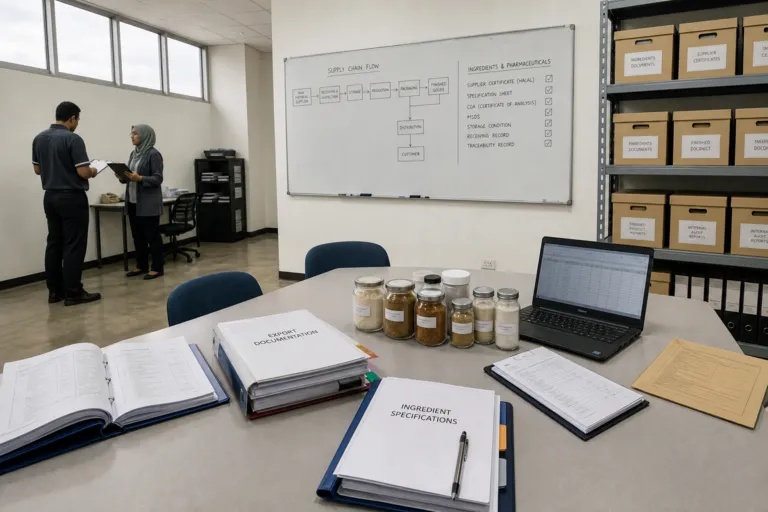
Within the export mix, the biggest driver remained food and beverage products. In 2025, the F&B segment contributed RM36.86 billion, representing 53.8% of total halal exports, while halal ingredients added RM21.39 billion, or 31.2%. Palm oil and its derivatives stood out for growth, rising 55% to RM4.57 billion. This structure matters for businesses planning the next phase of Malaysia halal food exports. The largest categories offer scale, but they can also be more price-sensitive, which increases the value of moving into higher-margin offerings where feasible.
Where Demand Is Concentrating: Leading Markets and Diversification
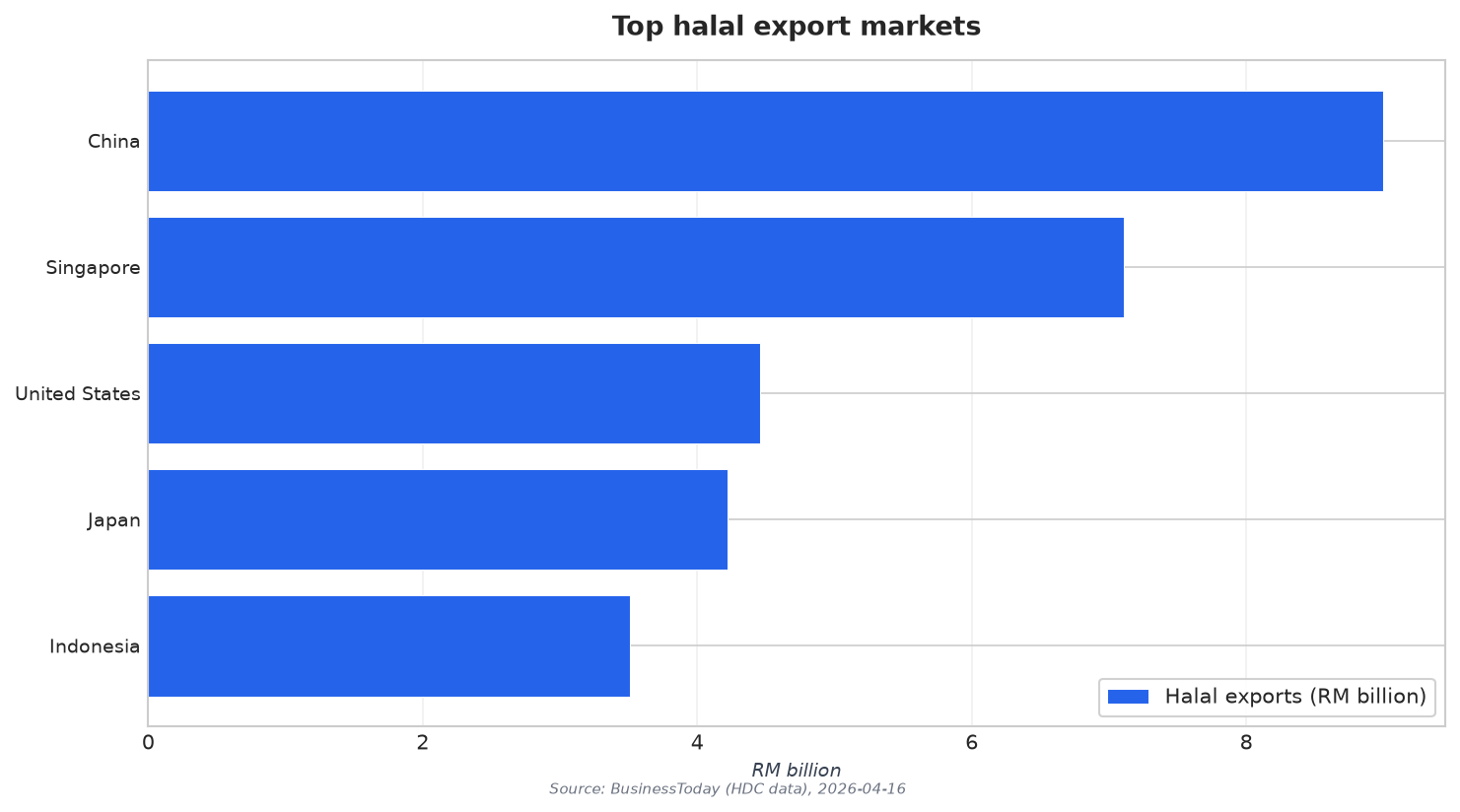
Export destinations show a diversified footprint rather than dependence on a single market. China led in 2025 at RM9.00 billion, or 13.2% of total halal exports. Singapore followed at RM7.11 billion (10.4%). The United States recorded RM4.46 billion (6.5%), Japan RM4.22 billion (6.2%), and Indonesia RM3.51 billion (5.1%). This spread across Asia and North America supports resilience when there are regional disruptions, while also signalling that certified halal products can reach both Muslim-majority and non-Muslim-majority economies through mainstream retail, food processing, and industrial use.
Growth is also easier to understand with a recent baseline. Government data cited for 2024 placed Malaysia’s halal exports at RM61.7 billion, before rising to RM68.52 billion in 2025. For strategy, that trajectory points to two parallel priorities: protecting the core F&B and ingredients engine, while building new ladders for value creation. HDC highlighted opportunities to expand higher value-added segments such as pharmaceuticals and specialised halal ingredients, which can offer stronger margins and longer-term potential but typically require more regulatory groundwork and investment to scale for overseas buyers.
On the global demand side, the SGIE-related figures provide a sense of why markets keep expanding. Muslim consumer spending worldwide reached US$2.6 trillion in 2024 and is projected to grow to US$3.56 trillion by 2029, representing roughly 37% growth over five years. The same report also flagged emerging opportunities such as digitalised halal certification, blockchain-enabled traceability, Islamic digital finance, and sustainable halal production. For exporters, these themes connect market access to proof, data, and trust—capabilities that can help Malaysian suppliers compete beyond commodity-style categories.
What was the value of Malaysia’s halal exports in 2025?
Which categories contributed the most to halal exports in 2025?
Which countries were the top destinations for Malaysia’s halal exports?
How big is Malaysia’s halal export sector compared with national exports?
What should businesses watch next in Malaysia halal food exports?