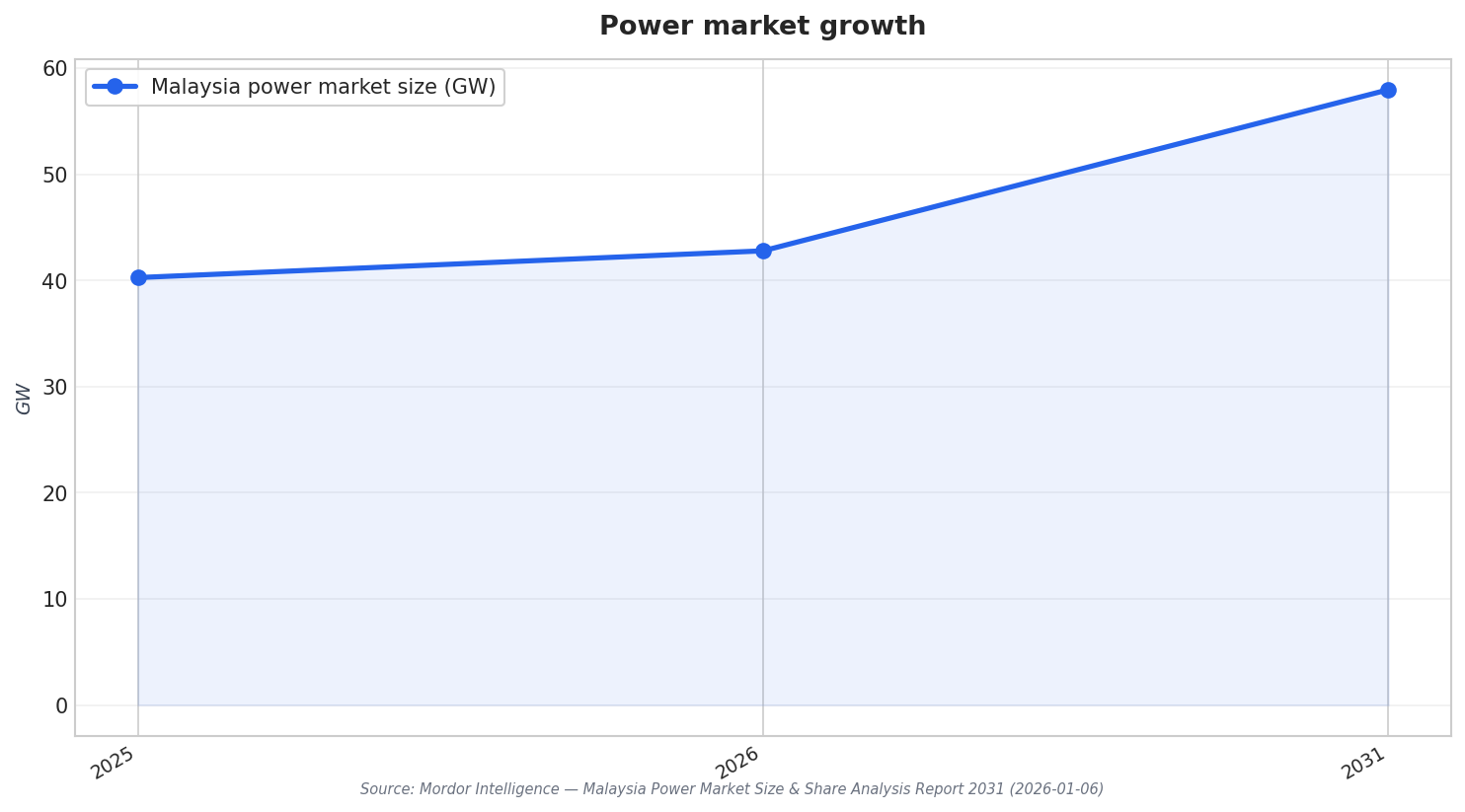
Malaysia’s power system is being pulled in two directions at once. Demand is rising fast, especially from semiconductors and data centers, while policy is pushing a sharper decarbonization curve. Mordor Intelligence estimates Malaysia’s power market size at 42.79 GW in 2026, up from 40.27 GW in 2025, with a projection of 57.97 GW by 2031. At the same time, electricity consumption in 2025 still relied on fossil fuels for nearly 78%, including nearly 45% coal and around 32% gas. That starting point explains why Malaysia’s transition plan must keep firm capacity available while renewables scale.
New load is not theoretical. Tenaga Nasional Berhad (TNB) has confirmed data-center applications totaling 11 GW, and the same 11 GW figure is also cited as a potential demand increase tied to data center investment. Mordor Intelligence adds that hyperscale data-center clusters account for 11 GW of new load applications, a figure that doubled in only two years, pushing TNB to accelerate generation and grid investments. TNB has also confirmed it will reserve 30% of its RM 16.3 billion contingent capital expenditure for unanticipated load growth. In this context, gas-to-power becomes a practical tool for system stability as coal plants retire and variable renewables expand.
How Renewables Scale Without Breaking Reliability
Renewables are positioned as the fastest-growing piece of the mix through 2030, but they are being built into a system that is still predominantly thermal today. Mordor Intelligence reports thermal technologies held 75.6% of the Malaysian power market in 2024, and a 74.92% share in 2025, while renewables are rising at a 22.89% CAGR through 2031. National targets are clear. The National Energy Transition Roadmap sets milestones of 31% renewable capacity by 2025 and 40% by 2035, with annual additions near 1.5 GW described as necessary to hit those goals. Separately, Malaysia is expected to expand renewable energy from 6 GW to 14 GW, reinforcing the scale of planned build-out.
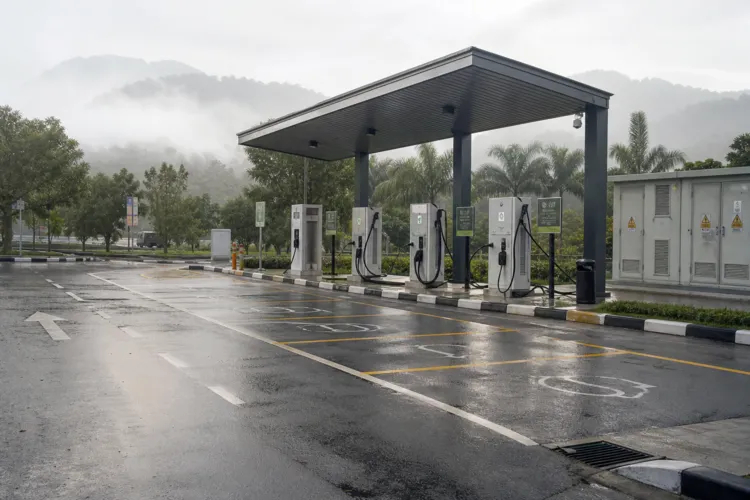
Storage and grids are central to making higher renewable penetration workable through 2030. Malaysia is planning battery energy storage systems (BESS) expansion to 500 MW by 2030 to store excess solar output for later use. On the network side, PETRA’s 2026–2030 strategic plan prioritizes grid resilience and long-term planning through the Peninsula Development Plan, alongside cross-border electricity trade via the ASEAN Power Grid initiative, including planned links involving Singapore, Thailand, Vietnam, and Sarawak. Malaysia is also scaling Advanced Metering Infrastructure, targeting approximately 800,000 smart meter installations annually in Peninsular Malaysia between 2026 and 2028, which supports demand-side management and better system visibility as renewables grow.
Policy signals add another layer to the balancing act between gas and renewables. Malaysia has pledged a 45% reduction in economy-wide carbon intensity against GDP by 2030 and set a goal to completely retire coal-fired power plants by 2044, with a net zero greenhouse gas emissions commitment by 2050. Market reforms are also moving procurement and planning closer to a more market-based structure, including an independent Single Buyer as market operator and new capacity market mechanisms. Against this backdrop, Wood Mackenzie notes Peninsular Malaysia accounts for more than 70% of national gas demand, with data-center expansion and coal-plant retirements fuelling a surge in gas-to-power demand into the 2030s. That is the core of the Malaysia Gas-Fired Power Expansion story: gas supports reliability while renewables, storage, and grid upgrades catch up.
What is driving Malaysia’s electricity demand growth into 2030?
How does Malaysia plan to grow renewable capacity while keeping the system stable?
What are Malaysia’s key renewable capacity milestones in the National Energy Transition Roadmap?
How is Malaysia gas-fired power expansion tied to coal retirements and new loads?
What investments is TNB making to handle unanticipated load growth?