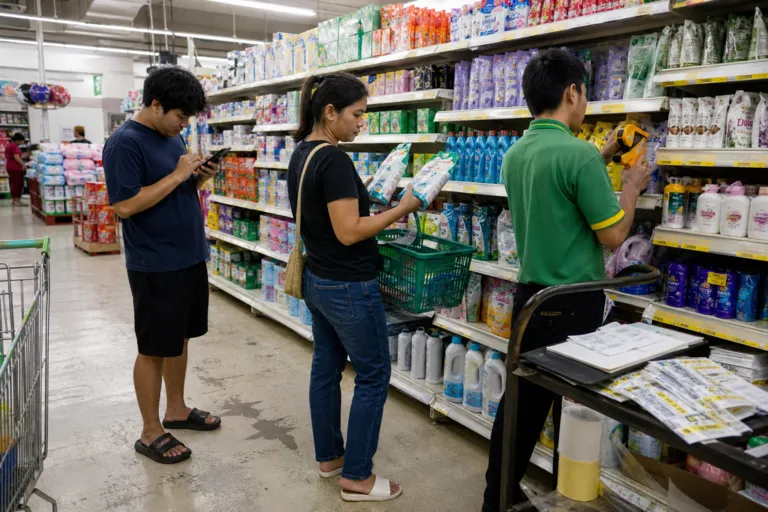
Malaysia’s expanded Sales and Service Tax (SST), effective from 1 July 2025, is a major shift in indirect taxation that can influence what households pay at the checkout. The framework aims to broaden the tax base while keeping daily essentials untaxed, using targeted exemptions to avoid widespread inflation. Still, consumer pricing can change quickly when tax is applied to categories of goods that were previously exempt and when more services used by retailers become taxable. The Finance Ministry projected additional SST revenue of RM5 billion in 2025 and RM10 billion by 2026, while another projection tied to the consumer goods impact estimates the policy can generate 5 billion ringgit (US$1.16 billion) annually.
On the goods side, the revised sales tax applies a dual-tier rate of 5% and 10% on consumer goods. The 5% rate generally covers near-essential imported items such as salmon, canned fruits, baby strollers, cosmetics, and smartphones. A 10% bracket targets higher-value discretionary products, including luxury leather goods, imported alcohol, antiques, and racing bicycles. Meanwhile, essential items such as local produce, staple foods, educational materials, and healthcare goods remain zero-rated to preserve affordability. For shoppers, this structure means price pressure can feel selective: stronger on imported and discretionary purchases, and muted for core everyday items.
Why Prices Can Rise Even When Essentials Stay Untaxed
The bigger day-to-day impact can come from services embedded in retail pricing. Under the expanded service tax scope, leasing of retail premises, warehousing, logistics, repair services, and advertising are subject to an 8% service tax, raising operating costs across the supply chain. A frequently cited example is an importer of skincare products that faces a 5% sales tax on the goods and an 8% service tax on leasing and transport services. Because these costs sit “behind the shelf,” they can still influence final prices even when a particular item is not taxed at the highest sales-tax tier.
Business groups and analysts also warn that the SST can have a “cascading nature” for firms with thin margins, especially SMEs, because multiple taxable steps can stack up before a product reaches consumers. The Federation of Malaysian Business Associations cautioned that any gains must be weighed against potential contraction in business activity and consumer spending. A spokesperson from the Malaysian Institute of Economic Research noted that sectors producing goods and services for end consumers may pass down some increased costs through market pricing. At the same time, experts told CNA the expansion is “necessary” for fiscal sustainability, noting Malaysia’s tax-to-GDP ratio is below 13%, compared with an Asia Pacific average of 19.3% in 2022.
Timing and compliance details also shape how quickly shoppers feel the change. While the SST expansion takes effect on 1 July 2025, enforcement begins on 1 January 2026, creating a transitional grace period through the end of 2025. Goods invoiced before 1 July but delivered afterward fall under special provisions, and businesses need systems to distinguish pre- and post-implementation transactions. The threshold for rental and leasing services, as well as financial services, was raised from RM500,000 to RM1 million, and beauty services were withdrawn from the final expanded service tax scope. For readers tracking the Malaysia SST Expansion Consumer Impact, the practical takeaway is that the sharpest price effects may cluster in imported near-essentials, high-end discretionary items, and in categories where taxable services are a significant part of the cost base.
When does Malaysia’s expanded SST take effect, and when does enforcement begin?
Which sales tax rates apply to consumer goods under the expanded SST?
What service tax rate can add to retailers’ and importers’ operating costs?
What revenue has been projected from the SST expansion?
What is the Malaysia SST expansion consumer impact expected to look like for everyday essentials?