
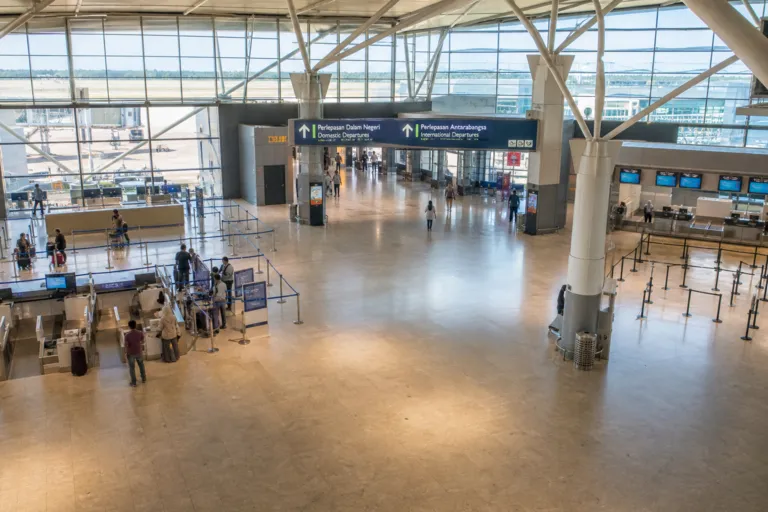
Malaysia air passenger traffic in 2026 is being shaped by two competing signals: high nationwide airport volumes and sharp short-term swings in demand and routing. From January through August 2026, total nationwide throughput reached 67.4 million passenger movements, and August alone recorded 8.4 million passenger movements. In the same August reporting, international passenger traffic expanded 4.1% month-on-month to 4.7 million travelers, supported by long-haul connections from Europe, the Middle East, and East Asia. Yet CAAM also recorded that O&D passenger traffic declined by 54.6% year-on-year in April 2026, underscoring how quickly market conditions can shift within the year.
Fleet expansion and renewal are a major driver behind the seat and frequency decisions airlines are making for 2026. Malaysia Aviation Group (MAG), the parent of Malaysia Airlines, closed FY2025 with revenue of RM14.5 billion and RM137 million NIAT, its fourth consecutive year of operating profit, and a doubling of bottom-line earnings from RM54 million in 2024. On the operating side, another Malaysia Airlines outlook report notes capacity grew by 7% year-on-year in available seat kilometers (ASK), supported by fleet expansion and network growth, with H1 2025 capacity growth also cited at +7% year-on-year. The same source reports non-airline revenue contribution at 18% of total revenue, a customer satisfaction index of 84% (YTD 2025), and on-time performance of 86.9% in August 2025, up from 69.8% in January.
Fleet and Route Choices: Where 2026 Capacity Is Being Placed
Malaysia Airlines is executing what one industry report describes as one of the largest dual-OEM fleet renewals in Southeast Asia, including a firm order for 18 Boeing 737-8 and 12 Boeing 737-10 aircraft, plus 30 options, alongside a doubled commitment of 40 Airbus A330neo widebodies through 2030. The 737 MAX fleet is expected to operate primarily on regional and domestic routes, complementing the A330neo on international services. On network planning, new 2026 route additions include direct services to Shenzhen, Changsha, and a return to Fukuoka, taking the China network to nine gateways and reinforcing Kuala Lumpur International Airport Terminal 1’s role for full-service intercontinental connectivity.
Low-cost carrier strategies are also central to the 2026 seat map. CAAM notes that its table of international carriers with the largest seat additions in 2026 consists entirely of low-cost carriers, which it interprets as a focus on price-sensitive markets and attempts to stimulate demand with lower fares and higher seat volumes. In a separate regional snapshot, OAG reported that capacity was reduced in Malaysia by 74,600 seats, alongside reductions in Vietnam and Singapore, illustrating that capacity is not moving in a straight line. On the demand side, Travel And Tour World reported Malaysia recorded over 10.6 million visitors in the first quarter of 2026, while also describing Malaysia Airlines increasing flight frequencies across ASEAN, South Asia, Australia, and New Zealand to capture both leisure and business flows.
Airport capacity and operations matter because they convert airline plans into usable throughput. KLIA operates as a dual-terminal hub with Terminal 1 for full-service carriers and Terminal 2 for regional low-cost carriers, while handling simultaneous widebody operations across three independent runways. The 2026 outlook includes specific route signals: CAAM expects increases in passenger flights and Malaysia Airlines’ fleet expansion to drive growth on Sydney and Perth routes, and it highlights AirAsia X’s new service to Istanbul to support inbound demand and future European connectivity. CAAM’s June 2026 waypoint also notes European itineraries shifting away from traditional Gulf hubs, with Istanbul (IST) emerging as a leading transfer hub, a context that aligns with airlines adjusting schedules amid jet fuel volatility and geopolitical tensions.
What do the latest airport totals suggest about passenger demand in 2026?
How is Malaysia Airlines expanding capacity through its fleet plan?
Which new Malaysia Airlines routes are highlighted for 2026?
What is CAAM’s key takeaway on low-cost carrier seat additions in 2026?
What is the outlook for Malaysia air passenger traffic 2026 amid volatility?