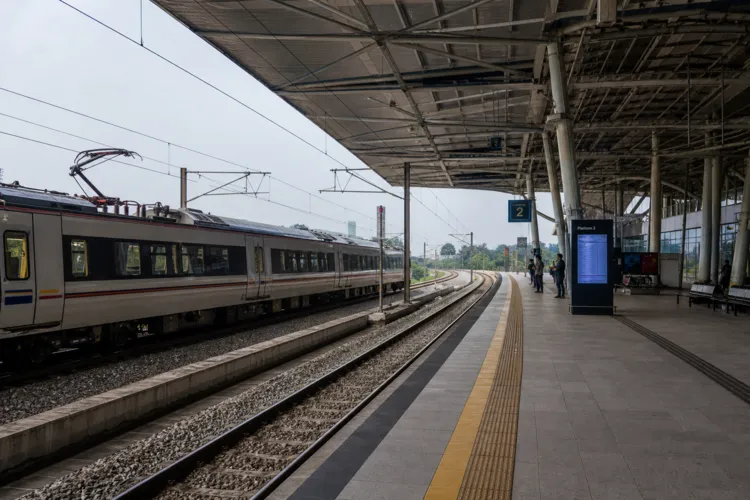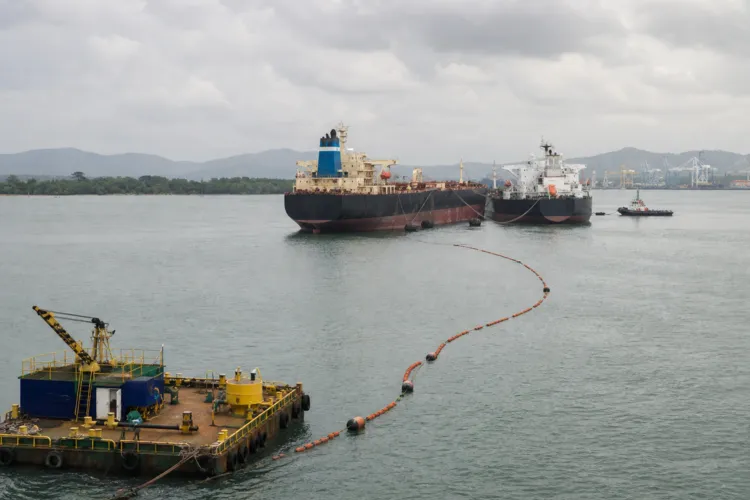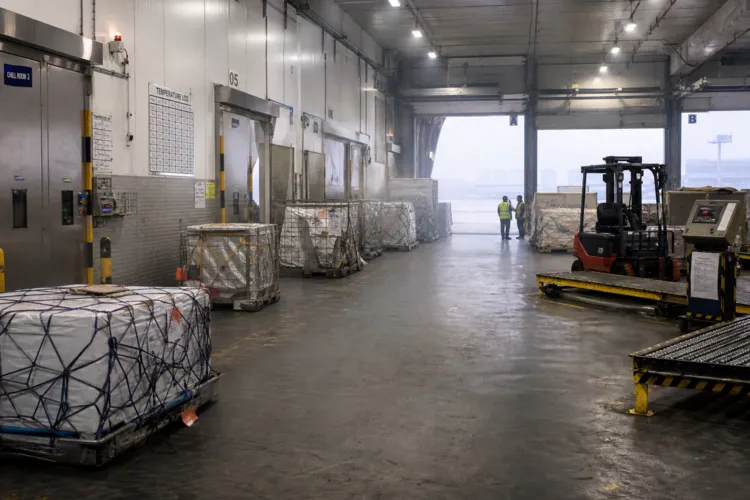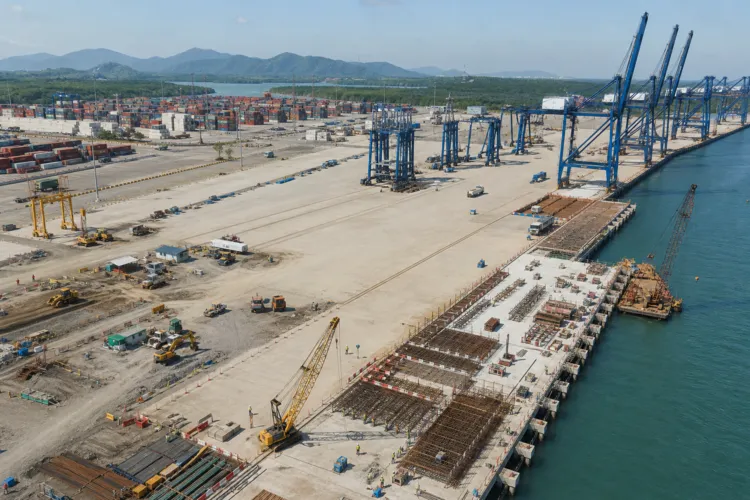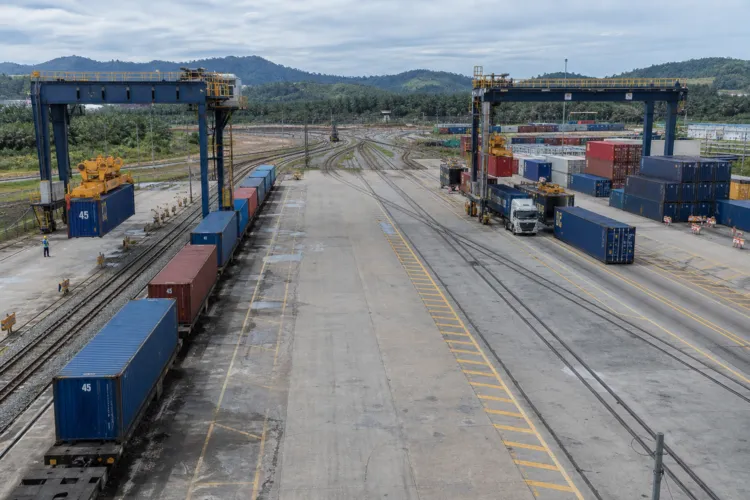
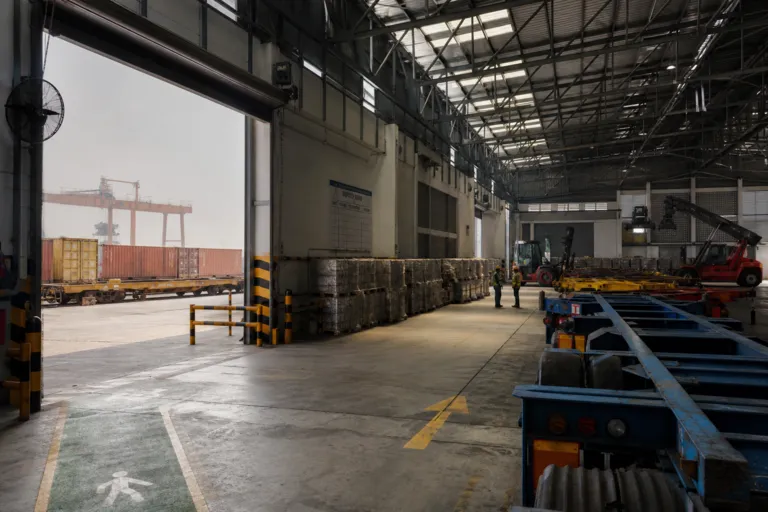
Inland ports and dry ports are increasingly used to move time-consuming functions away from crowded waterfronts. Industry reporting describes inland hubs as places that can take on customs clearance, container storage, and empty depot activities, reducing pressure on coastal terminals and shifting work inland. For Malaysia, this logic matters because demand is not uniform. The northern corridor is pulled by Penang’s electronics manufacturing base, while the east coast is pulled by capacity expansion at Kuantan Port and by new rail connectivity. In that context, Malaysia inland ports can be positioned as “bridge nodes” between seaports, production zones, and rail or road feeders rather than as stand-alone destinations.
Northern trade has a distinct freight signature that inland hubs can serve. Penang’s semiconductor cluster, with facilities linked to Intel, AMD, and Infineon, is associated with high-value and time-sensitive airfreight demand, helping anchor the northern corridor as a technology-driven node in the country’s freight logistics landscape. On the road side, domestic consignments accounted for 63.20% of Malaysia’s 2025 road freight transport market value, supported by a peninsular layout that moves raw materials from northern industrial states into Klang Valley consolidation hubs. That mix creates a clear use case for inland depots that can consolidate, stage, and hand off shipments efficiently without forcing every move through congested port gates.
Why the East Coast Rail Link Makes Inland Hubs More Valuable
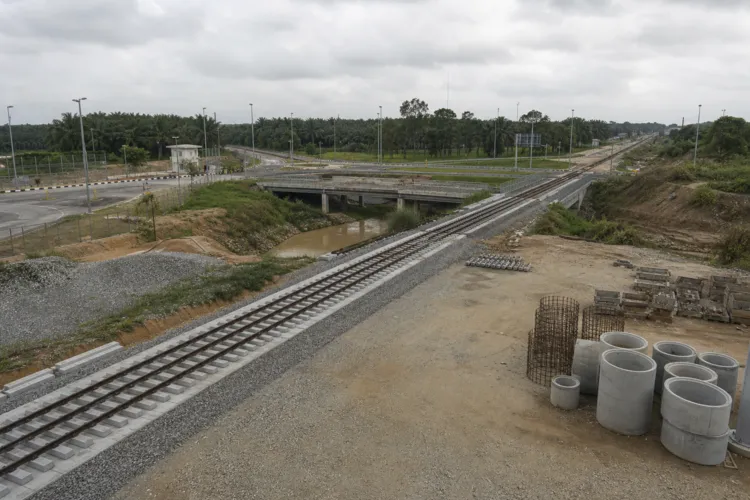
East coast trade has new momentum, and inland hubs can help translate it into smoother execution. Kuantan Port’s deep-water expansion raised annual handling capacity to 52 million metric tonnes, which is described as directly stimulating east coast freight activity. On top of that, the government has committed over MYR 9 billion to the East Coast Rail Link (ECRL), and one source states it is expected to cut freight transit time between Kuantan Port and Port Klang by roughly 50% upon completion. Separately, the 665 km ECRL is reported as 78.5% complete, with Phase 1 slated to start in January 2027. These facts point to a corridor where inland terminals near Kuantan and Kota Bharu rail hubs can become structured transfer points, supported by feeder trucks and local staging yards.
Road freight trends underline why inland depots are not optional add-ons. One outlook notes that chassis shortages at Port Klang still cause sporadic delays, and it adds that forthcoming inland depots in Perak and Negeri Sembilan should redistribute box flows and decongest terminal gates. The same road freight source also highlights how the ECRL, once live, will insert rail hubs at Kuantan and Kota Bharu that require feeder-truck support, encouraging operators to set up east-coast staging yards. At the same time, cost and labor constraints are real: a Malaysian industry association projected a shortage of over 25,000 skilled heavy-vehicle drivers by 2024, and spot-market haulage rates in the Klang Valley–Johor corridor have been rising by 12–15% annually. Inland hubs can help reduce wasted moves by enabling tighter staging and quicker modal transfers.
Globally, the role of inland container depots and dry ports is expanding alongside containerized logistics and multimodal planning, which helps frame Malaysia’s direction without assuming identical outcomes. One industry report values the global inland container depot and dry port market at $38.74 billion in 2025 and projects $69.73 billion by 2035, with a CAGR of 6.1% from 2026 to 2035. Another report highlights growing rail freight volumes as a driver, noting that rail freight volumes in the United States rose to 2.18 trillion tonne-km in 2023. In Malaysia, the practical near-term path is to align inland depots with decongestion needs, ECRL rail hubs, and the north–central consolidation pattern already visible in domestic road freight flows.
What roles can inland ports and dry ports play in Malaysia’s supply chains?
How do Malaysia inland ports connect to the East Coast Rail Link plans?
What is changing on the east coast that could increase demand for inland hubs?
What road freight pressures make inland depots attractive?