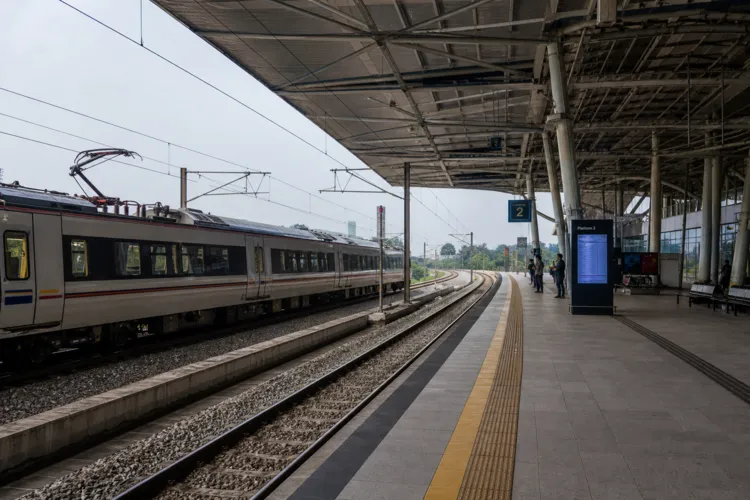
First- and last-mile gaps remain a practical barrier to getting more people onto rail-based public transport such as MRT and LRT systems. In Malaysia, the Ministry of Transport has framed this as a core focus under the National Transport Policy 2019–2030, with an emphasis on making access to stations and hubs more convenient and efficient. One visible response is Bus On-Demand (BOD), a form of demand-responsive transit that uses mobile app bookings. It does not run on fixed schedules or routes, but it does operate within approved service zones, which helps it act like a feeder connection rather than a replacement for trunk rail.
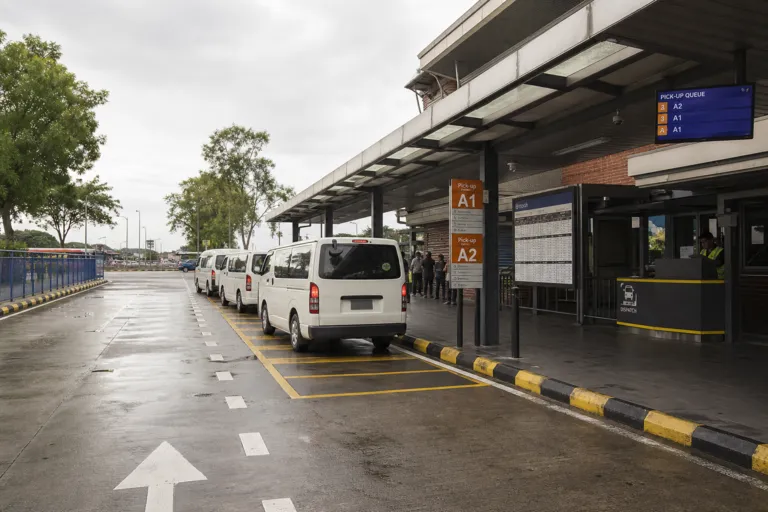
The current approach is positioned as a Proof of Concept for on-demand buses, and it is already being deployed at operational scale in Peninsular Malaysia. For the first quarter of 2026, four operators provided Bus On-Demand services across 123 approved operating zones, using 968 vehicles. In that same period, the service recorded 1.16 million trip bookings and served 1.37 million passengers. The model typically uses smaller vehicles such as minibuses, coasters, and vans, which can better fit short-distance feeder routes that link residential areas to major transit stations where fixed-route coverage may be less convenient for door-to-station travel.
What Makes Demand-Responsive Transit Work for First-Mile Connectivity
In market definitions, demand-responsive transit is described as algorithmically dispatched shared transportation that matches vehicles to real-time passenger requests through digital platforms, usually within defined zones. Services may use 8–15 seat vehicles or standard sedans, and the commercial role often centers on first-mile and last-mile connectivity to trunk transit networks, especially in lower-density corridors. Technology capabilities such as GPS tracking and automated dispatch are highlighted for reducing per-trip operational costs through dynamic vehicle repositioning and batching nearby requests. Data analytics can further differentiate platforms by enabling demand prediction and service optimization, which is critical when the goal is reliable connections to scheduled rail services.
Policy and planning signals in Malaysia also point toward continued attention on these flexible feeders. A national mobility trends brief noted that, as part of the 2026 national budget, new buses and enhanced rail links will include Demand Responsive Transit vans and additional commuter services intended to bridge first–last-mile gaps. Alongside on-demand buses, the Ministry of Transport has also said it is strengthening e-hailing and taxi services through regulatory and operational improvements so they remain viable first-mile and last-mile options. Together, these moves frame feeder access as a system problem, not only a rail problem, and they support more integrated travel between stations, hubs, and neighborhoods.
For broader context, the global demand-responsive transit systems market was estimated at USD 25.2 billion in 2024 and is expected to grow at a CAGR of 15.3% from 2025 to 2034. That same market view links microtransit growth to shared shuttles that connect first mile to last mile via app-based bookings and dynamic routing, aiming to improve efficiency by enabling riders to share trips. Against that backdrop, Malaysia demand responsive transit efforts can be read as a local application of a wider shift toward zone-based, digitally booked feeders that complement high-capacity rail rather than compete with it.
How is Malaysia approaching demand-responsive transit for first- and last-mile trips?
What were the latest reported Bus On-Demand results in Peninsular Malaysia?
What types of vehicles are used for Malaysia’s Bus On-Demand feeder services?
Which technologies are commonly associated with demand-responsive transit operations?
How big is the global demand-responsive transit systems market, based on the cited report?