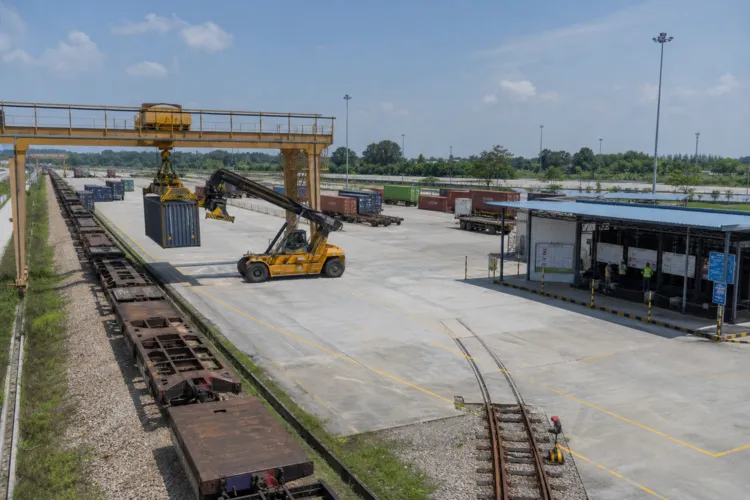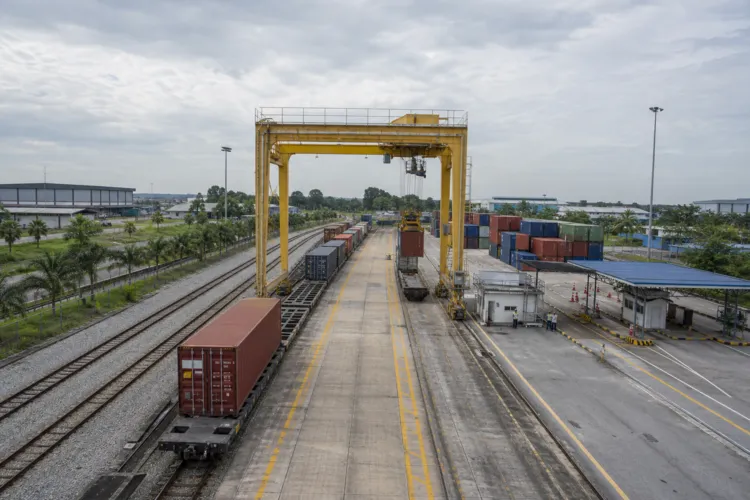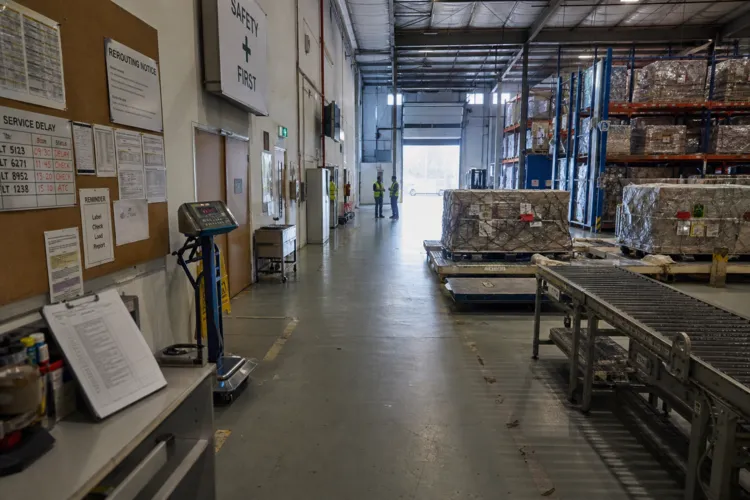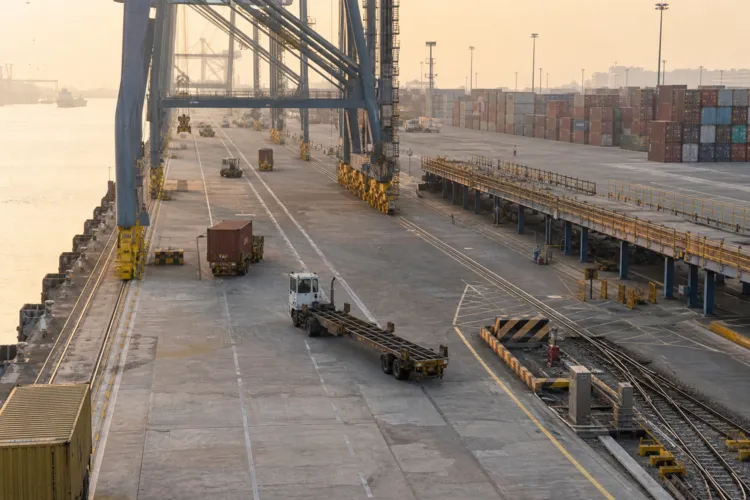

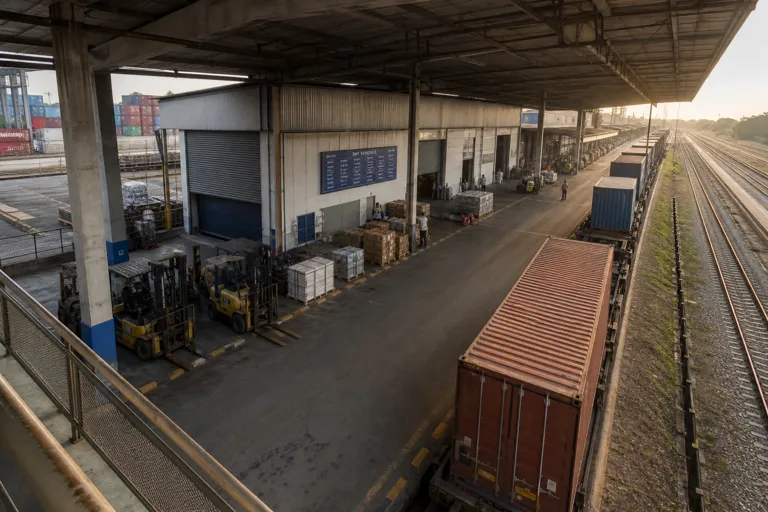
Malaysia’s East Coast Rail Link (ECRL) is a major connectivity project linking Peninsular Malaysia’s East and West Coasts, with Port Klang as the western anchor and Kuantan Port as a key east coast gateway. Multiple public sources describe the line as cargo-first, with a stated 70-30 split between cargo and passenger services. This cargo focus shapes where businesses can plug in: transport planning, cross-peninsula distribution, and support services tied to stations and industrial areas. For companies assessing Malaysia ECRL freight opportunities, the practical question is not only when trains run, but which corridor services can scale once the line becomes operational.
Several headline figures frame the commercial context. The ECRL alignment is described as a 665 km dual-track line, and one report estimates that 53 million tons of freight would be transported yearly between the east coast and Port Klang once completed. Investment figures also matter for corridor-adjacent demand. Approved foreign direct investment in Malaysia during 2024 was reported at more than MYR 400 billion, which the same source links to demand for cross-border forwarding, advanced warehousing, and specialized carrier partnerships. On the east coast, Kuantan Port’s deep-water expansion lifted annual handling capacity to 52 million metric tonnes, reinforcing the case for port-rail warehousing, container handling support, and overflow routing strategies that use the ECRL land bridge.
Where Businesses Can Plug Into the ECRL Operating Ecosystem
Opportunities are not limited to train operations. ECRL Operation Sdn Bhd (EOSB) announced 65 commercial spaces and 35 facility management packages worth RM12.7 million to be offered along the ECRL service line. EOSB described station commercial offerings such as kiosks and pushcarts for food and beverage, groceries, travel necessities, local products, souvenirs, and passenger-related services. Facility management packages cover cleaning, landscape maintenance, pest control, general building maintenance, and air conditioning system maintenance. EOSB also ran an outreach tour across Pasir Puteh, Marang, Dungun, Temerloh, and Kuantan, with 1,665 attendees in briefing sessions in Kelantan, Terengganu, and Pahang, signalling strong local interest and a structured procurement pathway for MSMEs and contractors.
For logistics and industrial players, corridor development language is explicit. A government-linked statement highlighted that logistics sector growth, warehouses, and industrial areas are expected to expand along the ECRL route. It also referenced development models such as transit-oriented development, cargo-oriented development, and industrial parks across the states traversed by the ECRL: Pahang, Terengganu, Kelantan, and Selangor. Progress updates indicate momentum toward operations: one report said the project in Pahang reached 97.33% progress, while the overall project recorded 93.66% as of last April, and it was described as scheduled for completion in December. These signals can inform timing for leasing, site selection, and staffing plans tied to future rail-linked distribution.
Commercial viability is being framed around cargo earnings. The Transport Minister was quoted saying the ECRL is projected to generate RM418 million in operating revenue from passenger and cargo services by 2029, and that about 70% of total revenue is expected to come from cargo services, with the remaining 30% from passenger operations. The same report stated a construction cost of RM52.43 billion for the 665 km alignment from Kota Baru to Port Klang and described financing sources including a term loan from China EXIM Bank, sukuk issued by Malaysia Rail Link Sdn Bhd (MRL), and development allocations. For shippers and 3PLs, these stated targets support a corridor narrative focused on freight throughput, with near-term business openings in warehousing, port-rail transfer services, and station-adjacent support contracts.
What is the ECRL’s cargo-to-passenger split?
How much freight is estimated to move between the east coast and Port Klang on the ECRL?
What business packages and station spaces are being offered along the ECRL line?
What are the main Malaysia ECRL freight opportunities highlighted by current announcements?
What operating revenue is the ECRL projected to generate, and by when?