Malaysia’s EV transition is moving forward, but research houses describe it as steady and gradual rather than a sudden surge. EV penetration increased from 274 units in 2021 to 44,800 units in 2025, which Kenanga Research said represented about 5.5% of total industry volume (TIV). Kenanga also projected Malaysia’s TIV at 790,000 units in 2026, down 4% year-on-year, broadly in line with Malaysian Automotive Association estimates. The adoption curve is shaped by tax incentives, localisation efforts, and new model launches, but also by infrastructure constraints and a fuel subsidy structure that can soften the cost case for switching from ICE vehicles.
Localization is now a core theme in how automakers plan for the next phase of EV growth. Consumers in Malaysia have access to more than 40 EV models across multiple price points, and competition is intensifying as more global brands and Chinese marques expand. Analysts cited in TNGlobal expect policy support for localization to benefit selected automakers, particularly national brands and manufacturers with local assembly operations, while noting that investors are watching for clarity on long-term automotive policies. CleanTechnica also reported that analysts see the planned expiration of incentives for fully imported EVs as a factor pushing more Chinese brands toward local assembly partnerships.
Local Assembly Moves From Announcements to Production
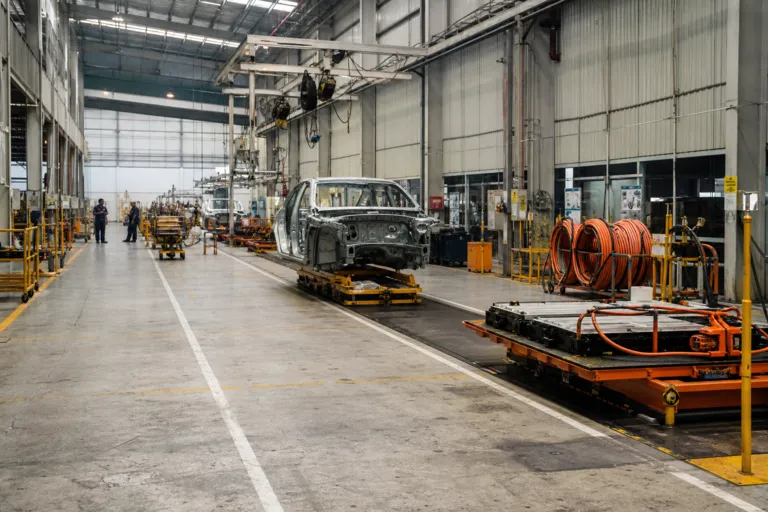
On the ground, assembly activity is becoming more tangible in specific locations. CleanTechnica described an export-oriented assembly ecosystem centered around EP Manufacturing Berhad’s (EPMB) Pegoh facility in Malacca, saying it has transitioned into active multi-brand vehicle assembly. A 2025 ASEAN Briefing report cited by CleanTechnica framed Malaysia’s positioning as a right-hand-drive assembly and export hub for Chinese automakers entering ASEAN markets, rather than competing as a battery minerals powerhouse. In a separate example of formalized plans, GM Insights reported that in August 2025 BYD declared it intended to set up a completely knocked down (CKD) assembly facility in Tanjung Malim, Malaysia, which would start in 2026.
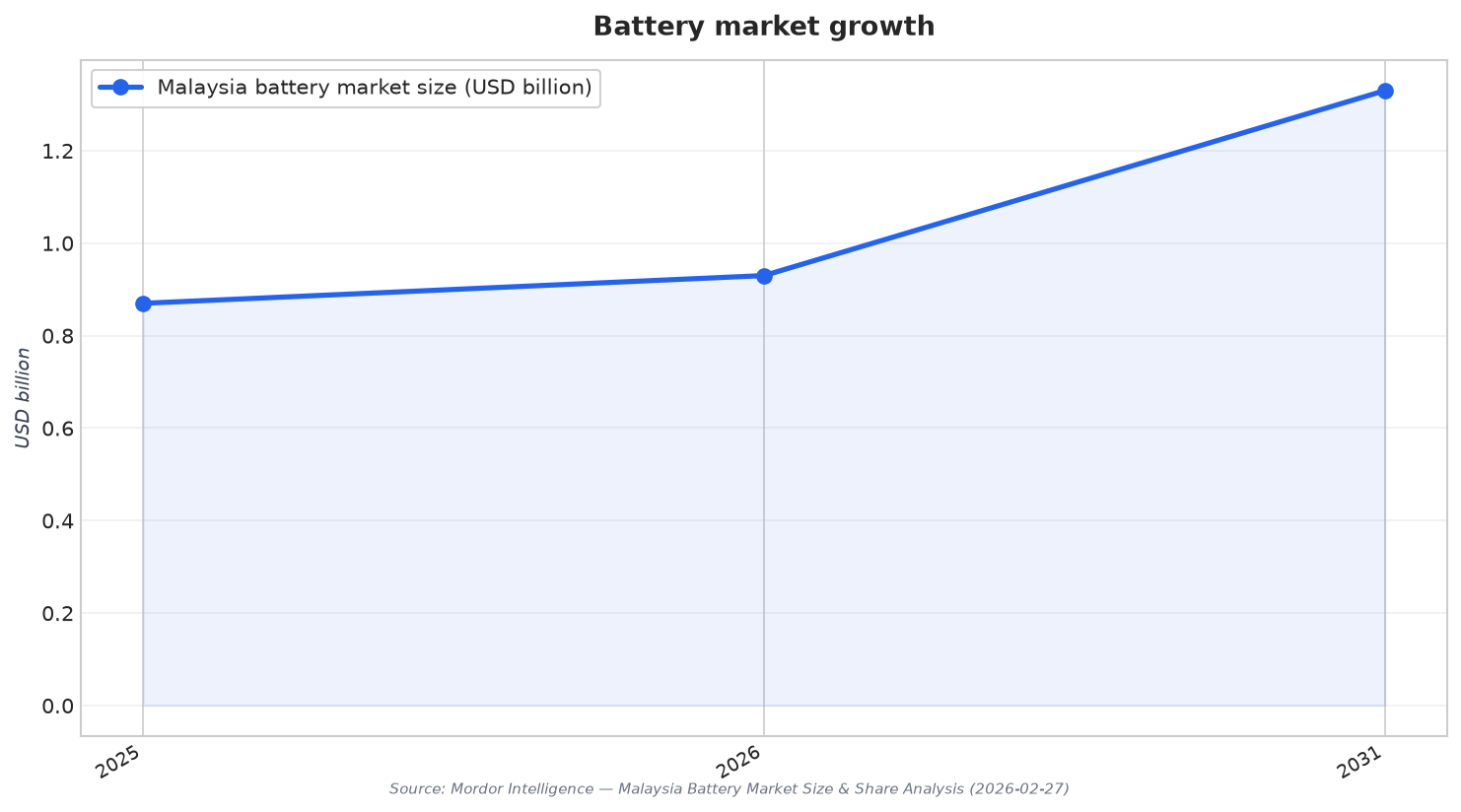
Battery supply chain development is also part of the localization conversation, and it intersects with broader market growth signals. Mordor Intelligence projected the Malaysia battery market would expand from USD 0.87 billion in 2025 and USD 0.93 billion in 2026 to USD 1.33 billion by 2031, registering a CAGR of 7.48% between 2026 and 2031. In 2025, secondary (rechargeable) batteries captured 88.1% of market share, and automotive batteries held 44.6% share, with automotive projected to log the highest 8.8% CAGR to 2031. By technology, lead-acid commanded 41.5% of market size in 2025, while solid-state batteries were expected to register the fastest 11.3% CAGR over 2026–2031.
Manufacturing capacity and geographic clustering are emerging alongside demand shifts. Mordor Intelligence noted that Kedah leads manufacturing capacity, citing EVE Energy’s combined 10–15 GWh energy storage system (ESS) expansion, while Johor was identified as the fastest-growing deployment cluster, supported by a five-fold data-center pipeline increase to 2029. The same report said Panasonic Energy Malaysia, Samsung SDI, and GS Yuasa collectively accounted for roughly 25% of 2025 shipments, while new Chinese entrants added more than 9 GWh of announced capacity, intensifying rivalry. Taken together, these signals show how Malaysia EV manufacturing is increasingly tied to local assembly momentum, battery capacity announcements, and policy-driven localization.
How fast is EV adoption growing in Malaysia?
What is pushing automakers toward local assembly in Malaysia?
What local assembly projects have been reported?
What battery manufacturing and capacity signals are highlighted for Malaysia?
What does the Malaysia EV manufacturing push mean for batteries and localization?