Across Malaysia, third-party logistics is increasingly positioned as an operating model, not just a vendor choice. Nexdigm’s market overview points to a recent historical assessment in which Malaysia’s third-party logistics market recorded an approximate size of “USD ~ billion,” supported by expanding international trade and the rapid growth of e-commerce logistics services. The same overview notes that data published by Malaysia’s Ministry of Transport and the Department of Statistics Malaysia shows logistics and transportation activities continue to generate substantial revenue across warehousing, freight forwarding, and distribution management. For many shippers, the outsourcing appeal is practical: manufacturing companies and retailers are turning to integrated 3PL services to reduce operational complexity and improve supply chain efficiency.
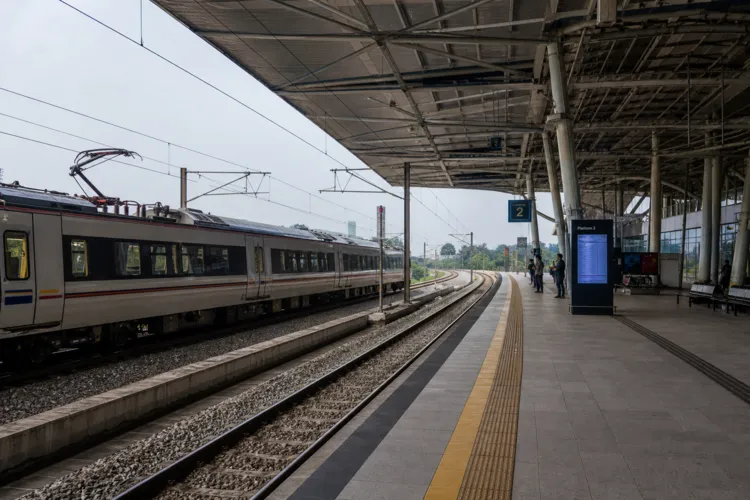
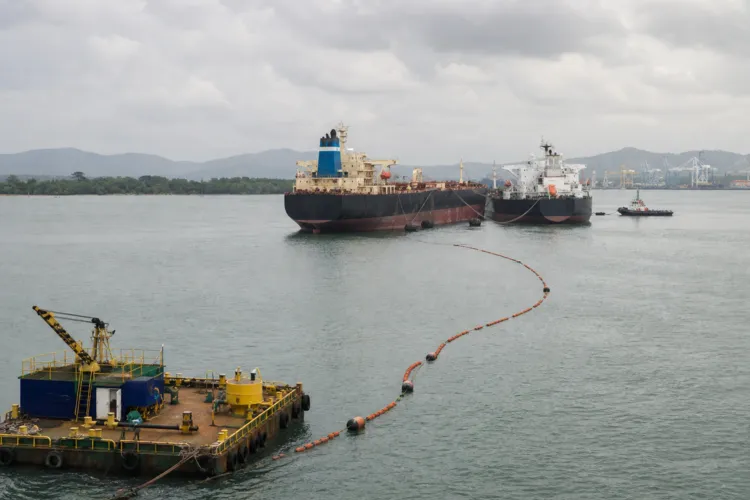
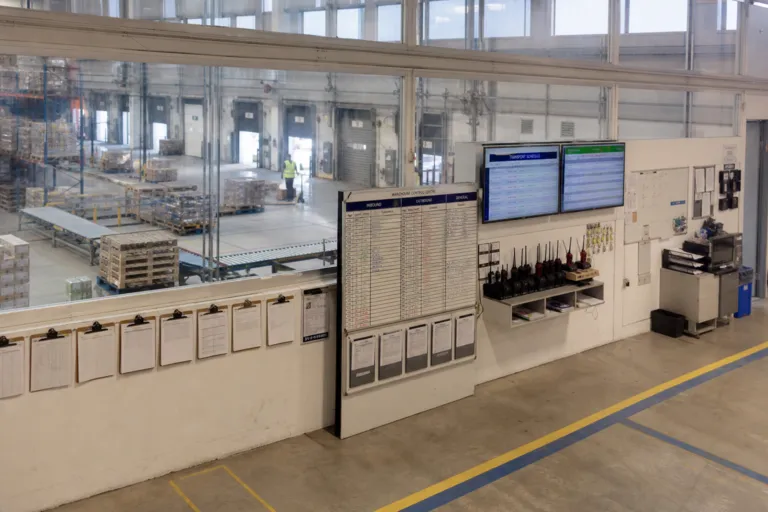
This outsourcing surge sits on a physical backbone that is already clustered and corridor-driven. Nexdigm describes logistics activity as concentrated in major economic corridors including Kuala Lumpur, Selangor, Johor, and Penang, supported by industrial presence and transportation infrastructure. Malaysia’s maritime gateways also matter for cross-border flows. Port Klang and Tanjung Pelepas are highlighted as major gateways for large-scale international cargo movement, and Kuala Lumpur International Airport is described as a critical air-freight hub for regional distribution. These clusters host warehouse facilities, distribution centers, and integrated logistics parks that enable both domestic fulfillment and international supply chain operations.
Transportation Management Leads as Outsourcing Deepens
Service mix is a key indicator of how outsourcing decisions are being made. Nexdigm segments the Malaysia 3PL market by service type into Transportation Management, Warehousing and Distribution, Freight Forwarding, Value Added Logistics Services, and Integrated Supply Chain Solutions, and states that transportation management has a dominant share. The logic is straightforward: manufacturing exporters, retail distributors, and e-commerce companies rely heavily on transportation networks to move goods efficiently across domestic and international markets. Nexdigm also connects this dominance to Malaysia’s port connectivity and highway infrastructure, which supports large freight volumes through road and maritime services, while more companies outsource transportation coordination to specialized providers.
End-user structure reinforces the same pattern. Nexdigm’s end-user segmentation includes Manufacturing Industry, Retail and E-commerce, Automotive Industry, Healthcare and Pharmaceutical Industry, and Consumer Goods Industry, and notes that manufacturing holds a dominant share. Malaysia’s export-oriented manufacturing base is described as including electronics, semiconductors, and industrial components, which depend on sophisticated logistics networks for international trade operations. Put together, the picture is a market where outsourcing is not limited to warehousing or last-mile tasks. It extends into coordinated transport planning, freight execution, and broader integrated supply chain solutions designed to keep export pipelines reliable.
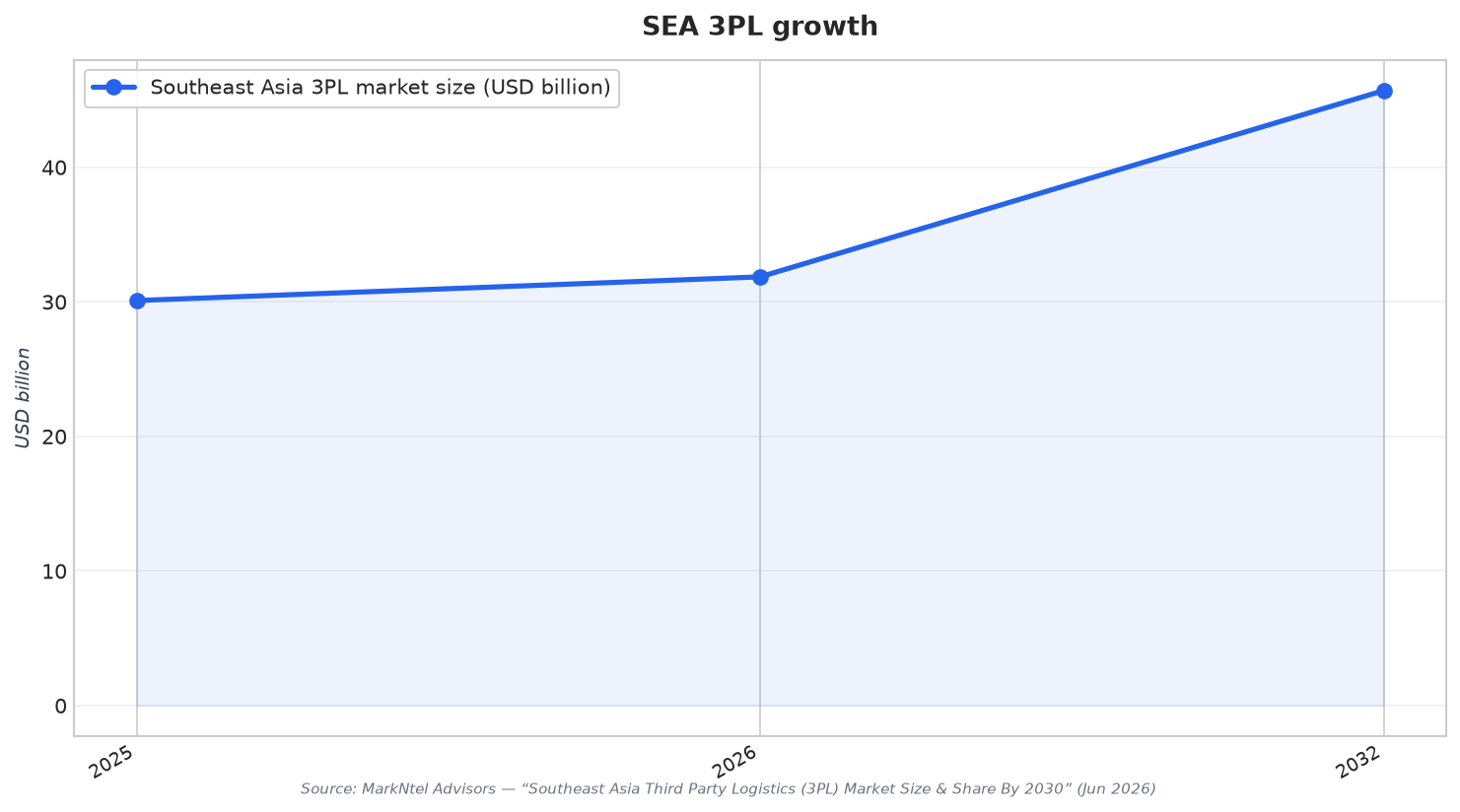
Regional benchmarks help frame where Malaysia fits, without confusing geography. MarkNtel estimates Southeast Asia’s third-party logistics market at USD 30.1 billion in 2025, projecting growth from USD 31.86 billion in 2026 to USD 45.7 billion by 2032 at a 6.2% CAGR. In that same Southeast Asia view, transportation management holds about 58% share in 2026, and road transport about 48%. The report also notes Singapore holds about 30% share in 2026, while Malaysia is “simultaneously scaling Port Klang,” with Malaysia’s Ministry of Transport setting a 2025 throughput target of 15 million TEUs, backed by over RM16 billion in digital infrastructure. Against that backdrop, the Malaysia 3PL market’s outsourcing surge aligns with a wider regional shift toward specialized providers that can orchestrate transport, distribution, and cross-border movement at scale.
What is driving the outsourcing surge in Malaysia’s 3PL sector?
Which service type leads in Malaysia’s third-party logistics landscape?
Where is Malaysia’s logistics activity most concentrated?
How does Southeast Asia’s 3PL growth outlook compare as context for Malaysia?
What is the outlook for the Malaysia 3PL market in terms of infrastructure momentum?