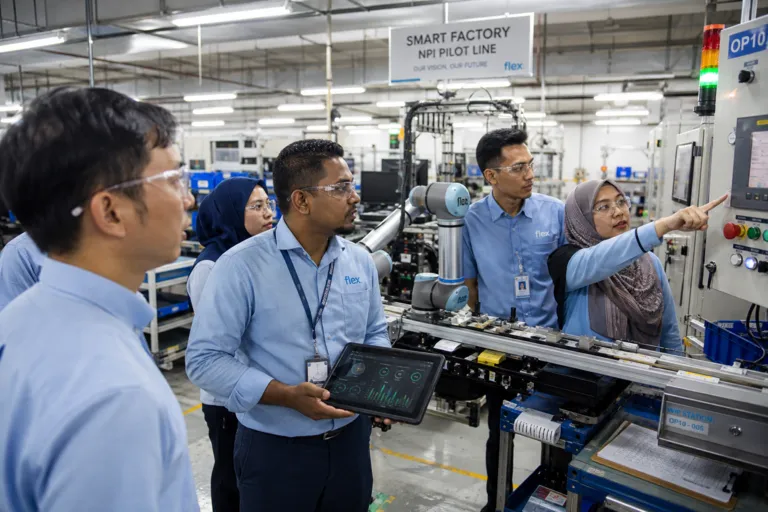
Malaysia is positioning smart factories as a practical path to upgrade manufacturing under the New Industrial Master Plan 2030 (NIMP 2030). The plan’s manufacturing ambition is explicit: increase manufacturing sector GDP from MYR364.9 billion ($82.2 billion) in 2022 to MYR587.5 billion ($132.4 billion) by 2030. Within that push, the smart factory initiative is framed as a scale program, with plans to upgrade 3,000 factories into smart factories and an estimated MYR5 billion ($1.1 billion) investment requirement. This is the backbone context for the Malaysia Smart Factory NIMP 2030 topic and for how policymakers are linking technology adoption to value-added growth.
The manufacturing upgrade narrative is also tied to wider investment conditions. A Malaysia Construction Market report projects the Malaysian construction industry to expand by 6.5% in real terms by 2026, supported by transport infrastructure investment and the 2026 Budget. Approved in October 2025, the budget earmarks MYR470 billion ($105.9 billion) in total spending. Within that, MYR127.3 billion ($28.7 billion) goes to the social sector’s operational spending, alongside MYR74.4 billion ($16.8 billion) for education and MYR40.1 billion ($9 billion) for training and health services. For manufacturers, this matters because factories modernise in an ecosystem that depends on infrastructure build-outs, workforce capability, and stable public investment signals.
From Policy to Plant Floor: Smart Tech-Up and Recognition
Execution is moving through programs tied to the Ministry of Investment, Trade and Industry (MITI). OpenGov Asia reports that nearly 100 companies are projected to achieve smart factory recognition by the end of 2025, driven by the Smart Tech-Up Programme introduced in December 2024. Since the program began, 21 factories have been identified as fully operational smart factories, while 71 companies are in various implementation phases. The first target phase seeks to certify at least 40 factories as smart facilities by 2026. The program’s structured assessments focus on machine connectivity, real-time data use, predictive maintenance, and digital quality control, aligning recognition with measurable readiness rather than one-off equipment purchases.
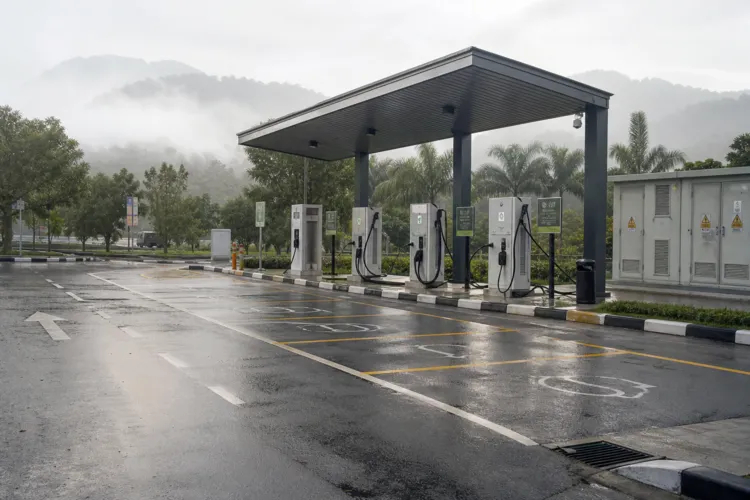
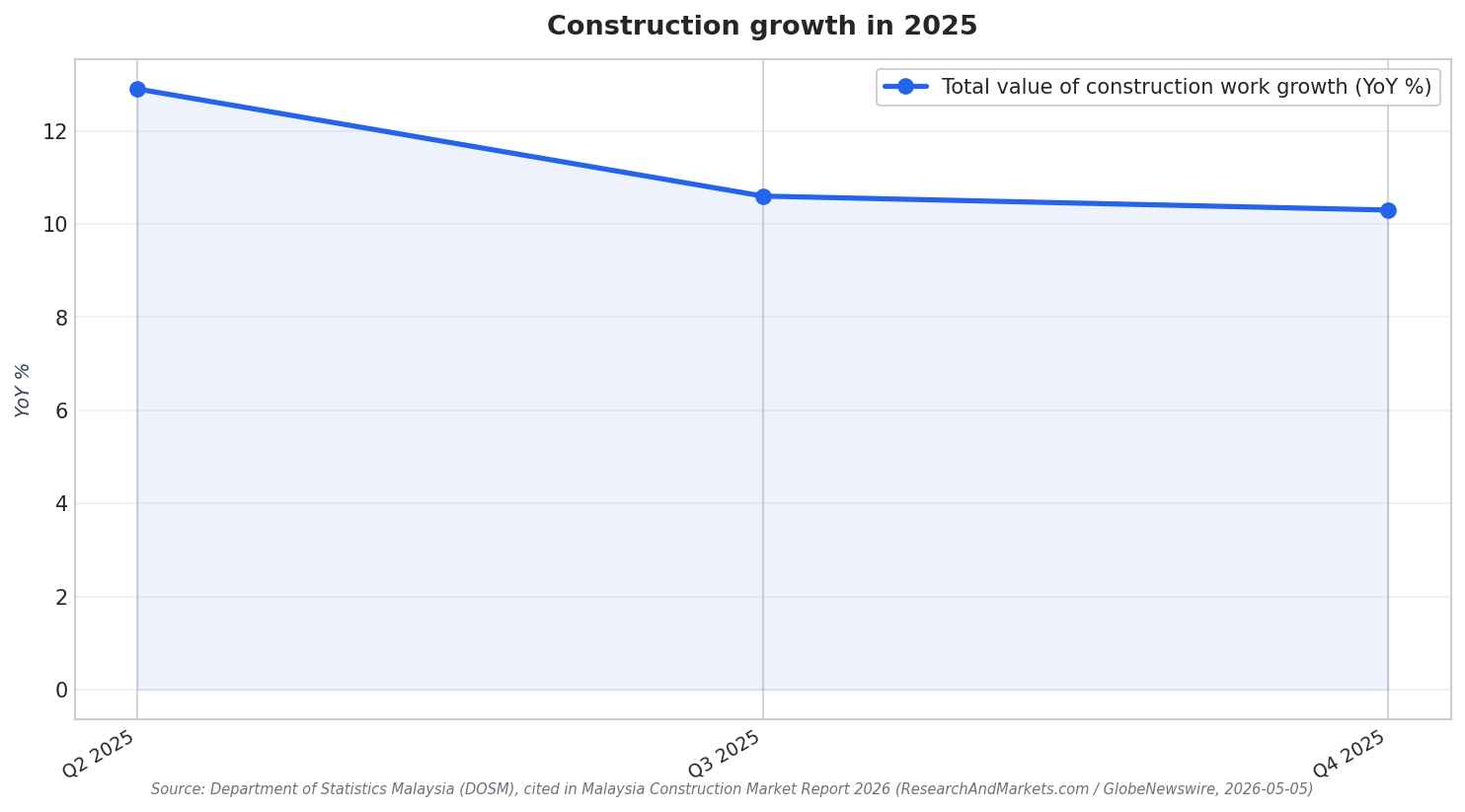
Energy and industrial corridor development adds another layer of momentum. The Southern Johor Renewable Energy Corridor (SJREC), announced in December 2025, is slated for significant development with MYR26.6 billion ($6 billion) from the World Bank. It is described as a 2,000km hybrid solar and battery energy storage system zone connecting Southeast Asia. By 2030, the initial phase is expected to achieve up to 4GWp of solar capacity and 5.12GWh of energy storage. In parallel, construction activity shows a strong near-term base: the Department of Statistics Malaysia (DOSM) reported the total value of construction work rose 10.3% YoY in Q4 2025, following 10.6% YoY in Q3 and 12.9% YoY in Q2 2025.
Smart manufacturing is also framed as a market opportunity alongside policy. One market source values the Malaysia Smart Manufacturing and Industry 4.0 market at approximately USD 5 billion, attributing momentum to advanced manufacturing adoption and government initiatives promoting digital transformation. Another cited target in that source is to have 50% of manufacturers adopting Industry 4.0 practices by 2025 under a National Industry 4.0 Policy introduced in 2023. Taken together, the NIMP 2030 goal of 3,000 smart factories, the measured factory-recognition pipeline, and the investment backdrop in budgets, construction, and energy capacity create a clearer picture of how Malaysia is sequencing its manufacturing upgrade through 2030.
What is the smart factory goal under Malaysia’s NIMP 2030?
How much does NIMP 2030 aim to raise manufacturing sector GDP by 2030?
What progress has Smart Tech-Up reported so far?
Which 2026 Budget figures show Malaysia’s wider investment context?
What does the Southern Johor Renewable Energy Corridor (SJREC) plan include by 2030?