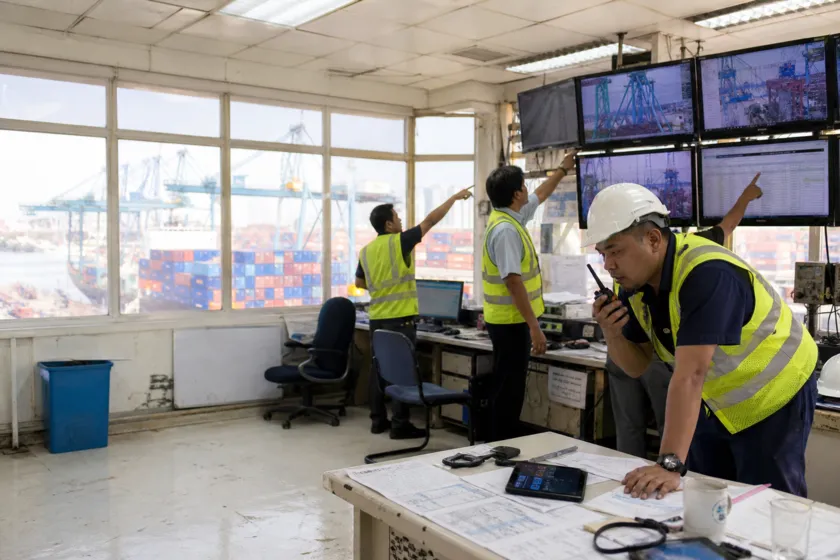
Port Klang’s rise to the world’s 10th-busiest container port is more than a ranking headline. It is a signal that routing decisions, inventory placement, and carrier negotiations across Malaysia are being reworked around higher container intensity at the country’s main maritime gateway. One market forecast links that shift directly to changes in supply-chain networks, warehouse automation priorities, and carrier partnerships across the Malaysia freight and logistics market. Another industry source adds a concrete reference point: Port Klang handled over 12 million TEUs in 2022, underscoring how container volume has become a planning input for shippers designing import cycles and export cut-offs.
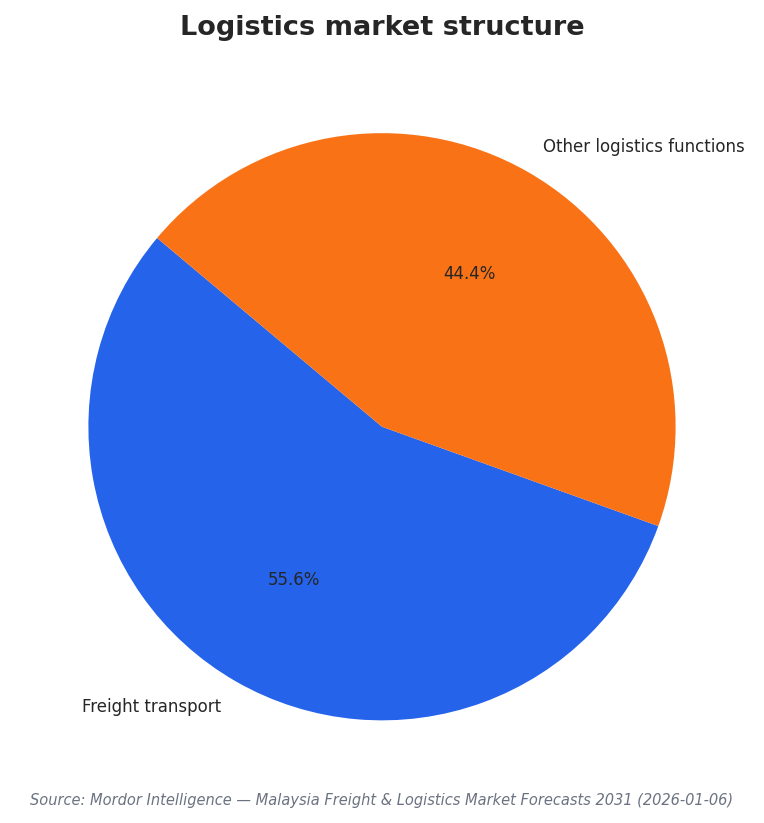
The knock-on effect shows up in how logistics providers prioritize capacity and connectivity. Government funding for rail and highway projects is cited alongside Port Klang’s top-10 emergence as a key driver reshaping market behavior, because smoother inland links help distribute seaport volumes to factories, distribution centers, and last-mile nodes. That matters in a market where freight transport held 55.62% share in 2025 and road freight led with a 50.94% share the same year. At the forwarding layer, sea and inland waterways freight forwarding generated 74.10% of revenue in 2025, reinforcing why port-centric performance now influences contracting and network design.
E-Commerce Speed and FDI Are Forcing New Supply-Chain Playbooks
Malaysia’s consumer delivery expectations are compressing the time available for every upstream step, from port clearance to linehaul to sorting. Leading platforms are shipping 95% of orders within 24 hours, and 64.8% of internet users prefer free delivery, which pushes operators toward automated sortation, micro-fulfillment centers, and data-driven route planning. The automation case is not theoretical: MR DIY reported 200% efficiency gains after installing robotic systems. These pressures interact with port dynamics, because tighter delivery promises raise the cost of variability when ocean schedules slip or yard operations choke, making resiliency planning a front-line requirement.
Industrial demand is also reshaping the lanes connected to Port Klang. Foreign direct investment reached MYR 378.5 billion (USD 82.3 billion) in 2024 and created 207,000 jobs, expanding demand for cross-border forwarding, value-added distribution, and specialized manufacturing logistics. The same sources highlight new requirements tied to advanced production, including electrostatic-discharge-compliant packaging, secure robotics, and bonded-warehouse clearance lanes, especially where semiconductor investments drive inbound raw-material synchronization and high-frequency outbound shipments. Separately, cross-border tax incentives inside the Johor-Singapore Special Economic Zone are expected to add 100 projects and 20,000 skilled jobs, anchoring new corridors that must still connect efficiently to Malaysia’s main maritime gateway.
However, higher maritime prominence brings operational friction that supply chains must price in. Port Klang faces vessel waiting times averaging 1.3–1.46 days, which challenges schedule reliability even as the Malaysia Maritime Single Window initiative has reduced documentation processing times. Reports also note that quay expansions lag demand, while arrival bunching and yard overflow continue to pose challenges. These constraints amplify the value of better inland staging, tighter appointment discipline, and diversified partnerships that secure sea-freight allocations and temperature-controlled capacity. In parallel, the Malaysia freight and logistics market is projected to grow from USD 29.70 billion in 2025 to USD 31.23 billion in 2026 and to USD 40.11 billion by 2031, at a 5.14% CAGR over 2026–2031, raising the stakes for port-linked execution.
How is Port Klang container throughput influencing Malaysia’s supply chains?
What e-commerce delivery expectations are shaping logistics decisions in Malaysia?
What does FDI mean for industrial logistics demand linked to Malaysia’s ports?
What operational challenges at Port Klang can disrupt schedules?