Reviving public transport use in Malaysia’s cities starts with a clear view of the trend. Malaysia’s public transportation ridership is tracked using high-frequency data from operators such as Prasarana, KTMB, and MyBas, and published on a national dashboard that is updated regularly (last updated 12 May 2026, with the next update scheduled for 12 Jun 2026). That kind of near-real-time visibility matters because it helps decision-makers respond to shifts quickly, rather than relying on occasional studies. When ridership is volatile, improving service requires rapid feedback loops and the ability to test changes and see what happens.
The wider context is Malaysia’s rapid urban growth. The urban population increased from 3 million people (28.4% of the total population) in 1970 to 24.4 million people (75.1%) in 2020, with much of that growth concentrated in the Greater Kuala Lumpur conurbation. Over 50 years, that is an increase of more than eight folds. As cities expand, people need dependable ways to reach jobs, education, and services. But the same period also entrenched auto-oriented development, with investments often focused on increasing road capacity, including toll expressways, rather than making it easy to walk, cycle, or use public transit.
What It Takes to Win Riders Back in Greater Kuala Lumpur
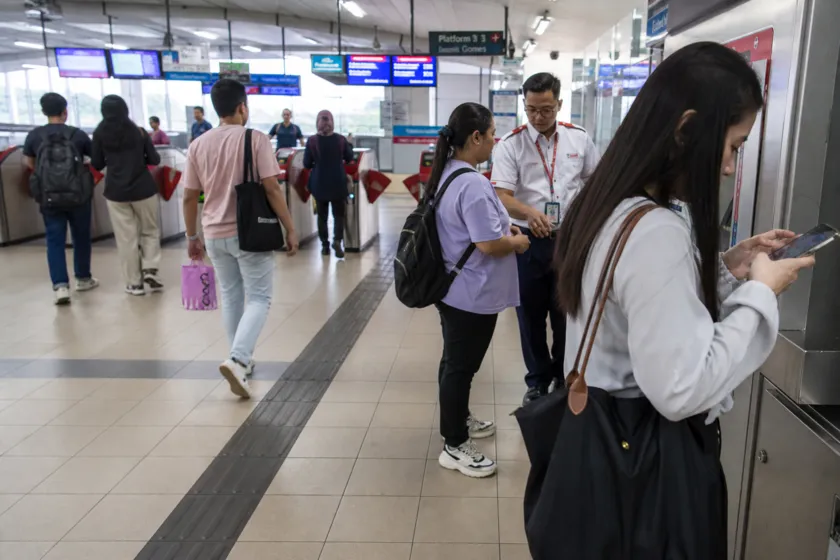
Even where networks exist, trust can be fragile. A Khazanah Research Institute study, as reported by Malay Mail, described public transport in Greater KL as “functional but fragile” and examined why ridership growth has been uneven despite significant investments in infrastructure. One operational issue stood out: variability in bus performance, especially early departures and inconsistent headways, which plays a major role in affecting commuter trust. For riders, reliability is not a nice-to-have. If buses depart early or arrive in bunches, commuting becomes unpredictable, and people default to private vehicles when they can.
Data-driven scheduling is one practical path to rebuilding confidence, especially for buses. Research on Rapid Bus services in Kuantan and Penang highlighted that urban bus systems can struggle with inefficient scheduling and underutilized resources when they lack accurate demand forecasting tools. The study compiled ridership data covering 2022 to 2024 from multiple sources, including Malaysia’s Official Open Data Portal, and tested several machine learning methods. In its evaluation, the Random Forest model achieved the highest accuracy with an R-squared value of 0.9940. The work also developed a GUI to visualise forecasts so operators can make informed decisions on scheduling and resource allocation.
Putting these pieces together suggests a practical roadmap for Public Transport Ridership Malaysia: measure trends frequently, fix the reliability basics, and then plan service with better demand signals. Frequent national reporting sets the baseline, while city-level operational reforms address what riders feel daily: on-time departures and consistent headways. Forecasting tools can then help operators match supply to patterns linked to weekends, public holidays, and even weather conditions, as explored in the Kuantan and Penang study. Over time, the goal is a public transport system that competes on predictability and convenience, not just network coverage.
What is driving the urgency to revive public transport use in Malaysia’s cities?
Why does reliability matter so much for ridership in Greater KL?
How can better forecasting help rebuild bus ridership in Kuantan and Penang?
Where can planners monitor public transport ridership trends in Malaysia?
What does the Public Transport Ridership Malaysia topic suggest is the best near-term focus?