Cold chain logistics in Malaysia sits at the intersection of food safety, halal integrity, and pharmaceutical quality requirements. In the broader Malaysia freight and logistics market, Mordor Intelligence expects total market size growth from USD 29.70 billion in 2025 to USD 31.23 billion in 2026, reaching USD 40.11 billion by 2031 at a 5.14% CAGR (2026-2031). Within warehousing and storage, non-temperature controlled space still dominated with a 91.10% share in 2025, but the same report forecasts temperature controlled capacity to rise at a 6.24% CAGR through 2026-2031, citing pharmaceutical and halal-food needs as drivers.
Several market summaries also frame where demand is concentrated and why. Nexdigm describes major cold-chain activity concentrated in Kuala Lumpur, Selangor, Penang, and Johor, linked to ports, pharmaceutical manufacturing zones, and food distribution hubs. It names Port Klang and Tanjung Pelepas as key gateways for temperature-controlled cargo, while positioning Kuala Lumpur as a pharmaceutical distribution center supported by advanced warehouse facilities and airport cargo terminals. These locations matter because they sit on the trade corridors that pull in temperature-sensitive imports and support controlled distribution of regulated products across the national network.
Meeting Halal and Pharma Storage Demand: Where Warehousing Leads
Refrigerated warehousing is repeatedly identified as the anchor service in Malaysia’s cold chain, especially when compliance and long dwell times are involved. Nexdigm says refrigerated warehousing has a dominant share, linking it to increasing pharmaceutical storage requirements, expansion of frozen food imports, and the development of large distribution centers that support supermarket and food-processing supply chains. IMARC coverage syndicated via Global Risk Community adds a clear benchmark for 2025: refrigerated warehouses held the largest market share of 68.7%, driven by the need to maintain product quality throughout the supply chain and supported by demand from pharmaceutical and food processing industries.
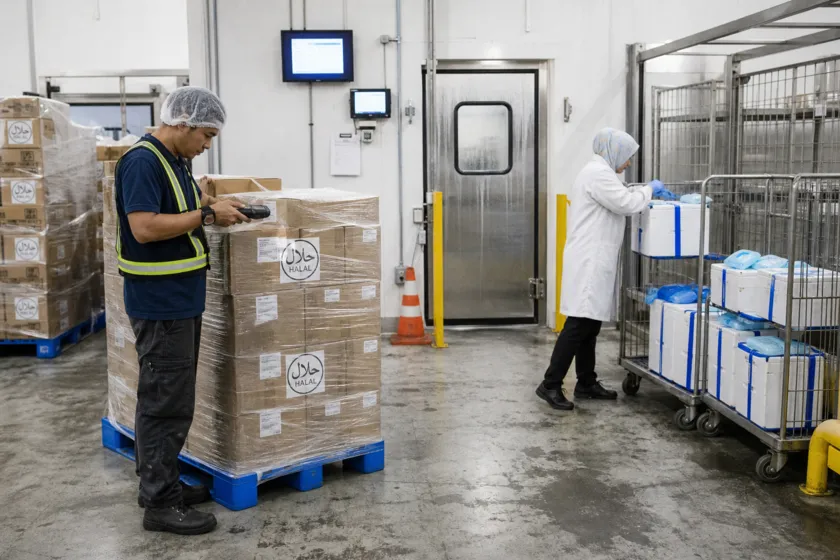
Halal is a demand shaper because it can change how storage and transport are organized. Mordor Intelligence’s ASEAN cold chain report notes that in Muslim-majority markets, halal-certified frozen meals and processed foods necessitate segregated storage and compliance with halal logistics rules, which increases demand for certified providers. In Malaysia, Ken Research’s press release on openPR also highlights “strong demand for fresh food, halal-certified exports, and temperature-sensitive pharmaceuticals” as factors reshaping the logistics landscape. The same release states the Malaysia cold chain logistics market reached approximately RM 269 million, while also describing cold storage penetration as below global benchmarks.
Pharma-led cold chain requirements are also rising alongside fast, urban delivery expectations for perishables. IMARC’s openPR release lists growth drivers including rising demand for vaccines, biologics, and temperature-sensitive medicines, plus rapid expansion of e-commerce grocery and food delivery that increases the need for temperature-controlled storage and last-mile cold delivery. Mordor Intelligence’s Malaysia freight and logistics report supports the speed expectation dynamic, noting leading platforms ship 95% of orders within 24 hours. For operators in the Malaysia Cold Chain Logistics Market, that combination pushes investment toward reliable refrigerated warehousing, controlled transport, and delivery execution that can maintain compliance while meeting tight turnaround windows.
What is the outlook for temperature-controlled capacity growth in Malaysia’s logistics sector?
How large was Malaysia’s cold chain logistics market in the Ken Research release?
Why does refrigerated warehousing matter so much for halal and pharma cold chains?
Which Malaysian locations are highlighted as key cold chain hubs?
What is driving demand in the Malaysia Cold Chain Logistics Market besides traditional retail?