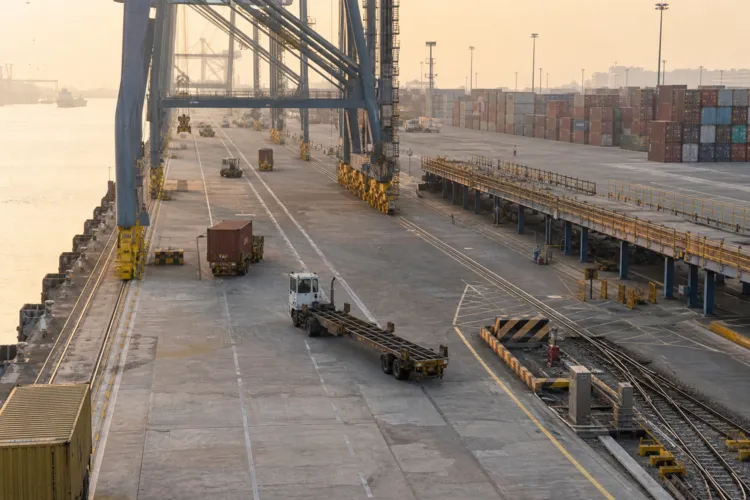
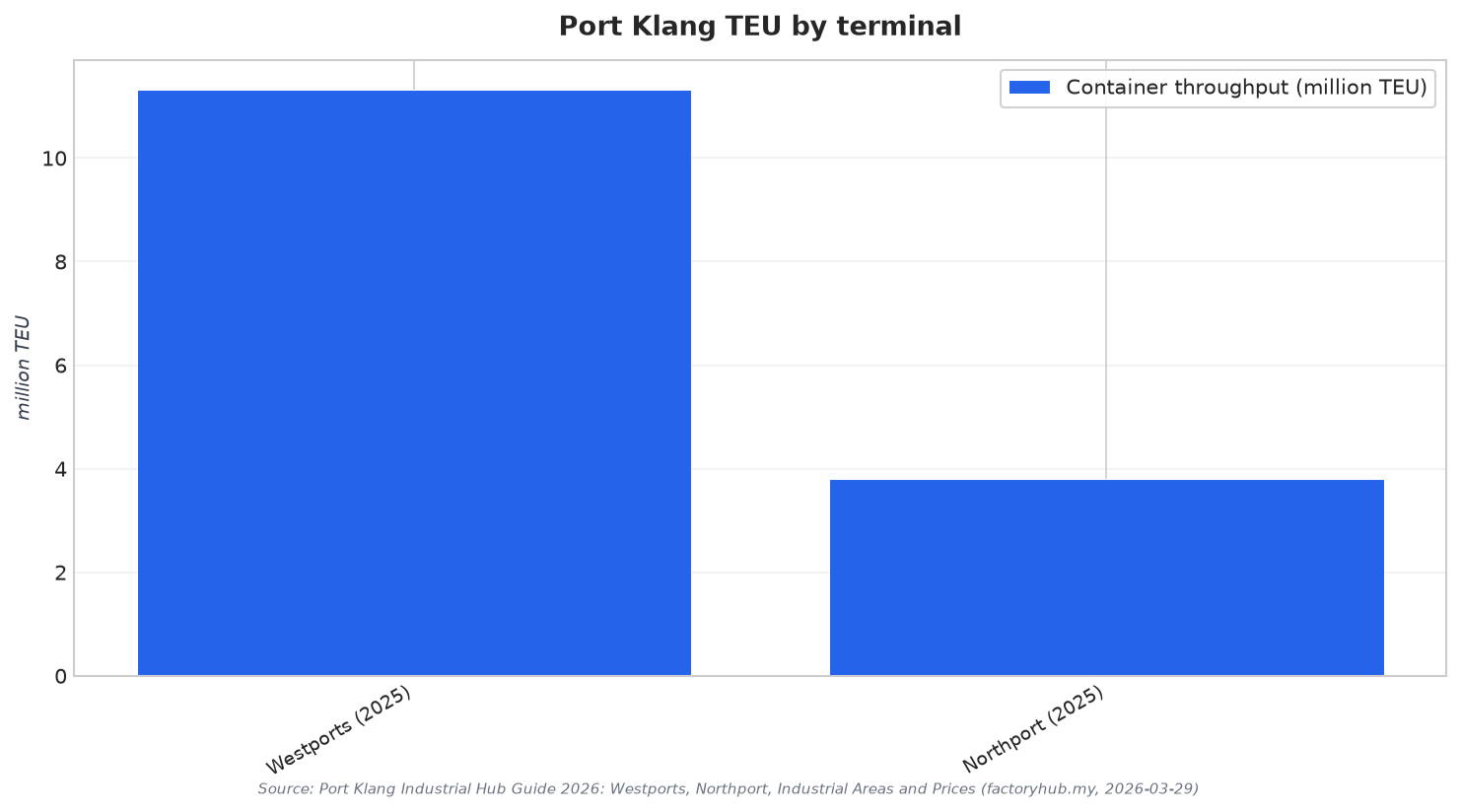
Port Klang’s scale is the starting point for understanding why inland container depots matter. The port handled a record 15.14 million TEU in 2025, up 3.4% from 2024, and its 2026 target is 15.37 million TEU. Westports accounted for 11.33 million TEU in 2025 and Northport handled 3.8 million. With transhipment reported at 8.41 million TEU in 2025, the remainder still leaves a large pool of gateway cargo that needs unstuffing, storage, and onward delivery into the Klang Valley’s industrial belts. This is where inland facilities can help by taking pressure off port-side space and smoothing flows to inland factories and warehouses.
Congestion signals show why a “move it inland” strategy can be attractive for shippers. One industry report cites average vessel waiting times of 1.3–1.46 days at Port Klang alongside yard utilization above 90%, which undermines schedule dependability. On the landside, road haulage is still described as handling roughly 55% of total freight tonnage, linking industrial hinterlands to port gateways. Another report adds that container trucking transit times between Port Klang and inland distribution facilities are still 20–30% longer due to peak-hour traffic on the North–South Expressway and Federal Route 2, despite MYR 7.5 billion in highway renovations under the 12th Malaysia Plan. Inland container depots can reduce repeat trips to the quay by consolidating storage, transfers, and staging inland.
How Inland Depots Fit the Port Klang Industrial Map
Port-adjacent land remains valuable, but the industrial footprint around Port Klang is not limited to the quay. Seven industrial areas are referenced around the two terminals, from Pulau Indah and Telok Gong near Westports to Bandar Sultan Suleiman, Kapar, and Meru closer to Northport. In JPPH-recorded deals in Klang district over the 24 months to July 2026, industrial land transacted at a median RM88 psf and factory rent at a median RM1.44 psf a month, with Telok Gong cited at a median RM65 psf and Pulau Indah at RM82 psf. Inland container depots can sit within this broader geography, connecting “closer-in” port estates with further-inland belts where space and operating patterns differ.
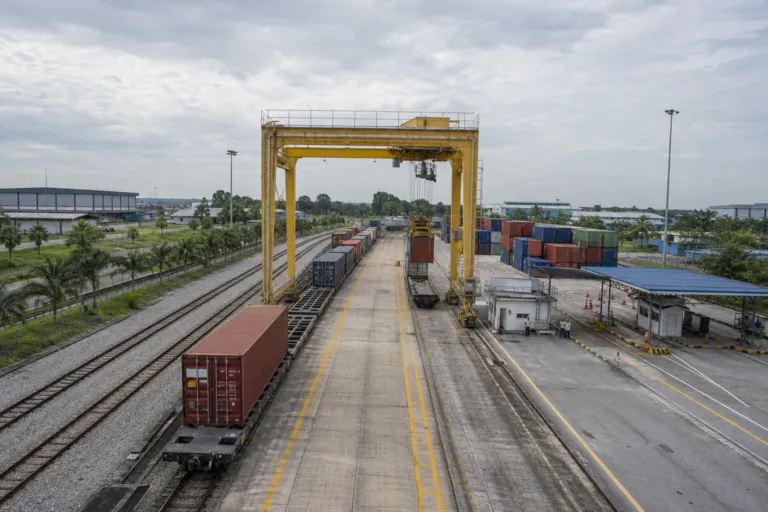
Rail and road projects shape where inland depots can create the most value. Westports is described as having an 11.2-kilometre rail link connecting the terminal to the Port Klang station, which supports shifting some movements away from pure trucking. Looking ahead, one guide points to full WCE completion targeted by early 2027 and an ECRL connection to Port Klang from January 2028, while another report notes the government has committed over MYR 9 billion to the ECRL and says completion would slash freight transit time between Kuantan Port and Port Klang by roughly 50%. An inland depot network aligned to these corridors can support steadier drayage patterns, consolidate boxes before linehaul, and reduce port-side dwell pressures.
The strategic logic for Malaysia inland container depots is to complement, not replace, Port Klang’s port-adjacent ecosystem. Port Klang is presented as the country’s largest logistics submarket, with warehouses and industrial estates within a 30-kilometre radius benefiting from the gateway. But when Westports is cited as running at roughly 82% of capacity in 2025, and when waiting times and yard utilization are also flagged, the case strengthens for inland nodes that absorb overflow functions and shorten the number of high-friction trips to the terminal. The Central Region is also described as commanding roughly 44.6% of total freight throughput, anchored by Selangor, Kuala Lumpur, and Port Klang. Inland depots that link these industrial hubs to the port can help keep the gateway moving as volumes grow.
Why are inland container depots being discussed alongside Port Klang growth?
What congestion indicators are reported for Port Klang?
How do Port Klang’s two terminals relate to inland logistics planning?
Which upcoming links could change how cargo reaches the hinterland?
What role can Malaysia inland container depots play for industrial hubs near Klang?