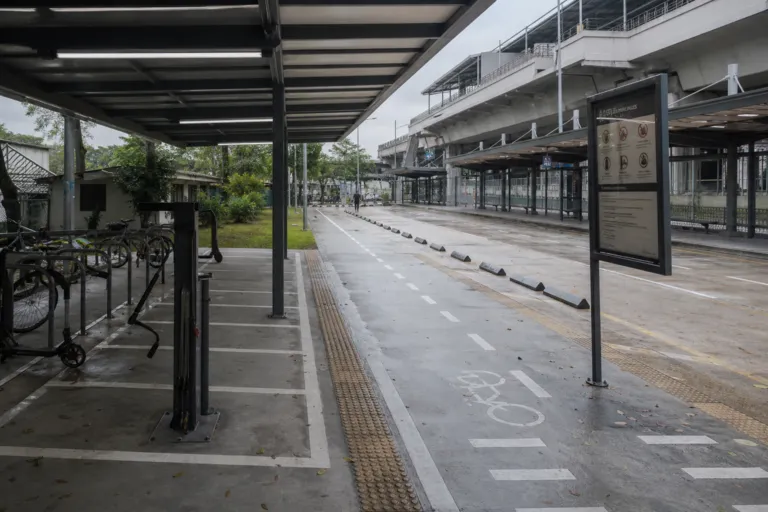
In Malaysian cities, micromobility is increasingly discussed as a practical way to handle short trips and improve first-mile and last-mile links to public transport. One academic source defines micromobility as small, lightweight devices that operate at low speeds, typically less than 25 km/h, and can be owned or rented. It also frames these devices as a solution for short distances around cities, often as the first or last mile of a journey to or from another mode such as bus, train, or car. This matters because completing first and last mile distances can promote greater public transport usage.
Local market commentary points to environmental awareness as a key driver for the Malaysia micromobility conversation, especially where climate change and air pollution concerns are rising. A survey cited in a Malaysia-focused market report says approximately 70% of urban residents are willing to switch to greener transport options, indicating strong potential for eco-friendly alternatives. The same report argues that e-scooters and bicycles produce significantly lower emissions than traditional vehicles, which supports the appeal of these modes for short-distance travel. It also notes changing preferences among younger generations, with millennials and Gen Z favoring flexible and convenient transport options over traditional car ownership.
E-Scooters, Bikes, and the First-Mile Problem in Dense City Streets
First-mile and last-mile connectivity becomes even more urgent when congestion is costly. A Malaysia-focused report highlights Kuala Lumpur as an example, stating that traffic congestion can lead to economic losses estimated at USD 1.5 billion annually. Against that backdrop, micro mobility solutions such as e-scooters and bicycles are presented as a viable option for short-distance travel that could reduce the number of cars on the road. A separate Malaysian research article also states that the rise of micromobility solutions, particularly e-scooters and e-bikes, is reshaping urban mobility patterns in Malaysian cities, while noting that behavioral dynamics and safety implications across road categories remain insufficiently understood.
Policy and street design decisions influence whether shared programs work at scale. An academic source notes that cities or other jurisdictions can set weight and width limits for various roadway users, and it emphasizes that supportive infrastructure is an important consideration when a city considers a shared micromobility program. The same source references MIROS in the context of micromobility and sustainable development goals, including SDG 11 (Sustainable Cities and Communities), and adds that since early 2018, the Malaysian government has received requests for approval from e-scooter start-ups. These points underline why local rules, road allocation, and basic facilities can determine whether riders feel safe and whether services can operate consistently.
Globally, industry reports describe common operating models that can inform how Malaysian cities think about scaling access. A shared micromobility market report values the global shared micromobility market at USD 2,018.5 million in 2024 and projects growth to USD 5,247.7 million by 2033, at a CAGR of 11.2% for 2024–2033. It also describes last-mile connectivity deployments, including dockless electric scooters and bicycles near transit stops, to help commuters complete trips quickly and affordably. Another micromobility platform report adds that cities are tightening rules for shared scooters, increasing the need for tools such as geofencing, and notes that MobilityData’s GBFS v3.0 requires dockless vehicle status feeds to be updated within 5 minutes, reinforcing the importance of real-time availability and control features.
What counts as micromobility in Malaysian cities?
How does micromobility support first-mile and last-mile links to transit?
What signals demand for greener mobility options in Malaysia?
Why is congestion part of the micromobility argument in Kuala Lumpur?
What kinds of rules and tools are discussed for managing shared micromobility?