Malaysia has positioned its industrial transition around a plan unveiled on 1 September 2023 under the MADANI Economy framework, aimed at reshaping manufacturing and industrial sectors over the next seven years. The blueprint is described as being organised around four interconnected missions, and supported by 21 strategies and 62 action plans spanning 21 sectors. It is also presented with a “Whole-of-Nation” execution model intended to drive collaboration and accountability. In parallel, Malaysia’s economy is described as open and state oriented, with trade activity at 132% of GDP and consistent trade surpluses since 1998, which adds context to why reindustrialisation is being pursued through export-linked industries.
In the near term, the construction pipeline is being cited as a key enabler for industrial upgrading. Reports project Malaysia’s construction industry to expand by 6.5% in real terms in 2026, supported by increased transport infrastructure investment and the 2026 Budget. Approved in October 2025, that budget earmarks MYR470 billion ($105.9 billion) in total spending and includes Government-Linked Investment Companies (GLICs) initiatives. The largest operational spending share is allocated to the social sector at MYR127.3 billion ($28.7 billion), alongside MYR74.4 billion ($16.8 billion) for education and MYR40.1 billion ($9 billion) for training and health services—spending areas that can support workforce capacity for higher-value industry.
Smart Factories, GDP Ambitions, and the Reindustrialisation Engine
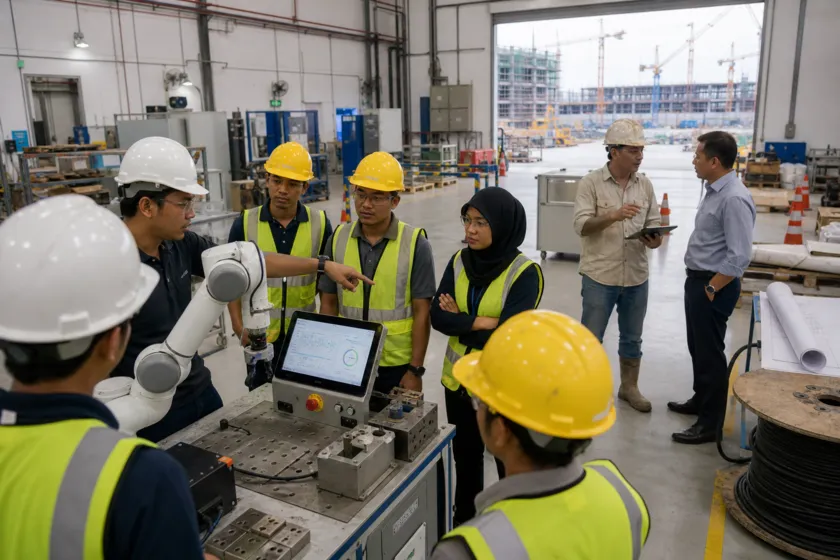
Under the New Industrial Master Plan 2030, Malaysia has set an explicit manufacturing GDP ambition: to increase the manufacturing sector’s GDP from MYR364.9 billion ($82.2 billion) in 2022 to MYR587.5 billion ($132.4 billion) by 2030. A central delivery mechanism highlighted in the sources is smart factory upgrading. The programme plan includes upgrading 3,000 factories into smart factories, with an estimated MYR5 billion ($1.1 billion) investment. Separately, smart manufacturing implementation is described as advancing through Smart Tech-Up and Smart Factory Recognition, with nearly 100 companies projected to achieve smart factory recognition by the end of 2025, signalling early-stage momentum before the broader factory-upgrade target is pursued.
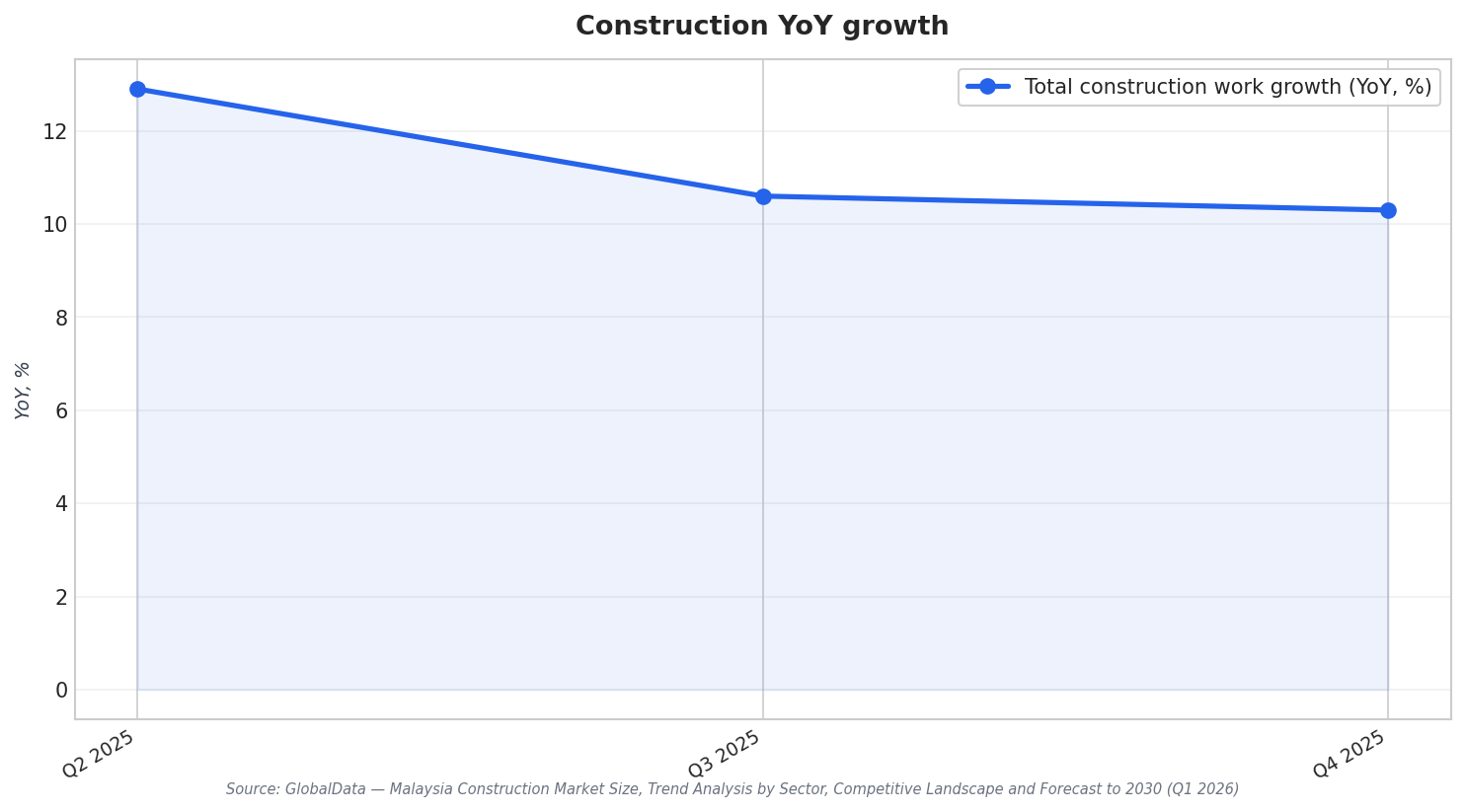
Recent construction performance data illustrates the pace of enabling activity around industrial and infrastructure needs. According to the Department of Statistics Malaysia (DOSM), the total value of construction work rose by 10.3% year on year in Q4 2025, following 10.6% in Q3 2025 and 12.9% in Q2 2025. By segment, residential construction advanced by 5.9% year on year in Q4 2025, while non-residential grew by 18.6% and civil engineering increased by 3.6%. Looking beyond 2026, sources project an average annual construction growth of 3.5% through 2030, driven by industrial, transport, and energy sector investments that can provide the physical backbone for reindustrialisation.
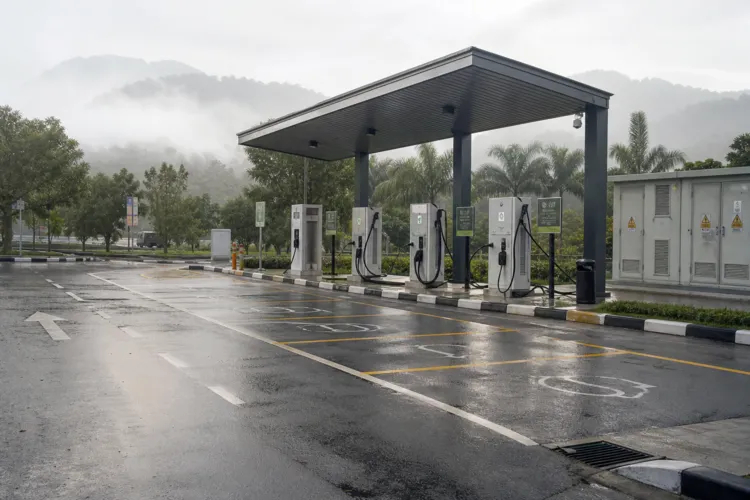
Energy infrastructure is also being framed as part of the investment ecosystem surrounding industrial expansion. The Southern Johor Renewable Energy Corridor (SJREC), announced in December 2025, is cited as receiving MYR26.6 billion ($6 billion) in World Bank funding. The project is described as a 2,000km hybrid solar and battery energy storage system zone connecting Southeast Asia. By 2030, the initial phase is expected to include up to 4GWp of solar capacity and 5.12GWh of energy storage capacity. Taken together with smart factory targets and budget-linked spending priorities, the plan’s reindustrialisation narrative ties factory modernisation to infrastructure readiness and an energy transition that supports more advanced production.
What is Malaysia’s manufacturing GDP target under the industrial plan to 2030?
How many factories are planned to be upgraded into smart factories, and what investment is cited?
How is smart factory recognition progressing before the wider upgrade programme?
What construction and budget signals are linked to industrial and infrastructure enabling activity?
What does the SJREC project aim to deliver by 2030 in energy capacity terms?