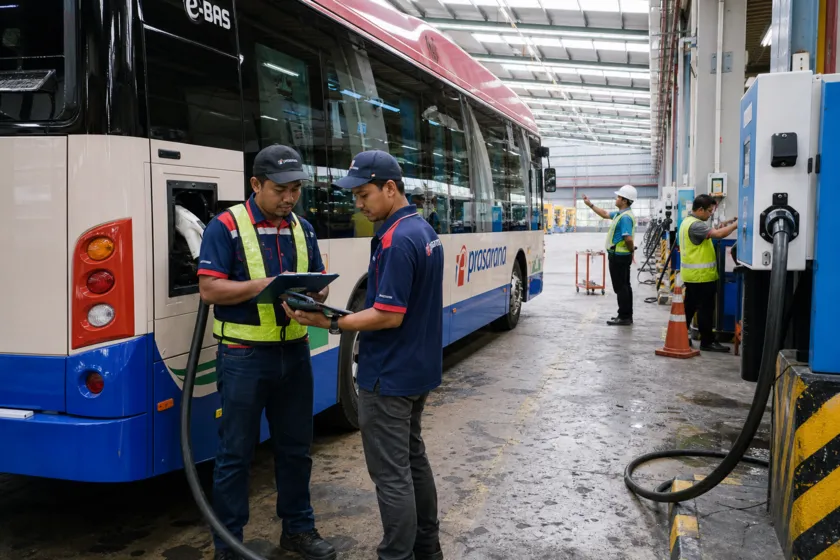
Malaysia’s public transport operator Prasarana Malaysia Berhad is moving beyond small pilots and into large-scale fleet change. Through its subsidiary Rapid Bus Sdn Bhd, Prasarana is planning to acquire more than 1,000 electric buses nationwide over the next decade as part of a shift toward low-emissions mobility. Multiple reports frame this as a cornerstone of Prasarana’s Sustainability Blueprint and an effort aligned with Malaysia’s National Energy Transition Roadmap (NETR). The operator already runs 15 electric buses on the BRT Sunway Line, and those vehicles have been in service since 2015. The new procurement plan turns that early deployment into a wider, structured re-fleeting programme.
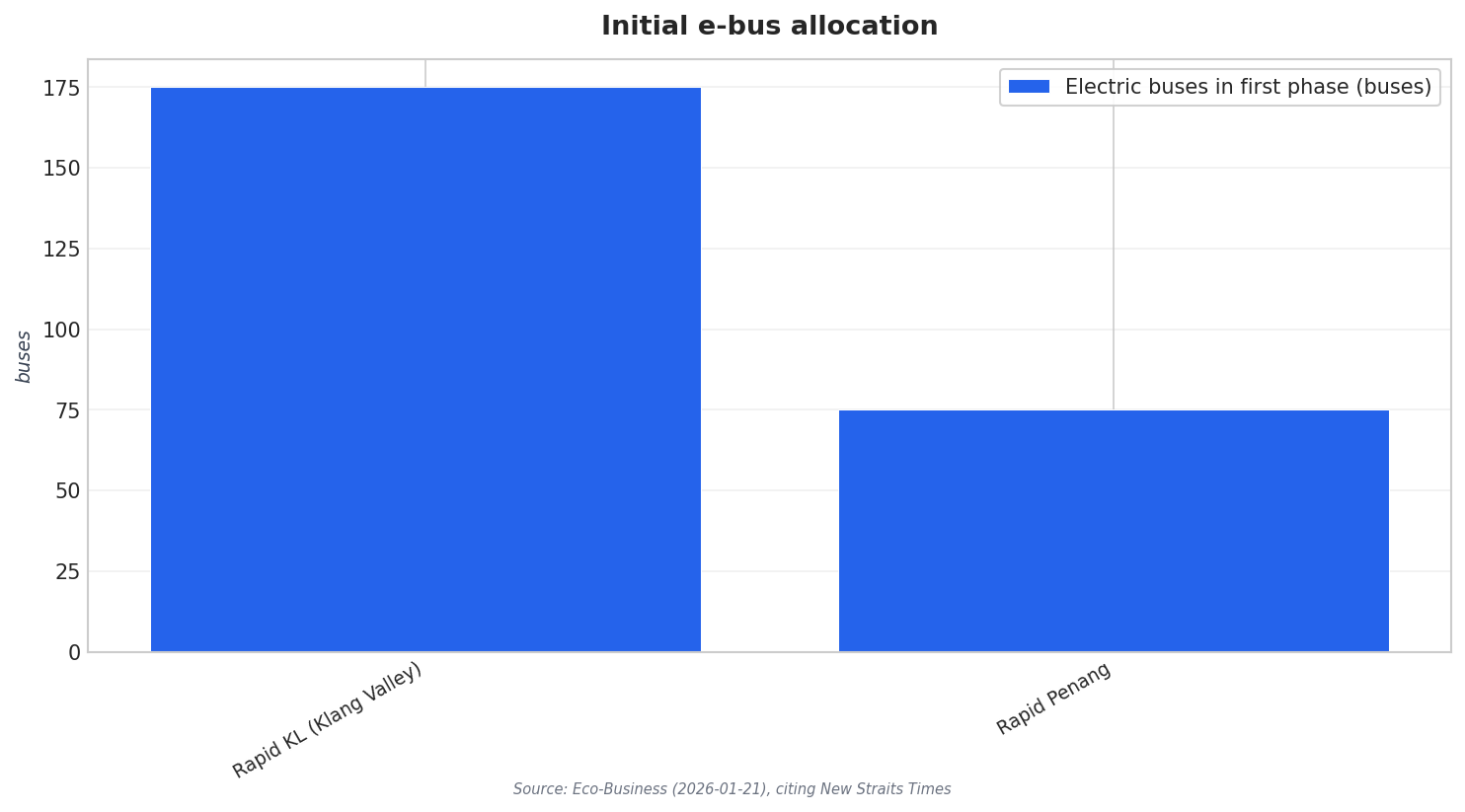
The rollout is being staged with clear early milestones. Transport Minister Anthony Loke Siew Fook said a first phase will procure 250 electric buses, with deliveries scheduled in stages from March 2026 to March 2027. Of that initial batch, 175 units are intended for Rapid KL services in the Klang Valley and 75 units for Rapid Penang, with Penang operations expected to begin in May 2026. In a separate longer-range timeline, Prasarana has been reported as set to procure up to 1,600 electric buses between 2026 and 2031 to replace ageing diesel fleets across the Klang Valley and Penang. These figures help define the direction and pace of Malaysia’s electric bus fleet expansion in the country’s busiest corridors.
Penang’s Fleet Renewal, Charging Buildout, and Cost Reality
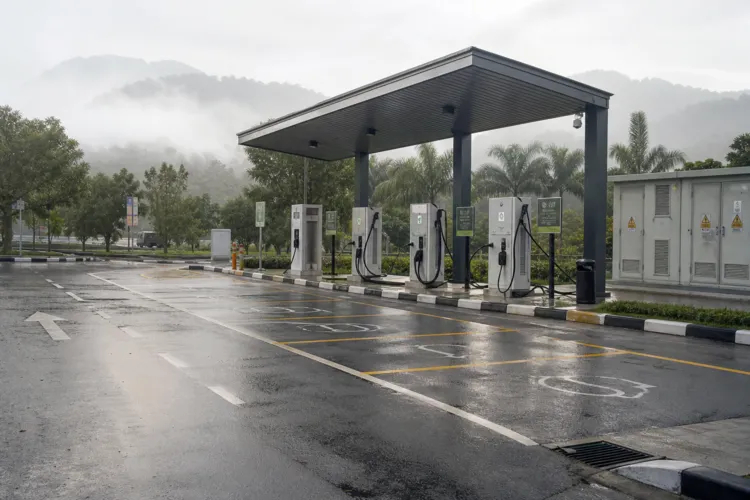
Penang is a focal point because the shift is explicitly tied to replacing older diesel buses. Loke said electric buses will gradually replace diesel vehicles that have been in service for more than a decade. Rapid Penang currently operates 310 buses, and many are due for phased replacement. The fleet renewal has already started with the acquisition of 70 new diesel buses, described as the final batch of diesel vehicles before a full shift toward electric replacements. After that, all subsequent replacements will focus on electric buses, and Rapid Penang plans to deploy up to 240 EV units through two procurement phases by 2027. To support these vehicles, Prasarana is also developing EV charging infrastructure at Rapid Penang depots, and the process has already commenced.
Prasarana is also framing electrification as part of a broader operational emissions and energy strategy. Under its Sustainability Blueprint, the operator is targeting a 45% reduction in operational carbon emissions by 2030 through vehicle electrification, solar energy adoption, and energy-efficiency measures. Solar panels were installed in 2023 at the BRT Sunway station and six other stations, with further installations planned over the next three years across approximately 75 rail and bus depots, transport hubs, and stations nationwide. At the same time, the operator confirmed it will acquire 310 diesel-engine buses as its final internal combustion purchase, with deliveries expected by March 2026, before transitioning fully toward electric buses by 2037.
Execution will hinge on economics and readiness as much as procurement. Loke noted electric buses remain significantly more expensive than conventional diesel buses, with prices ranging from RM1.2 million to RM1.5 million per unit, nearly double diesel alternatives, while the government has not disclosed the total allocation because tenders are still ongoing. Prasarana is also building internal capability to run a larger high-voltage fleet, including structured training for drivers, technical personnel, and depot staff, with a focus on safety protocols and incident response. Reporting also highlighted emergency handling and fire-suppression awareness, including a six-month “My Risk, My Responsibility” campaign with the Malaysian Fire and Rescue Department (JBPM) to strengthen a safety-first culture as electric bus operations scale.
What is Prasarana planning for Malaysia’s electric bus fleet expansion?
When will the first new electric buses be delivered, and where will they go?
How many electric buses does Prasarana operate today?
How much do the electric buses cost compared with diesel buses?
What is Prasarana’s timeline to stop buying diesel buses and reach zero-emission operations?