Malaysia’s mobility conversation is shifting from road reliance to rail-led connectivity. Two initiatives stand out: the East Coast Rail Link (ECRL) and the MRT3 Circle Line. Together they anchor today’s Malaysia Rail Infrastructure Projects narrative, linking national transport goals with investment themes such as transit-oriented development and logistics modernization. Budget 2026 is framed around “allocative precision” and productivity-led growth, with a total value of RM419.2 billion and a projected fiscal deficit of 3.5% of GDP. Within that broader push, mega projects including ECRL and MRT3 are repeatedly cited as catalysts for new growth corridors and changing land-use patterns.
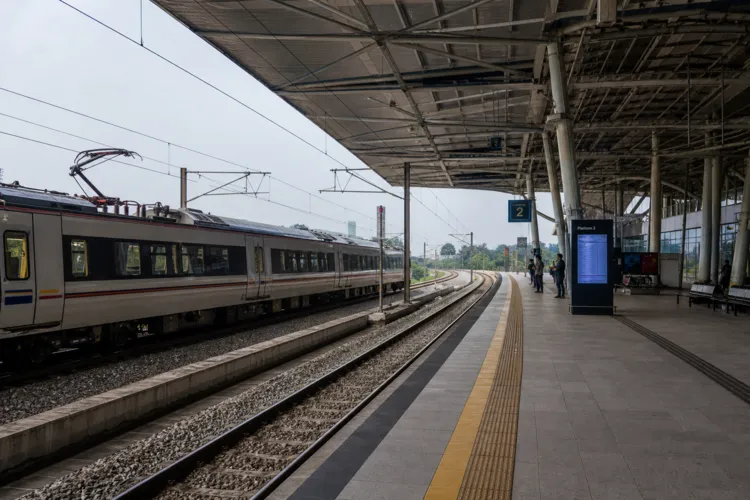
The ECRL is positioned as a national milestone. It began construction in 2017 and is described as Malaysia’s first major new railway line since independence in 1957. In a 2026 preview run update, Transport Minister Anthony Loke said the line was nearly 92% complete, and the service remains on track for a 2027 launch. The preview in Pahang covered a 20 km round trip between KotaSAS (Kota Sultan Ahmad Shah) and Kuantan Port City stations, and featured the Chinese-built CR200J passenger trainset alongside electric locomotives designated for cargo services. The project is owned by Malaysia Rail Link (MRL), a subsidiary of the Minister of Finance (Incorporated), and carries a finalised cost of RM50.27 billion.
ECRL and MRT3: From Travel-Time Gains to Station-Centric Growth
On the passenger side, the ECRL is designed to compress east-west journeys in practical, measurable ways. According to MRL, the trip from Gombak to Kota Bharu is expected to take four hours and 45 minutes, compared with around six hours by road under normal conditions and up to 12 hours during peak festive seasons. The alignment connects Kuala Lumpur to key east coast cities including Kuantan, Kuala Terengganu, and Kota Bharu, and it also fills a gap for coastal cities that currently lack direct rail access. The system also marks a break from KTM’s 1,000 mm narrow gauge by using 1,435 mm standard gauge, enabling coaches that are about 30 cm wider than KTM’s ETS, with five seats per row instead of four.
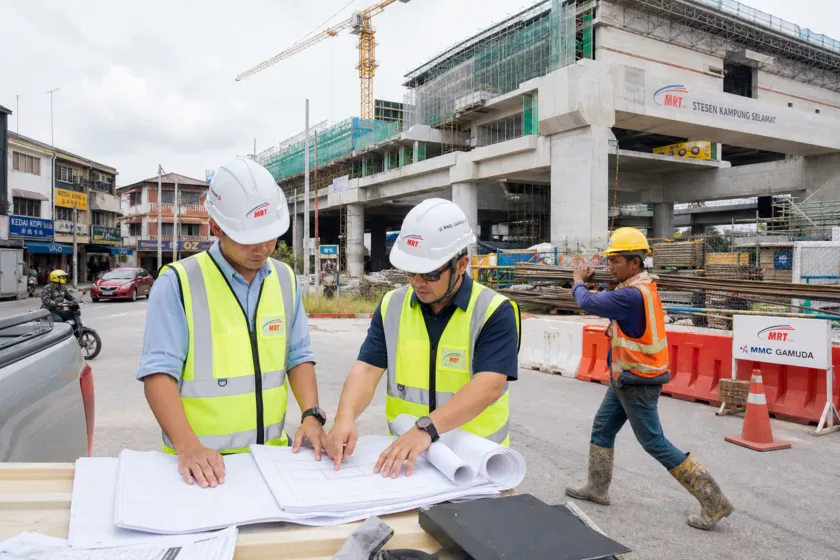
Freight and real estate impacts are part of the same story. One commercial real estate analysis says the ECRL is 76% constructed and will “knit 665 km of east-west trade routes when trains start in 2027,” with a focus on industrial land take-up near future stations. The same source highlights MRT3’s momentum: it states MRT3’s USD 2.09 billion civil-works phase begins in 2026, and predicts office and retail rents could lift up to 30% within 500 m of stations. It also notes MRT3’s alignment is set to raise commercial property valuations up to 30% within half a kilometer of its 31 stations. In a parallel property outlook, mega projects such as ECRL and MRT3 are expected to raise surrounding land values by 15–50%, reinforcing how station access can reshape tenant preferences and investment priorities.
Operational planning details further underline the scale of the mobility shift. The ECRL passenger service is supported by 11 trainsets, while cargo operations will deploy 12 electric locomotives. These choices align with the project’s stated purpose of improved cargo efficiency and faster passenger movement, which Malaysia projects will boost the national economy by 3.8% over the next two decades. At the same time, Malaysia’s wider economic posture matters for delivery and uptake: Budget 2026 targets 4.5% to 5.5% GDP growth, and subsidy rationalisation is expected to save RM10–12 billion annually for reinvestment into productivity-enhancing sectors, including logistics modernisation. In that context, ECRL and MRT3 read less like isolated builds and more like a connected push to re-balance how people and goods move across key corridors.
When is the ECRL expected to launch, and how complete is it now?
How much time could the ECRL save between Gombak and Kota Bharu?
What is the stated cost and ownership structure of the ECRL project?
What does the MRT3 civil-works phase look like, based on published estimates?
How do Malaysia rail infrastructure projects like ECRL and MRT3 connect to the wider mobility shift?