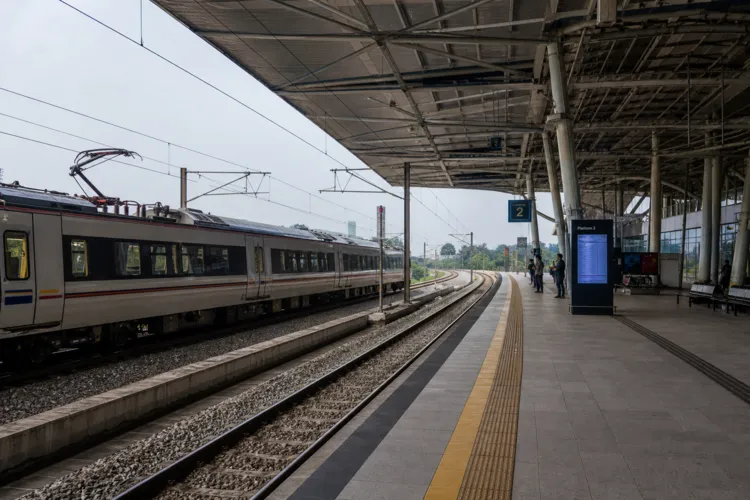
Malaysia’s push for sovereign AI is increasingly concrete, because it is being shaped by both policy intent and infrastructure buildout. In the 2026 state budget speech, Prime Minister Anwar Ibrahim announced an allocation of RM 2 billion (around USD 490 million) to build a sovereign AI cloud. Asia Society frames this as part of an industrial strategy focused on economic resilience and digital sovereignty, while also warning that Malaysia faces grid constraints, limited water capacity, and geopolitical pressure. The same source argues that Malaysia’s AI development has been heavily influenced by foreign hyperscaler data centre investment, creating a risk that the country becomes a host economy rather than an active AI player.
Foreign investment momentum is real, and it is reshaping the local infrastructure landscape. Rockbird Media reports a cluster of commitments, including Microsoft’s USD 2.2 billion investment in Malaysian cloud and AI infrastructure, Google’s USD 2 billion pledge for data centres and cloud infrastructure in the Klang Valley, and AWS committing USD 6.2 billion to Malaysia over the next 15 years to establish its first local infrastructure region. Introl also cites Microsoft at USD 2.2 billion over four years and adds Oracle’s USD 6.5 billion pledge for cloud infrastructure, plus a YTL-NVIDIA partnership at USD 2.36 billion for green AI data centres powered entirely by renewable energy. Taken together, these deals expand domestic capacity, but they also raise the governance question of who controls the most strategic workloads.
From Data Centre Scale to Sovereign Capability
Johor’s rise shows how quickly Malaysia’s footprint can expand when land, power pricing, and cross-border geography align. Introl says data centre capacity in Johor grew from 10 megawatts in 2022 to over 1,500 megawatts “today,” with projections reaching 3,600 megawatts by 2027. The same source attributes investor interest to proximity to Singapore and cites an electricity price comparison of USD 0.10 per kilowatt-hour in Johor versus USD 0.27 in Singapore, after Singapore imposed a data centre moratorium in 2019 due to power and water constraints. Introl also reports that the Johor-Singapore Special Economic Zone offers a preferential 5% corporate tax rate for up to 15 years, alongside streamlined immigration processes and coordinated infrastructure planning.
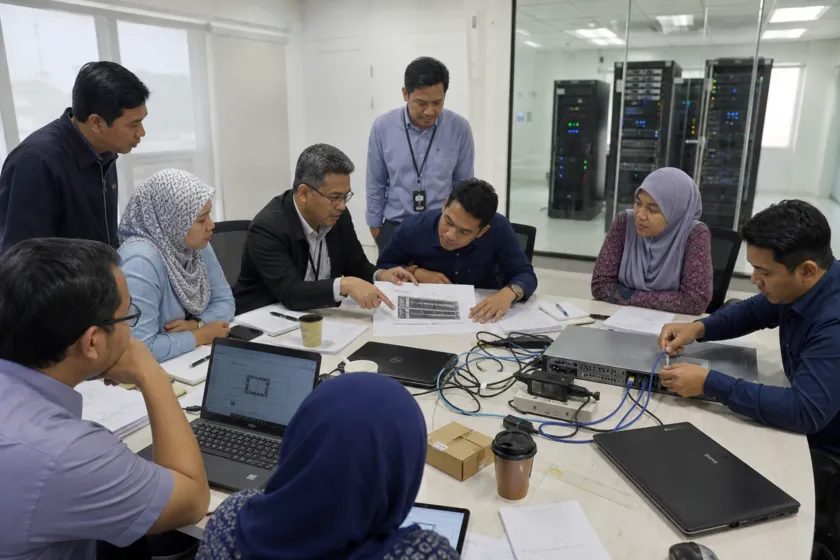
Compute supply signals a similar acceleration, with implications for sovereign AI operations and compliance. Introl reports Malaysia imported USD 6.45 billion worth of GPUs in the first four months of 2025, and that April 2025 alone saw USD 2.74 billion in GPU imports, described as a 3,400% increase from April 2023. Introl also notes local execution, including SNS Network launching Malaysia’s first commercial NVIDIA H100 GPU-as-a-Service platform. BusinessToday adds that Malaysia’s public sector is advancing secure AI adoption as digital services scale, and it describes sovereign workloads and hybrid strategies intended to keep sensitive information under local control, while also emphasizing skills-building through hands-on AI bootcamps hosted by SNS Network with Dell Technologies and local partners.
Malaysia’s biggest challenge is turning infrastructure into compounding national capability, rather than just capacity. Asia Society points to the 2021 Artificial Intelligence Roadmap, which called a national AI ecosystem “a sine qua non for Malaysia to attain a Developed Nation status by 2030 or even earlier,” and notes Malaysia moved from 28th to 24th on the Government AI Readiness Index, ranking second only to Singapore among ASEAN states. AIBP argues that data centres alone are not enough, framing sovereign AI as a leadership posture tied to risk classification, governance, talent, and data infrastructure. In other words, the Malaysia Sovereign AI Cloud is most defensible when it is paired with local institutions, clear accountability, and practical paths for public agencies and regulated industries to run AI on their own terms.
How much did Malaysia allocate to build a sovereign AI cloud?
What major cloud and data centre investment commitments have been reported for Malaysia?
What does Johor’s data centre growth look like, based on the sources?
What do the sources say about Malaysia’s GPU import surge?
What determines whether Malaysia’s sovereign AI push becomes real capability, not just infrastructure?