
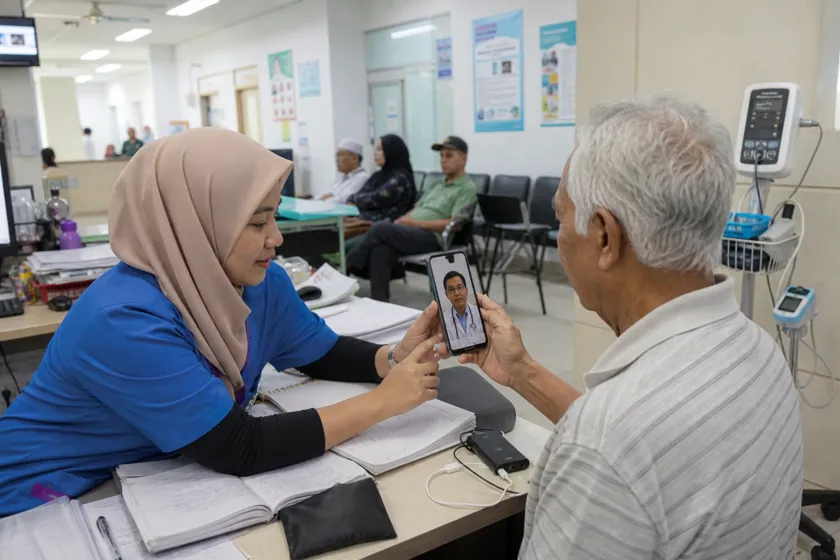
Digital health adoption in Malaysia has moved from “nice to have” to a core part of access and operations, especially as care delivery shifts toward more convenient, remote touchpoints. Ken Research values Malaysia’s digital health and telemedicine market at approximately USD 1.1 billion, tying growth to adoption of digital health solutions and the impact of the COVID-19 pandemic on healthcare delivery. The same research also describes a broad product mix that includes teleconsultation, remote patient monitoring, health management apps, digital therapeutics, wearable devices, telepharmacy, electronic health records (EHR), and other categories. In this landscape, teleconsultation stands out as the leading sub-segment because it improves convenience and accessibility by enabling remote consultations with healthcare professionals.
Urban adoption has been a visible driver. Ken Research highlights Kuala Lumpur, Penang, and Johor Bahru as key adoption centers, linking their momentum to advanced healthcare infrastructure, high internet penetration, and populations that are increasingly tech-savvy. The same source notes that digital wellness platforms and virtual healthcare services are expanding rapidly in these urban centers, while telehealth platforms are increasingly reaching smaller towns such as Ipoh and Kuching to bridge gaps in specialist access. The competitive landscape described by Ken Research includes a mix of regional and international players, such as DoctorOnCall, BookDoc, Teleme, Doctor2U (by BP Healthcare Group), GetDoc, HealthMetrics, Naluri, Qualitas Health, Alpro Pharmacy, Speedoc, Caring Pharmacy, MyDocLab, Homage Malaysia, MedKad, and Pulse by Prudential.
What’s Driving Adoption: Hospitals, Regulation, and Digital Infrastructure
Hospitals are a central adoption engine. Ken Research describes hospitals as the dominant end-user segment because they are increasingly adopting digital health solutions to enhance patient care and streamline operations. It also states that integrating telemedicine into hospital services can help manage patient flow and reduce wait times. Expert Market Research similarly observes that Malaysian hospitals are increasingly adopting electronic medical records (EMRs), telemedicine, and AI-driven diagnostic tools to improve efficiency and patient care, and that rising patient demand for accessible and convenient services is fueling growth in telemedicine and remote monitoring. This aligns with broader digital transformation dynamics: Mordor Intelligence reports that, within Malaysia’s digital transformation market, healthcare is set to post the highest 18.95% CAGR through 2031 as telemedicine scales nationwide.
Policy and governance shape trust in remote care. Ken Research notes that Malaysia’s Telemedicine Act 1997, issued by the Ministry of Health Malaysia, regulates telemedicine practices and is designed to ensure quality and safety. It adds that telemedicine providers must be registered and comply with specific standards, including licensing requirements and operational protocols for remote consultations, which supports consumer confidence. Research hosted on ResearchGate also frames adoption barriers that can slow scale, including the digital divide, regulatory barriers, and technological interoperability issues. At the same time, the same chapter points to future prospects that include 5G, blockchain, and telemedicine robots, reflecting how infrastructure and interoperability will remain central to sustainable growth.
Looking ahead, Malaysia’s market narrative is increasingly about structured scaling rather than experimentation. A Ken Research release states that “Malaysia is entering a more structured phase of digital healthcare adoption,” and positions telemedicine as more than convenience, citing relevance for urban professionals, chronic disease patients, corporate health programs, and underserved communities seeking faster and more efficient support. The same market analysis expects continued innovation as the government invests in digital health infrastructure, and suggests that integrating AI and machine learning into healthcare services is expected to enhance patient outcomes. Taken together, the picture for Telemedicine Malaysia is defined by leading teleconsultation use cases, hospital-led operational integration, and a regulatory framework intended to keep remote care safe and standardized.
How large is Malaysia’s digital health and telemedicine market?
Which digital health segment leads in Malaysia?
What regulation governs telemedicine practice in Malaysia?
Why are hospitals important to telemedicine adoption?
What are common barriers to Telemedicine Malaysia adoption mentioned in research?