Last-mile delivery in Malaysia is no longer a simple “drop-off” function. It is becoming the most visible stress test for the country’s logistics networks as e-commerce shifts consumer expectations toward speed, transparency, and flexibility. Nexdigm notes that Malaysia’s courier, express, and parcel (CEP) market has moved away from traditional postal roots and now revolves around fast-moving e-commerce parcels and time-sensitive deliveries, with higher volumes concentrated around Kuala Lumpur, Johor Bahru, and Penang. At the same time, providers face a defining tension: customers want faster service and tracking, often at little to no extra cost, while operators face cost pressures that make profitability harder.
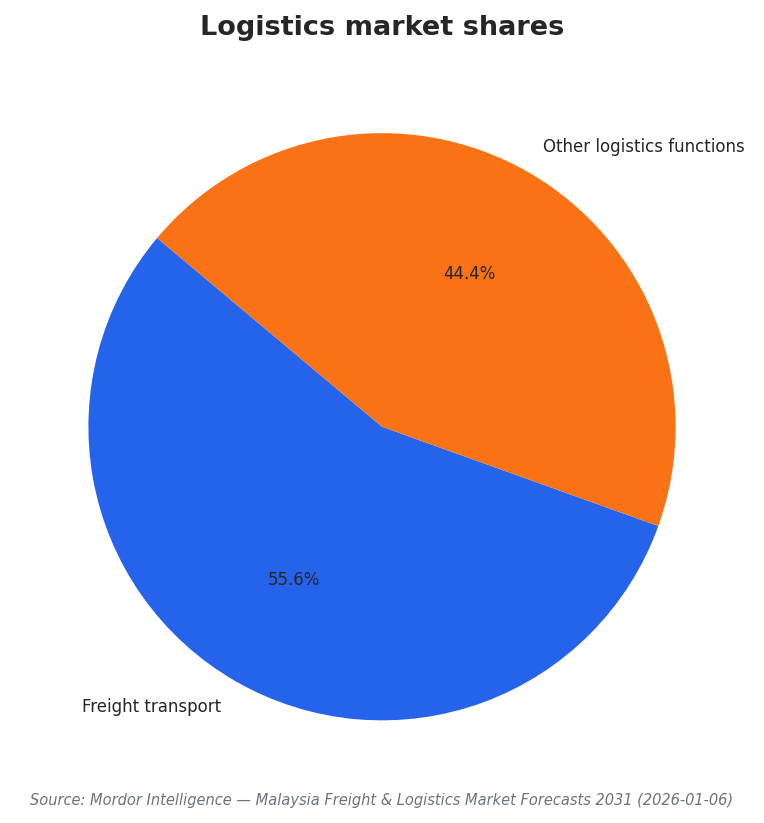
Macro logistics indicators support the same direction of travel. Mordor Intelligence forecasts Malaysia’s freight and logistics market to grow from USD 29.70 billion in 2025 to USD 31.23 billion in 2026, reaching USD 40.11 billion by 2031 at a 5.14% CAGR (2026–2031). Within that outlook, freight transport held 55.62% share in 2025, while CEP services are forecast to expand at a 5.86% CAGR (2026–2031). The same report connects consumer preference for same-day delivery to last-mile network densification, and highlights that domestic deliveries secured an 84.23% share of CEP in 2025 while international CEP is forecast to grow at a 6.51% CAGR (2026–2031), reflecting SME export expansion. These dynamics create a practical mandate: tighter city coverage, faster handoffs, and more resilient line-haul to last-mile coordination.
What E-Commerce Demand Is Forcing Last-Mile Networks to Change
E-commerce is not only increasing parcel counts; it is changing the shape of demand. Nexdigm describes flash sales on platforms such as Shopee and Lazada creating sudden spikes that strain sorting hubs and last-mile routes, while grocery and same-day delivery add complexity in dense urban zones where traffic can derail tight schedules. It also points to a behavioral shift: households ordering more frequently but in smaller quantities, increasing the number of parcels per household. Thousands of home-based sellers and micro-SMEs ship daily, creating scale that requires cost-efficient pickups and reliable delivery. Mordor Intelligence adds a concrete indicator of service expectations: leading platforms ship 95% of orders within 24 hours, while free-delivery preferences among 64.8% of internet users intensify margin pressure and force optimization across routes, hubs, and carrier partnerships.
Geography and cross-border trade shape where networks densify first. Nexdigm frames Malaysia’s location as a natural advantage in regional logistics, with trade flows between Singapore, Thailand, and Indonesia passing through Malaysian networks and supporting international parcel services. But customer expectations now extend to cross-border shipments, with real-time tracking and delivery “within days rather than weeks,” which pushes investment in customs integration and regional hubs even as border delays and regulatory differences remain common frustrations for smaller exporters. Nexdigm’s last-mile market overview also emphasizes that major activity concentrates in Kuala Lumpur, Selangor, Penang, and Johor due to urban demand and connectivity to airport cargo terminals and distribution hubs, positioning Kuala Lumpur as a primary distribution center supported by courier sorting facilities and e-commerce fulfillment warehouses.
Malaysia Last-Mile Delivery Trends are also being shaped by the mix of delivery types and end users that dominate network planning. Nexdigm segments the market into standard, next-day, same-day, on-demand, and scheduled services, and notes standard parcel delivery holds a dominant share because it balances affordability and speed for nationwide fulfillment. The same source identifies e-commerce retailers as the leading end user segment, driven by digital shopping adoption and the expansion of marketplace platforms across Malaysia’s consumer economy. In practice, this means operators must run large sorting centers and regional hubs for consolidation while keeping enough localized capacity to meet time-sensitive promises. Globally, last-mile growth underscores the scale of the shift: Market Research Future projects the last-mile delivery market to rise from USD 140.5 billion in 2024 to USD 311.3 billion by 2035 at a 7.5% CAGR, offering context for why technology integration, partnerships, and faster delivery options are now central themes.
What is pushing Malaysia’s last-mile delivery networks to densify in cities?
Which Malaysian areas see the most last-mile logistics activity?
How do SMEs and home-based sellers affect parcel networks in Malaysia?
What do current Malaysia last-mile delivery trends suggest about speed and pricing expectations?
How is cross-border e-commerce reshaping Malaysia’s parcel and last-mile networks?